On Monday, the first grain cargo ship departed from the port of Odesa. As is well known, the Russian invasion of Ukraine halted a highly significant flow of food exports from the country for several months. Given that Ukraine is an important exporter of grain and sunflower products, its contribution to global markets is substantial. At present, prices that have risen almost to the sky and supply bottlenecks have caused concerns about economic downturns or even famine in some parts of the world.
However, the shortage of Ukrainian food goods is only the tip of the iceberg when we talk about the chaos in the global food market. As a result of the crisis, several countries, including Russia, have suspended the export of certain food products and fertilisers in order to protect domestic supply, thus triggering an even wider impact on global food supply.
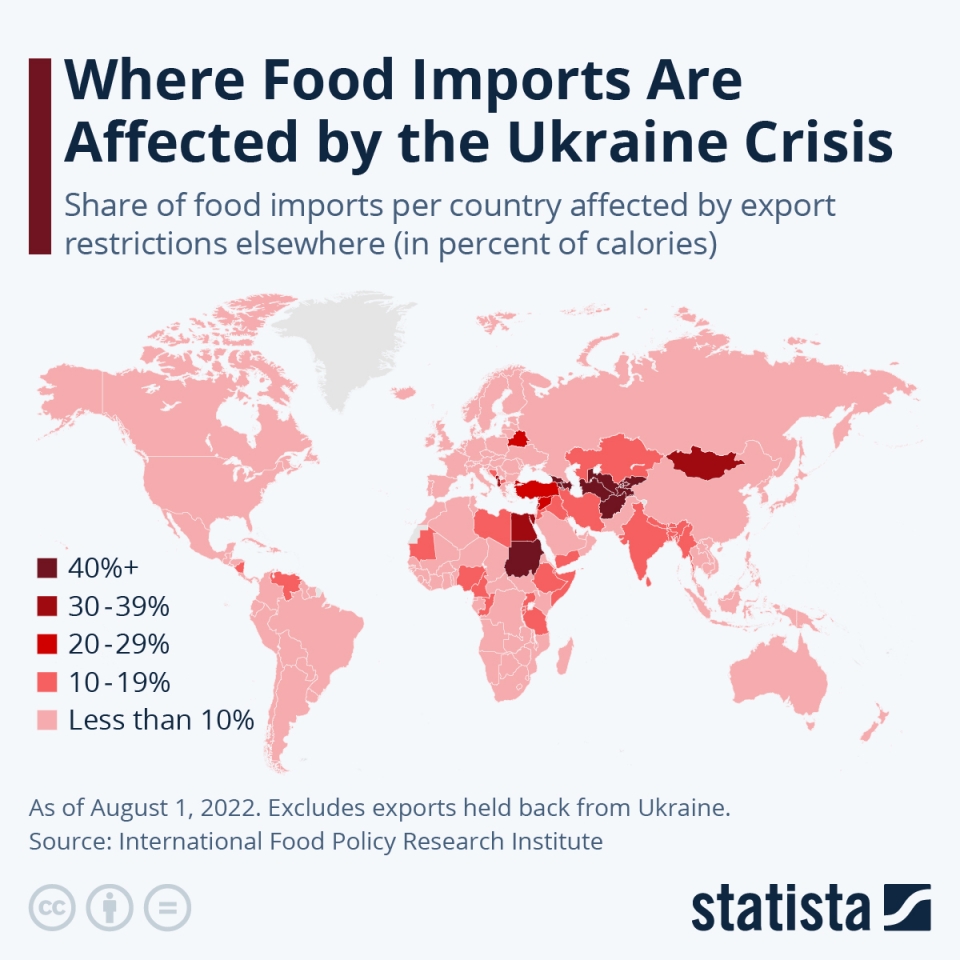
According to a study (analysis) of food and fertiliser export restrictions conducted by the International Food Policy Research Institute, 20 countries worldwide have currently banned the export of 30 food products, while a further six countries have imposed strict export restrictions. The impact is felt most in poorer countries – many of which are located in Africa and the Middle East – that are usually dependent on food imports. Kazakhstan, which is a major grain producer, is also one of the countries that, in response to the crisis, is applying a highly protectionist strategy, which is significantly affecting Central Asian countries. North African countries and Caucasus countries are also suffering from food import insecurity, as many of them were dependent on Russian and Ukrainian grain, as well as global markets in general.
Some countries, such as India, Iran or Turkey, are seemingly on "both sides", restricting exports while at the same time largely influencing export bans elsewhere. (...)