




There has been a lot of talk and writing about “Rīgas meži” this year, including from zemeunvalsts.lv ...even if one might rather not, some questions about politics are unavoidable, but a number of other issues important to the industry made us accept the invitation to talk about the near and perhaps distant future of “Rīgas meži”.
You studied food technology at the LLU. What paths led you to the forestry sector?
Upon graduating from the LLU, I gained the qualification of engineer-food technologist. During my studies, I learned theoretical mechanics, technical drawing, electrical engineering, the fundamentals of construction, and descriptive geometry...
Some of the subjects mentioned were also studied by Forestry Faculty graduates
After my studies, I started working in the chemistry laboratory at A/S “Aldaris”. As time went on, I felt that my capacity and creative potential were greater. I continued working in the sales department of “Aldaris” as a HoReCa key account sales manager; I began these duties with limited knowledge, but great determination. In 2006, the World Ice Hockey Championships took place in Riga, after which I moved to a new job, as it seemed I had achieved everything I could at “Aldaris” at that time. Through a competitive selection process, I ended up at “Statoil” (as Retail Manager for the Baltic region), where, in addition to my work, I gained a great deal of knowledge about corporate governance principles.
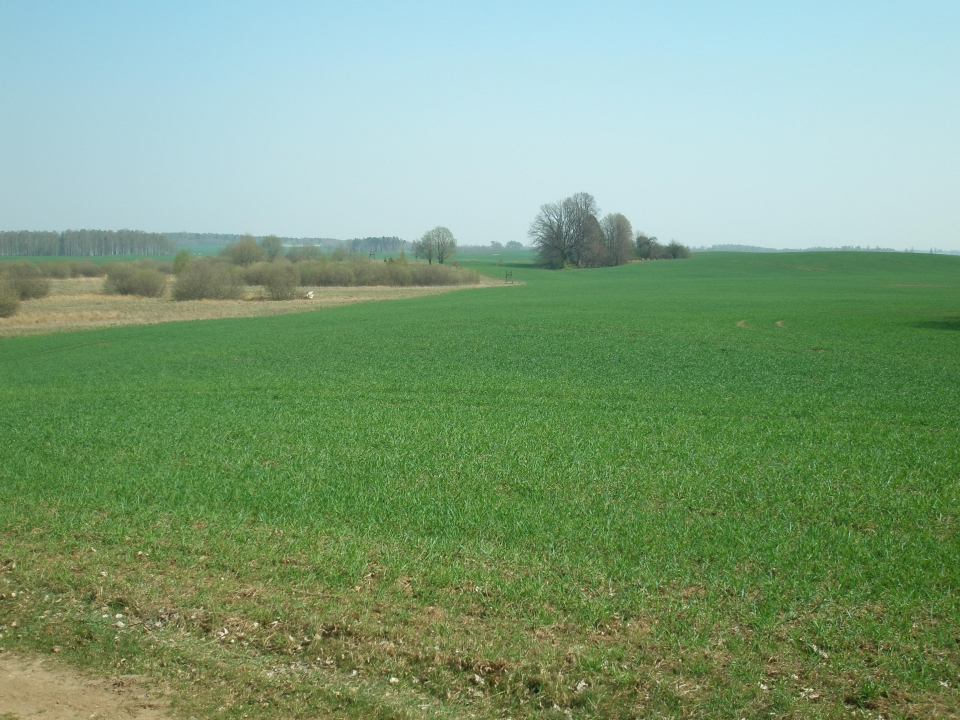
Business management in practical work...
Exactly! The next workplace where I participated in a selection process for a vacancy was “NP Foods” (Laima, Staburadze, Gutta) as a Key Account Sales Manager, and after six months, I became the Commercial Director for the Baltic states. This workplace remains the dearest to my memory. But then came a time when a recruitment company approached me several times to persuade me to enter the competition for the position of Chairperson of the Board of “Latvijas Piens”. I refused more than once until I decided to go to the interview just to be left in peace. How did it end? The evening after the interview, I was offered the job. Looking at the situation today, I would definitely not agree to lead a company in such a difficult situation a second time. Those were the hardest working years of my life so far. Take, for instance, the situation with the Russian embargo on EU dairy products, the internal changes in the company (a new shareholder), and over time, one of the major shareholders, “Trikāta”, went bankrupt, to be replaced by insolvency administrators, some of whom have since become well known to the general public. We were looking for investors who would want to work, not just “be on paper”. It is important to add that “Liepājas Metalurgs” went bankrupt at exactly that time, and the “success story” with its shareholders did not work out. We succeeded!
After the events with “Latvijas Piens”, I passed the competition for a position at “Rīgas Dzirnavnieks” (as a Board Member). The biggest EU fund project there was the conversion of an old warehouse into a production facility and its relocation from Estonia to Latvia. The decision to go job hunting again was a conscious one because the shareholders' operational principles were unacceptable to me. At that moment, I realised that the food industry was “exhausted” for me. I wanted to work in a field where my work would have added value in the broadest sense. At the time, incidentally, various people in the media often called on private sector representatives to work in state or municipal capital companies so that the knowledge gained in the private business environment could be integrated into the work of these companies. I entered many competitions: in the structural units of “Latvijas Dzelzceļš” and elsewhere, but... I noticed that the call to participate sounds beautiful, but one of the core requirements is experience in the management of capital companies. Where can a private sector representative gain that?
Then I saw an advertisement for a vacancy on the Council of “Rīgas Satiksme”. I applied. In October 2020, I participated in a Nominations Committee meeting, presenting my vision for “Rīgas Satiksme”. I did not win, which I took very hard! A week later, I was invited to the Riga City Council Personnel Department, where I was offered a position at “Rīgas meži”. In the Riga City Council, it is permitted to act this way – if a candidate has applied for a position in one of the Council’s capital companies, passed a reputation check, had their competencies evaluated, and been heard by the Nominations Committee, the holder of the capital shares has the right to offer a so-called “soft mandate” in another capital company. At the beginning of November 2020, a decision was made to remove E. Zommers from the board of “Rīgas meži”, and I was offered the position of temporary board member for issues concerning the implementation of corporate governance. There you have the short answer as to how I ended up in the forestry sector and at “Rīgas meži”!
I started work on 7 January 2021. As I mentioned, my task was to implement Riga City Council Regulation No. 4 “On the implementation of corporate governance in municipal capital companies” at “Rīgas meži”.
Why did you agree to a temporary (“soft”) mandate? Did someone whisper that a “hard” one would follow?
No, no one whispered anything!
Your story suggested you were agreeing to something promising and stable; a temporary position is not that...
By participating in various competitions, I understood that a significant obstacle to obtaining a position (in fact, to not obtaining one) had been my lack of experience in managing a capital company. So here, at “Rīgas meži”, I was given the opportunity to gain experience in managing a capital company. By taking a step back (by receiving a temporary board member position), the next leap in my career can be higher!
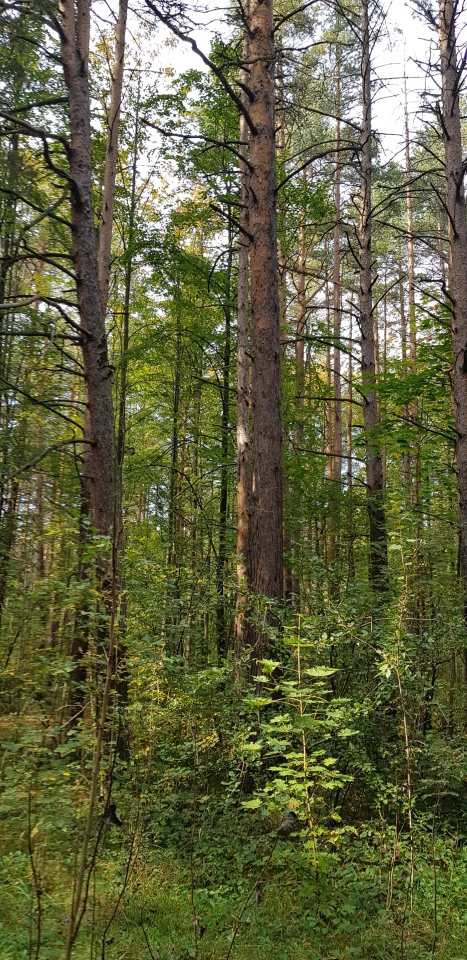
Before the Riga City Council elections, the deputy candidates I had to speak with mentioned “Rīgas Satiksme” with a sigh: “What hasn’t been lost there, like in an abyss...”
I applied for a position on the “Rīgas Satiksme” Council. My previous harsh experience with “Latvijas Piens” was stimulating; difficulties do not scare me. I am happy to work where it is quite clear whether I will see the results of my work. It is important to me that under my leadership, the company becomes better.
I see you like to tidy things up. Do both board members currently have a temporary mandate?
Yes!
The new Council of the capital company has been in its position for seven days (note: the conversation took place on 8 September); can you already feel it?
We can. The first Council meeting was on 2 September; the next one already has four agenda items and our reports planned. The work has begun. The impression of the Council is good; they are professional people who ask us about everything, including forest matters and the sawmill. The processes within the capital company are understandable to them.
Are you not confused that there is no one in the Council or the temporary board who is an expert in the forestry industry?
No! The food industry is also similar to the forestry industry. How? Both have a defined starting and ending point, both are connected to natural processes. To reach the endpoint (i.e., the result), one must go through a series of processes that are directly related to nature, which cannot be influenced by IT solutions or the like. To grow cocoa beans, seeds must germinate, a tree must bloom, the fruit must ripen, it must be harvested, dried, etc. The quality of the beans is important. It is similar with wheat and rye...
Forestry also has many different stages. 100 or many decades ago, someone had to plant the trees, someone had to tend them, etc. Production at “Rīgas meži” is also production – capacity, efficiency, costs, labour, cost price.
Do you feel the influence of politicians in your work? What is the cooperation like with the Riga City Council? In the media, one can notice that some city councillors like to speak both on behalf of “Rīgas meži” and about the company.
The cooperation is neutral; the councillors do not interfere in our work. In the Council, there is an executive director and a Commercial Security Department, with whom we have direct contact. Politicians do not dictate our rules.
Recently, there has been talk of withdrawing 30% of forests from economic circulation
We have developed and submitted amendments to the Forest Management Plan to the Riga City Council. The ten-year plan for “Rīgas meži” has been in effect since 2017. Given that habitat mapping has just finished, the newly acquired data must be taken into account and incorporated into the forest management plan.
Since the forests near Riga are very rich in both recreational areas and nature areas to be protected, it is our duty to review what was previously planned. We submitted the report and our vision to the Council, estimating that the recreational and protected areas together make up about 30% of the “Rīgas meži” territory. I would like to add that we have previously been free to manage about 70% of the area; now, after the revision of the plan, in 2022 it will be 63%. So the reduction is 7%.
I understand that you have accepted the report on habitat mapping and its results at “Rīgas meži” before it was approved by the Cabinet of Ministers
The informative report on habitat mapping, according to the information at our disposal, has an informative character. But we have already partially taken it into account in drafting the amendments to the Forest Management Plan. Edmunds Račinskis, a respected and well-known ornithologist who carefully follows habitat mapping activities, works in our forestry department. At the moment, we are looking at the situation more openly, if you can put it that way – more green.
Do you participate in industry discussions on habitat mapping issues and the final report?
Of course, we participate! Our opinion is to treat nature with care, preserving habitats. It is also necessary to understand how to manage areas where there is no restriction, but where there are natural values and recreational objects. The most important thing is to understand the management principles because we neither plan to, nor can we, stop our economic activity. Why are we acting faster? Life forces us to: Riga is being “very” tightly enclosed by surrounding municipalities, which often want to develop at the expense of “Rīgas meži” territory. New zoning will help protect our forests.
The upcoming Rail Baltica route will certainly also affect “Rīgas meži” territories
This will be one more event (or reality of life) that we will not be able to avoid. The real estate department is working most intensively on this project right now. Rail Baltica will also split our properties into two parts. We are cooperating with colleagues from “Latvijas valsts meži”, for whom the issues to be solved are similar. It is important that the railway construction does not significantly hinder our work.
What is the cooperation like with the municipalities near Riga regarding Rail Baltica?
These issues are not yet on the agenda. At the moment, we are dealing with everyday issues. Municipalities are looking for our territory for the expansion of cemeteries, playgrounds, roads, roundabouts – we are solving these types of issues. And, of course, recreational opportunities are also important – recreational paths, trails, cycle paths.
Recreation and waste. The age-old headache of the big city
This is a significant problem. Especially in the last year, when many people have been forced to stay at home, have not travelled outside the country, but have “headed into nature”. I recently read an interview by Kristaps Klauss (Executive Director of the Latvian Forest Industry Federation) with the LETA agency, which mentioned that a person sitting at home gets bored and has saved money. That is why construction and rebuilding are being done, repairs are being carried out, and... unfortunately, a large part of the construction debris is dumped in our forests. The total volume of waste dumped in our forests, compared to 2020, has increased by 11 t (about 30%).
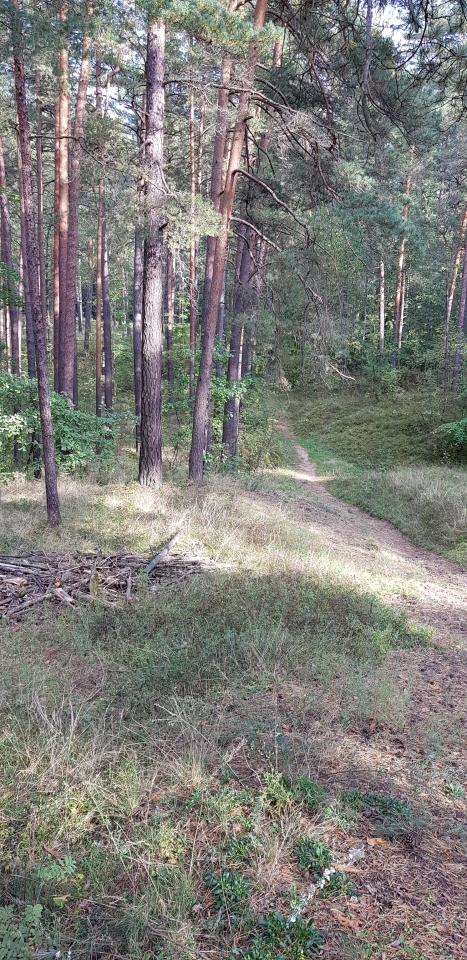
I will ask (perhaps naively): “What to do about this, thinking about a green Riga?” (A bit more about a green Riga later) Teaching, telling, educating?... How much can one do? By the way, the waste issue is quite well solved in private house areas
We do not live in warmer lands where trash is thrown over the fence; Latvians take it a little further. We do not have a real plan on how to act; it is a matter of state responsibility. Social campaigns are being planned. Our forest protection department deals with this on a daily basis. I agree, it is very bad if you collect the waste today, and tomorrow it is already to be collected again. We see a thing or two on the surveillance cameras placed in the forests, but quite quickly the cameras are discovered and...
... does anyone really take an old sofa to the forest knowing there are surveillance cameras?
When they find out about the cameras, understandably, they no longer go there, but... they head elsewhere! As harsh as it may sound, littering in forests and surrounding areas in Latvia has become a habit. Unfortunately!
I live in Tukums, where there is a tyre recycling plant and every resident has the opportunity to hand in four tyres free of charge once a year... While Nordic walking or walking, I see: tyres are scattered in many places and in much greater quantities than last year... What can you call that?
What else are we doing to help? We install barriers and talk, explain, remind... Today (8.09.) in the Jugla forest, we organised a public consultation about forest tending, during which we asked those who gathered what to do about waste in the forest. We concluded – the only thing we can do is set an example – we collect, collect, collect... We hope that one day society will become more conscious.
That sounded very sad... Speaking of financial issues: a capital company must earn money. What are the further plans for earning? They say that someone has set their sights on the “Rīgas meži” sawmill and nursery, so that both could be nimbly moved into private hands...
I am hearing about the nursery and private interest in it for the first time. I think rumours are created by those who themselves have an interest in getting something at a “bargain price”, as was the case in the 90s or earlier. About our plans: the company's economic activity must be ensured. Forest regeneration must be ensured so that what was taken from nature can be given back, and both the operation of “Mežaparks” and (partially) the functions of “Rīgas dārzi un parki” must be ensured. The latter are sources of joy and recreation, but also costs. Forestry also generates costs – seedlings, planting, tending. To ensure all of this, we must work with a plus sign. Regarding the nursery – there has not been a thought, a conversation, or any word that it could be sold or given over to privatisation.
Speaking of the sawmill, the Council of the capital company has just started work, which will evaluate the participation in the sawmill, taking into account all aspects. And only then will a decision be made! We still have to wait for that. Looking at the financial indicators, we see that in 2021 the sawmill is operating with a plus sign. The sales and auction procedure has been tidied up; of course, timber prices worldwide are also high. I will definitely emphasise the fact that the sawmill will need serious investment, because the previously purchased headrig (“the heart of the sawmill”) was bought from the far north of Russia and was once resuscitated to be operational. This issue will have to be addressed.
This spring we received a letter from a Latvian company informing us that they would be happy to consider the possibility of purchasing the sawmill. We replied that we would not sell. In our view, a sale is not intended, but in any case, it will be a joint decision of the Council and the holder of the company's capital shares.
Riga is a very green city, which you can see well while walking or riding a train. But! Greenery requires maintenance. If you wait until a tree falls on your head...
Riga's greenery definitely requires control and a professional eye. This is well known to many – often a tree looks beautiful and healthy on the outside. Nothing on the outside indicates that it is hollow inside. But in stronger winds, it breaks off….
In the city territory alone, we have to manage 5,500 ha of forest. “Rīgas meži” arborists and foresters deal with this every day. We are very grateful to the city neighbourhood associations that tell us daily where something should be tidied up, sawn, or felled, because given the size of the area, we cannot be everywhere or manage everything in time. That is understandable!
If a person approaches you and says: “There are three trees growing in my street by my house, one of which should be looked at by a professional.” What do you do?
Not always will trees be under our care. However, in our day-to-day work, we often have to tend to areas under other people's care. One must understand: we, as a company or the Riga city capital company “Rīgas meži”, serve the people of Riga. To serve means to please people, to convince them that it is safe to go to Riga's parks and forests. I will add, however: saying “a change in philosophy” is easy, but it is harder and takes longer to truly do it.
In a situation where there is a rather peculiar opinion about forestry in society, is it easy to work?
I already mentioned the meeting with neighbourhood residents in Jugla, talking about forest tending. The conversation that took place pleasantly surprised us. Yes, before that we thought, even worried, how it would be! The conversation was not dismissive; they even suggested we tend the forest more ambitiously... But... at the same time, they also asked for recreational objects, i.e., walking and bike trails, and benches where mothers with children could sit down, etc.
So it was not necessary to convince someone long and hard that forest tending work is necessary?
If you show a person an example and involve them in the process, which is not complicated at all, persuasion is not necessary.
I quote: “Yes, you talk beautifully here, you have studied in high schools, but I think that...”
I will repeat: the solution is to involve and show that words match deeds. So far, I have not had critical clashes with the residents of Riga. I know well that our work is watched by very many people and they do so very meticulously. Overall, our ideas and plans have support. I assume, however, that we have not yet encountered those with very orthodox views.
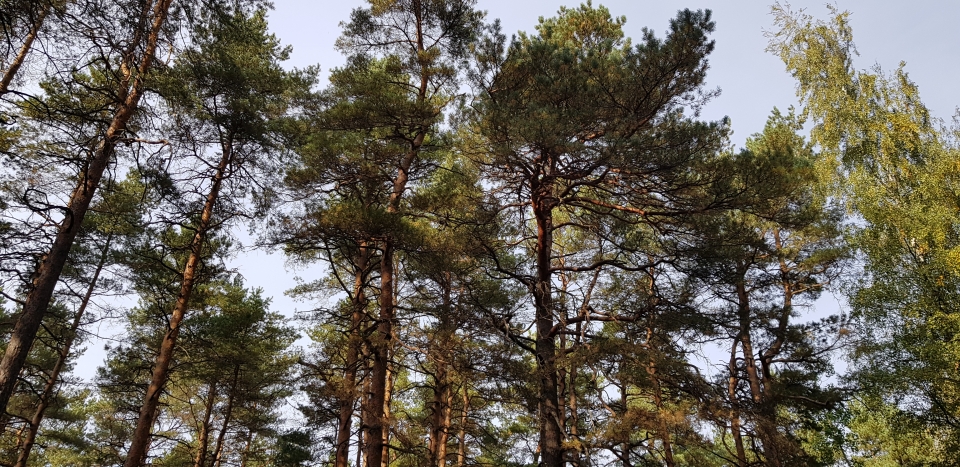
“Rīgas meži” is in charge of the Large Cemetery...
I have met with friends of the Large Cemetery several times. We must be grateful that and how they have acted so far; I perceive this association as our support, not as an opponent.
... and Uzvaras Park. How do you like the idea of a concert hall in this park?
In my opinion, a very good idea. Where to place it or build it, let the planners think. I haven't “placed” a concert hall in a precise spot in my mind, but – it is important – that it is easy to enter, easy to exit, that there is no overcrowding, and that the building “fits” well into the landscape.
This year, by the way, many Riga parks “turned” into concert halls. Vērmane Garden and other central parks have a high load, but... people live not only in the centre of Riga. Many events took place in Arkādija Park. In my view, as many Riga parks as possible should be “revived” in this way. By the way, this matches our concept of the Green Class, because it is not a closed territory with one building, but all “Rīgas meži” territories, including parks and gardens, should be considered a Green Class. We already have audio guides in three parks, and soon there will be one in the fourth. The Green Class is our story and thoughts on how to coexist with nature and how to return to it what was taken.
Green Class activities are possible both in the park and indoors. For example, this winter...
The previous winter was wonderful for being outside. But, speaking of possibilities and accessibility, we are currently working to make the Green Class farm building in the Ogre area more accessible. The project did not include, for example, a toilet for disabled people; this mistake has been corrected. A procurement for the completion of the project has been announced. In the spring of 2022, we hope to open the entire Green Class complex. The project is not being put aside, it will continue.
Staff turnover. “Zemeunvalsts.lv” received a letter from former employees of Rīgas meži, which had been sent to the Ombudsman, Riga City Council deputies, and the State Labour Inspectorate.
First of all, what I want to emphasise is that industry colleagues have already praised us for the fact that we will henceforth take on logging as an outsourced service.
Speaking of the mentioned letter from 38 people (1), I have no data on the indignation of specifically 38 people. Since the dissatisfaction is expressed publicly without signing the letter, I assume the situation is different. The current board started working from 19 March. Some employees still have fixed-term contracts. Some employees explained that they do not see themselves in the new “Rīgas meži” philosophy. We have parted ways with these people by paying out the compensation provided for in the collective agreement, which is very strong at “Rīgas meži”. Yes, there have been people who could not accept our new strategic goals but wanted to continue to be (not “work”, but “be”) in the company! And there is only one single person we have fired for loss of trust by the employer. From experience, I can say that when company management changes, it is normal that some employees do not want to continue working. There are people who cannot endure the new work tempo, which has undoubtedly increased in the company. Decisions and reasons for leaving work are different.
The processes taking place in the company are evaluated by both the Ombudsman and the Labour Inspectorate. From the latter, we have received support for the current changes in the company. I can say that no settling of scores with long-term “Rīgas meži” employees has taken place. A normal process has taken place, which is associated with the change in company management. Looking from my own experience, I will add that the process of change at “Rīgas meži” is perceived more sharply and painfully!
Clear! So the Ombudsman has been informed by both parties involved. Does the phrasiness and vagueness of officials when explaining the whistleblower's report at the RD management press conference bother you? (2)
That is exactly why the Riga City Council audit report was published on our website, redacting the parts that would affect the data security of private individuals. Anyone can read this report and understand what has been said and what has not.
The words “green Riga” sound more often in political conversation than “Hello!” When asked to explain, the politicians answer: a green Riga is a green Riga...
We can tell you what our capital share holder means by “green Riga”! A green Riga: prioritises cyclists, pedestrians, and public transport, relieving the city of personal (light) vehicle traffic as much as possible. Mobility points are being created in the Riga area (arrive, leave your vehicle, and get on public transport). One of these points, by the way, is planned in Berģi on “Rīgas meži” land.
A green Riga – there will be more plants in areas where one is used to seeing vehicular traffic. Riga needs as fresh air as possible because it is a serious capital city problem even at the European level. I must say, in everyday work there is no time to pay attention to the phrasiness of politicians. We are given tasks by the capital share holder, by the Housing and Environment Department, and we carry them out.
We are preparing a social campaign “Let's protect and clean up the surrounding environment!” to remind every resident of Riga that our common property – parks, gardens, forests – is everyone's responsibility. If you see someone dumping trash, don't exactly run over to fight, but: take a photo, call the police, report it! You must answer for a violation. The sense of impunity is already problematic.
What politicians cannot explain, doers of work can. Speaking of cleanliness, we must again touch on the waste problem (question) – ZAAO copes with this quite successfully in Vidzeme. For example, stories about waste found in the forest, in which a purchase receipt is found, and also the shameless buyer who littered the forest... In this Latvian region, one fears dumping or throwing things in the forests...
It is a large and heavy job, which everyone really must tackle. The perpetrators must be caught and shown, etc., so that others who have the intention to dump an old stove in a park understand that their time has passed! Society must mobilise to solve this issue.
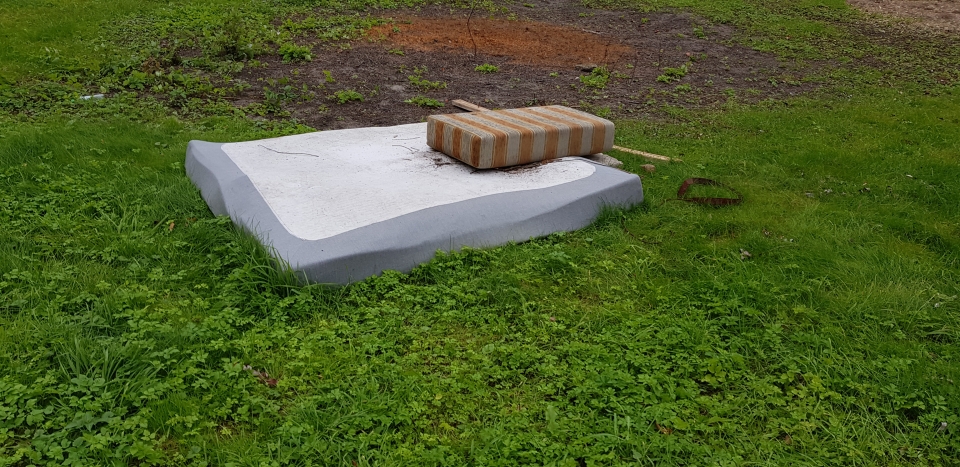
I will again mention Tukums, where in waste dumped in the forest we have even found delivery notes, the photo of which we sent to the municipal police. Of course, to find and punish such perpetrators, resources are needed, which are not always available. It is often easier to clean up or tidy up yourself. But if we do not start looking and demanding accountability, little will change. The Vidzeme experience is very good and correct.
By the way, Riga neighbourhood associations are developing and taking care of their territory. I hope they will be a good and strong support for us in this work.
Another problem in Latvia: as soon as any entrepreneur gets active for action, activists, signature collectors appear...
Yes, that is so... (sighs)! One must look at this normally, however, because social involvement is important, one cannot do without it. I think that the planned goal and benefits should be explained much more carefully and understandably to the residents. Why does signature collection start? In my opinion, also because the entrepreneur at some point has not been able or has not known how to talk to the locals so that both understand each other.
I have already experienced something similar when starting work at “Rīgas meži”. I was informed that the neighbourhood representatives are “crazy people with whom one cannot reach an understanding”. Upon starting to talk, a completely different impression has been formed. It is important that the leaders of the neighbourhood associations are able to pass on our message or news understandably. Talking is never easy; one must know how. We are trying to do that and will continue to do so in the future.
When is the competition for positions on the “Rīgas meži” board expected, and do you plan to participate in it?
I think the competition will be announced very soon. Three people will work on the board. Yes, I plan to participate! The time when the new Board will start work will depend on the progress of the competition; I assume – by the end of the year there should be clarity.
Concluding the conversation, have I understood you correctly: “Rīgas meži” will continue to be a capital company that will work and earn money.
In order for us to ensure non-financial goals, of which we have many and various, we must work and we must earn. The answer is – yes!
Used a photograph of “Rīgas meži” and photographs taken in territories managed by “Rīgas meži”, except for the photo with the mattress, which was taken in Riga, but is unrelated to “Rīgas meži”
1. We are talking about a letter from “Rīgas meži” employees addressed to Riga City Council deputies, the Ombudsman, and the State Labour Inspectorate. About this can be read: https://www.zemeunvalsts.lv/-rigas-mezu-bijuso-un-vel-esoso-darbinieku-vestule-
2. We are talking about Riga City Council press conferences on 19 March and 6 May 2021