



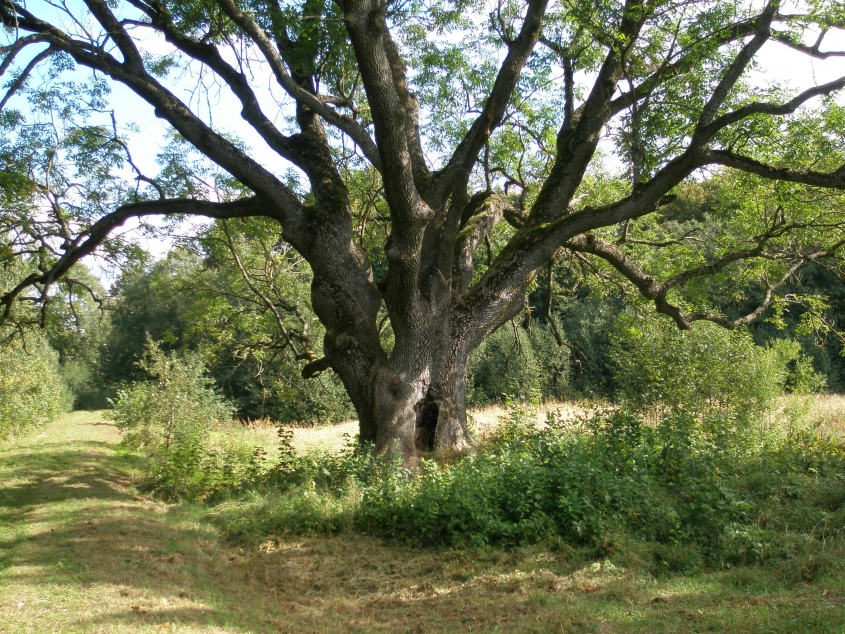
An interview with Jānis Eglītis, Parliamentary Secretary of the Ministry of Environmental Protection and Regional Development
It is essential to maintain a balance between nature conservation and economic activity. All processes related to these developments must be viewed as a whole; one cannot choose a single topic or problem to solve without affecting the entire system.
People need a clean and well-maintained environment – and it is up to every one of us to take care of it today so that our children can live in a green, well-maintained, and clean land in the future. When talking about preserving environmental quality, think about the "green" things you do yourselves or that are happening around you. Without economic processes, such as dairy production, your perhaps favourite morning coffee with milk would not be possible. Also, when using the milk you have bought, it is essential to take care of the proper disposal of the packaging. Yes, waste sorting! Namely, if those engaged in economic activity look after environmental requirements in their business, and if each of us makes our daily life greener and more eco-friendly, by joining forces we can not only create an ever greener society and country, but also be leaders on a European or global level. That is exactly why I want to emphasise that a comprehensive view of interconnected matters is necessary! We must create or seek complex solutions so that daily processes do not stop, while at the same time becoming increasingly environmentally friendly.
When talking about environmental protection, discussions about forests are often initiated – a fact little known to the public: in pre-war Latvia, forest areas were significantly smaller. It cannot be said that forest areas are shrinking and shrinking...
One problem can be observed in forests – a portion of the forests is ageing. It is difficult to find economic value for these "old" or over-mature forests, and people rarely touch them for economic purposes.
A peculiar situation is emerging – the documents show that agricultural land areas are increasing in Latvia, including the fact that forest areas are actually increasing. It is necessary to address the question: what to do with ageing forests? This is also an important issue from the perspective of carbon dioxide emissions, as the biological processes of old forests can cause problems in the future.
How did this situation arise? During the years of the Soviet occupation, many things were left neglected, and over-mature forests are one of them.
There is a belief that a forest is something like a park – well-maintained, clean, and transparent. A forest is not a thicket.
Nowadays, the forest must also be looked after – it must be managed. By management, I mean felling, maintenance, and ensuring sustainability. A full-cycle forest is a forest where seeds are sown or young trees are planted, and, let us say, after 80 years, the grown forest is felled to start the cycle anew.
There are forests where this is not ensured. Both brambles and thickets could form there. If these (cyclical) issues are not addressed for a long time, one can end up in quite serious trouble. Our neighbours in Poland have encountered such problems in the Białowieża Forest. The situation in this protected area shows that one cannot leave a forest unmanaged and uncared for; the aforementioned cyclicity must be ensured. We can only learn from this, unfortunately, bad experience of our neighbours.
Are we talking about a bark beetle attack?
A pressing problem in Białowieża is the beetle – the eight-toothed spruce bark beetle – but the problem situation developed over a long period. It cannot be said that the Białowieża forests are unmaintained. We must talk about the balance mentioned – as soon as the natural balance is broken or is interfered with, it affects the further stages of the life cycle.
Is the desire to isolate birds and animals from humans by any means a case of overreacting to their need for silence? Over the years, we get used to them and they get used to us.
Of course, each situation must be looked at separately, but the trend mentioned in our conversation – that forest areas are increasing – must be taken into account. Currently, large areas of forest in Latvia are directly or indirectly owned by Scandinavian pension funds, whose goal is to ensure that the land and the forest generate money. This would be one reason why forest volumes are maintained or even increasing. The lands owned by the aforementioned Scandinavian funds are often converted (agricultural land into forest land), forests are sown or planted, and the forest life cycle is created, which we spoke about earlier. However, the reduction of forest land areas should not be carried out artificially. It would not be wise to encourage the intensive felling of forests to create something else. We must act economically and responsibly – thinking about the future! This will ensure everything humans need – a clean environment, wood for economic use, recreation for families, as well as the feelings and experience a person is able to gain by getting to know nature.
You know, someone once asked me if the specified environmental requirements were perhaps too strict? I suppose that in one area or another, yes, but I believe that requirements must always be supplemented and expanded, taking into account the rapid development of global and national processes. For example, Japan, in response to the ban on the whale trade, decided to hunt whales for scientific and commercial purposes, and whale meat is once again available in shops. That is not a sustainable solution, because, in my opinion, these are two contradictory decisions that do not solve the problem at its core. 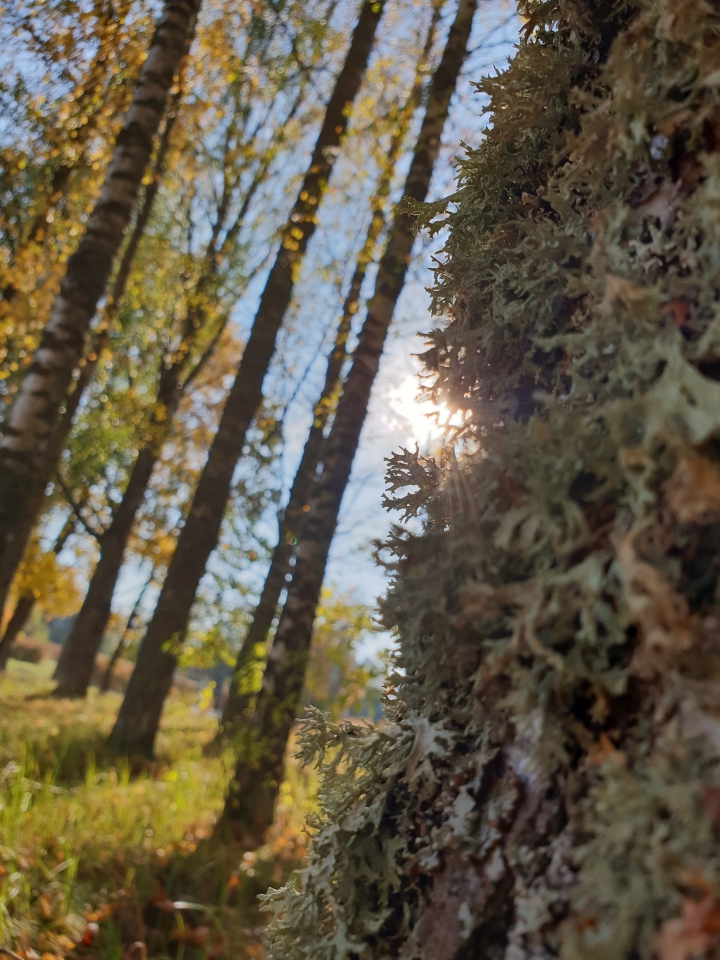
When talking about protected areas, it often happens that as time passes, the protected bird or plant is no longer in the restricted area. It has "moved" a bit further away, where the restrictions do not apply. How often are protected areas inspected – is what is recorded in the documents still found in nature?
The "nature census" is still ongoing, during which we will gain a clear view of the situation and carry out a kind of inventory – what habitats and what restricted areas are necessary, what and where things are located, and what grows and lives where. Many people fear the nature census, believing that something will be found on their properties that was not there before. To those who are afraid, I can safely say – there is no basis for fear! There will be many areas where what was there years ago will not be found; where something new is found, a balance must definitely be struck between economic activity, its necessity, and the preservation of nature values! Such an inventory of nature objects has not been carried out for at least 20 years. Therefore, I believe it is valuable and will make a significant contribution to the Latvian people and environment!
Could a more reasonable system be one where if an owner knows that a protected bird lives in their territory, they report it, and the response from the responsible authorities is swift?
I know people who would definitely report such a find and in their own way look after everyone living in the territory, but not all members of our society, unfortunately, are like that. There are quite a few people who try to act contrary to laws and regulations just to make a higher profit. Because of such people, greater burdens also fall on those who monitor and care for what is happening on their own property.
Restrictions and compensations. How to reconcile them? As more than one forester has said: "a forest owner should work and manage the forest, not sit and wait for compensation!"
There used to be so-called "armchair farmers" who would mow meadows, receive subsidies, and live quietly. That was not right.
Speaking of the compensation mechanism – if a person truly has legal restrictions on managing their property, the compensation must be such that the person retains the desire to keep the property rather than sell it on. What is not gained from economic activity must be compensated. At the same time, the owner must maintain the forest, keep it in such order that, at the very least, bark beetles do not multiply and other problems do not arise. On the other hand, the compensation mechanism in the case of partial restrictions must guarantee: the compensation must not be lower than the income from economic activity. Here, every case must certainly be evaluated individually. And – the compensation must be fair. Not just legal, but also fair! A person must be interested in managing their land and keeping the property in order.
Have the "armchair farmers" disappeared now?
Currently, there are changes in place for receiving European funds, and such farmers no longer exist!
Has the ministry compiled information on the heritage of the Soviet era – chemicals, warehouses, etc.?
The legacy of the Soviet era is found or discovered from time to time. The biggest problems we are informed about are in the Baltic Sea – the ships sunk there still "store" oil, petroleum products, explosives, and poisons, which can end up in the ecosystem and further along the food chain, affecting us as well. There are also so-called buried legacies, which are found not only in the form of explosives but also as chemicals. The gudron ponds, which have been much discussed and deliberated upon, are a true Soviet legacy. Cleaning them up costs millions, which should be covered by the union's direct successor, Russia. A similar problem exists in Jelgava – in the territory of a former boiler house where diesel fuel was stored; it has soaked into the ground and remained there. At a depth of 7 metres, the soil is contaminated. We discover such places in Latvia from time to time.
There is no plan or methodology for how to discover such places and learn about them systematically because there is no clarity on how to work with it all and which end to start from. If we were pointed to every place where something crazy happened in Soviet times, we would lack the capacity to investigate it, let alone the funding that would be necessary to rectify all these "legacy" problems immediately...
Not so long ago, a European project was implemented in Latvia to return once-straightened rivers to their old riverbeds – Slampe, Dviete... We have quite a few straight, geometrically precise rivers...
Currently, nothing has been heard about such projects. Speaking of rivers, their beds tend to change regularly, in a natural way; if a river has been straight (straightened) for a while, now to start touching it again... Will we harm it once more? What should be done with small rivers? We must think about what to do with small hydroelectric power plants. How are the requirements for fish passages being observed? Formally, in documents, everything might be correct, but in nature, "correct" does not always work. The flow of the current is disturbed or changed. Small HPPs should be considered an economic opportunity of a specific moment, which the people who saw it realised, and through the mandatory procurement component (OIK), they are still receiving money. We must think about how to organise this so that it is economically justified and beneficial even from a general, state-wide perspective. For the owner of a small HPP, it is undoubtedly profitable. Is it profitable for society as a whole? ...that is already another question.
The slow overgrowing of lakes is a serious future problem in Latvia. A project has currently been written for the cleaning of a part of Lake Alūksne... Is anything known about other lakes?
I would definitely divide this issue into two parts. One – the project for cleaning Lake Alūksne, and once that is successfully completed, we will get a clean lake. Second – who should do this, namely, the cleaning of lakes. Currently, the money we can direct towards territory improvement, fish breeding, and ensuring fish diversity is being spent on everyday things. Are municipalities prepared to carry out the cleaning of lakes and other water bodies regularly (on a daily basis), or let the water body overgrow while waiting for European or other fund money to be dedicated to cleaning? Is it right to fight only the consequences? It would be reasonable to get to the causes in time, to prevent them, rather than regularly trying to eliminate the consequences. Are municipalities doing what they are supposed to do? In discussions with the Latvian Association of Local Governments, we are asked to name the functions or duties that municipalities are not fulfilling. Looking at the list of functions and analysing them, we tick the box. How well-founded is this "tick"? How many municipalities in Latvia have started cleaning lakes? In my opinion, these are works that municipalities must perform themselves; we cannot write every little detail or action into the law, and that is not necessary at all.
Not so long ago, I heard a story on Radio SWH that "Latvijas Valsts meži" had decided to remove waste containers from recreation areas because waste management costs a lot. One – if people have decided to go to a recreation area, it is natural that a container to dispose of waste is necessary. Two – this issue should also be handled by the municipalities. It is the municipality's resident or a visitor from another municipality; when visiting, they leave a certain amount of money, and there must be possibilities to dispose of waste.
This issue can also be viewed in two ways – I think the majority of society has been brought up not to even think of throwing cigarette butts, bottles, or cans on the edge of a forest, by a trail, or anywhere else – not in a waste bin. Another thing is whether and how the possibilities for waste disposal are provided. I do not consider that containers must necessarily be placed by all forest roads or paths, but in places popular with recreationers and travellers, there must be bins, and there must be someone who manages them. Of course, it is expensive, but one cannot invite or lure people to a recreation area without spending anything... It is the task of the municipalities!