



A few years ago, we spoke about habitat mapping (1) and the organisational issues associated with it, which left more than one forest owner dissatisfied. Stiga RM created and distributed an audio clip (2) at the time, calling on landowners to carefully monitor the work of the mappers. The audio message angered some public officials, but, as it happens, in 2021, while delving into the final report draft of the habitat mapping, we concluded that the warning had been timely and appropriate.
If we talk about our audio message, which we also aired on the radio, so-called 'greens' or environmental activists acted very actively against us. I agree: we made a mistake in the text of the message, namely, the Nature Conservation Agency (DAP) does not create protected areas and micro-reserves, but proposes their creation. It was our mistake to say that restrictions are determined or imposed by the DAP; legally, this is done by the State Forest Service. The DAP are the proposers. What do we see now? In 2019, we spoke about the situation loudly enough, saying that the landowner's tolerance is quite high—that is, the owner will say: 'Don't shout, don't scream, it will be fine...' In 2021, we already encountered a situation where many representatives of the forestry sector and farmers (landowners) were unpleasantly surprised by letters received regarding findings on their properties. Theoretically, a forest owner can manage their forest areas, but they cannot sell the timber obtained with an FSC certificate, which creates huge problems. It is a tangible restriction. How the situation will continue or resolve, we do not know. Of course, we are waiting for the ministerial discussions to end, we are waiting for decisions, but it is tragic to realise that our country and our people are being robbed in this way.
Industry colleagues praise Stiga RM for its active participation in the habitat mapping process on its properties. It is mentioned that mapping with and without the owner's presence differs in substance.
Exactly said! In the first year of mapping, our participation was refused; that year, whoever wanted to walk through our properties did so, whenever and however they wanted—we were neither informed nor consulted. We were not satisfied with this situation; we wrote letters and objected. A year later, we were able to participate in the inspection of our properties and actively used this opportunity. It is true, however, that situations occurred: an expert arrives, there is still 200 metres to walk to the forest, the area to be inspected hasn't been looked at yet, but the opinion is almost ready: 'You have a habitat there.' Colleagues who participated in the area inspections (all have forestry education) successfully engaged in discussions: what is a high-value habitat, how was it determined, etc.? We definitely managed to 'get' 50% of what was planned to be included out of the mappers' intentions. If we saw that a habitat truly existed, we did not argue. Our goal was not to 'not count' habitats, but to ensure openness and fairness in the process, so that where the high natural values found and substantiated by the expert exist, they are preserved. We are an FSC-certified company and have never said that all forests and all areas must necessarily be harvested. By no means! It is important that the expert is able to both assess the natural values and justify their assessment. As a company manager, I can say that the qualifications of experts and their understanding of nature vary greatly. For a number of experts, the expert certificate issued is questionable.
A 50% difference does not mean that a capercaillie, a lesser spotted eagle, or a black stork has now disappeared from the properties.
Of course not! Talking about nests—they are still in their places; the birds are still settling there and nesting. We have objected to the scale of the restrictions, considering that the protected areas and their buffer zones are unreasonably large. The mapping process itself involved less of the birds' or animals' habitats; it was more about the existence of other high-value habitats. When talking to a mapping expert on the spot, in the forest, it has happened that their assessment lacks justification.
Covid, two years, and business. How has it gone?
We have done quite well; we escaped the clutches of Covid with a light scare. In the company, we have very organised and thoughtfully followed all epidemiological requirements. Work has effectively been reorganised so that employees feel safe in their workplace. For example, we minimised face-to-face meetings and similar activities, started issuing work tasks electronically, etc. We experienced two small outbreaks of the illness in the company, which we dealt with successfully. Of course, we are still following all precautions and rules.
As an entrepreneur outside Riga, how do you assess the government's work—what has been done very correctly and precisely, and what should be called a serious mistake?
If we look back, the problems caused by Covid started at the beginning of 2020. That was when the government's grant allocation for exporting companies for turnover decline was timely and very appropriate. (I am talking about the second quarter of 2020.) This support (grant) helped a lot. At that time, we had started one of the company's development projects; we had the funds for it in our account, but... in March 2020, sales 'slowed down' very significantly, i.e., customers 'paused' collecting ordered products, which significantly affected the company's cash flow and further development opportunities. The government's action, as I said, was very timely because, for example, we got a relatively small amount, but it allowed us to continue and not slow down the intended projects. Looking further—in the 2021 perspective—this support was very decisive in order to increase production capacity, quality, and volume.
If we talk about the government's unsuccessful actions, we must mention the end of 2021, when entrepreneurs had to suspend unvaccinated employees. It seemed that state institutions did not trust us, the entrepreneurs, thinking that we would not be able to ensure an epidemiologically safe working environment. This decision 'hit' us hard, because we had to reorganise unplanned. What happened? After 15 December, we were unable to provide full production shifts. Currently, the situation has normalised, but from 15 December to 3 January, the factory did not work at full production capacity. Unfortunately, in other areas of our operations, we were also forced to suspend perfectly healthy employees who, for reasons known only to them, refused to be vaccinated.
If the situation has normalised, did people decide to get vaccinated, or did you have to look for new employees?
Some decided to get vaccinated, others had to be replaced by training new employees. This situation harmed us as entrepreneurs to a certain extent because it all required quite significant funds.
Is the company delving into the European Green Deal documents and climate neutrality requirements?
If we look at our factory, last August we began a large, extensive audit conducted by a Finnish company—regarding opportunities, energy—a total of 20 important issues were audited. We carried out the audit on our own initiative, thinking about how to develop production and do it greener, how to maximally use all the energy we are able to produce. We looked for auditors who would study both wind and solar energy, who knew how to use heat and flue gases, steam condensate, and other residues of the production process, and who would recommend how to do it more efficiently so that we 'release as little heat into the air' as possible, how, by effectively organising heating (in our case with wood chips), we could reduce CO2 emissions. We continue to analyse the results; we received the first auditor conclusions in November. What we had to be sad about (this is an important conclusion)—in Latvia, we did not find a single auditing company capable of analysing the obtained data and providing recommendations. For entrepreneurs in Latvia, this is a free niche. I think this topic will be very topical for more than just the next decade. We will definitely get down to increasing the company's energy efficiency—we are planning the design this year, and construction next year. If we speak about the factory, the first five tasks to be performed are clear.
As is known, Stiga RM also has a forestry department. For the company to be climate-neutral, in the future, we plan to provide for not only our own factory but also others through CO2 emission sequestration. We look at this positively because we are a good example of a CO2-sequestering company.
At the end of last year, one could read online about the largest forest property transaction in Kurzeme.
Yes, in one transaction at the end of 2021, we managed to purchase 223 hectares! We are very proud of that; during the transaction, we competed with foreign investors. This is our most powerful transaction in recent years; at first, there were many interested parties, but the owners had specific conditions, etc. The land and forest remained in the hands of a Latvian entrepreneur.
So there is a plan to increase the area of forest property.
We have done so within the limits of our possibilities, while simultaneously investing in and developing the factory in Kuldīga. Last year, the large investments in the Kuldīga factory concluded. Of course, there is still plenty to do there, but in a much smaller volume. Over the last three years, we have quite actively been purchasing properties; I won't say the exact forest area in hectares, because agricultural and other types of land have also been purchased. The first three property purchase transactions have also been concluded this year.
How is the agricultural land used?
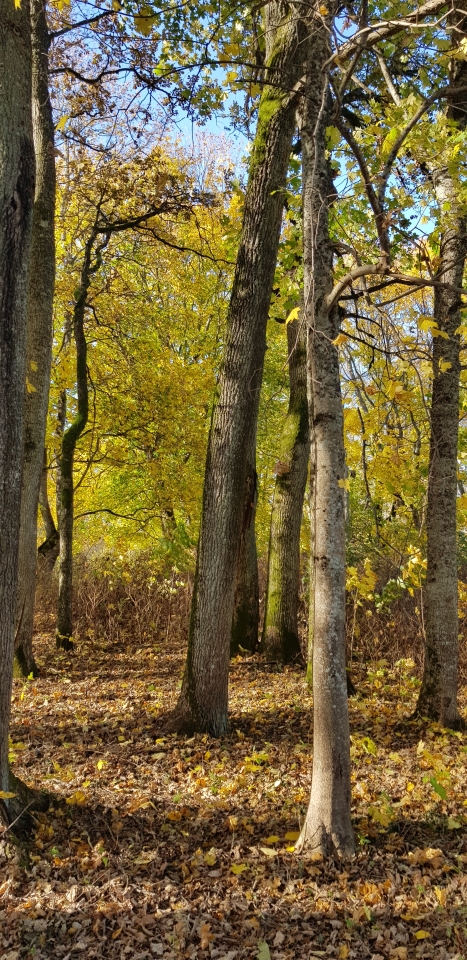
We manage to successfully lease out the agricultural land; every year we afforest some areas—last year it was 50 hectares. There is still agricultural land that is located in the middle of the forest. Farmers are not prepared to lease or use such land because there is a very high density of forest animals in Kurzeme: what is sown, what grows, gets eaten. In such places, we plant forests. Speaking of the other lands, we have excellent cooperation with several dozen farmers who successfully manage the company's agricultural land.
Other company plans...
This year, we will most likely start the construction of a new factory in Tukums Municipality.
Has anyone rushed to collect signatures to object to this?
That would be futile, because the factory will be built in an industrial zone; we already have a building permit. Since the primary product is and will be timber for export, I don't see any problems in this regard.
The market situation in recent years has often surprised even experienced entrepreneurs.
If we look at that (the market situation), starting from March 2020, the beginning of the pandemic—there was uncertainty and product prices fell. The situation changed in the autumn of 2020, when the market recovered; several countries invested sharply and heavily in construction, which, by the summer of 2021, created a situation where prices for all timber products almost doubled. Currently, prices have 'calmed down' but have still not returned to the level they were at before Covid. Most likely, if we look at the pre-pandemic situation as the baseline, the current 'new normal' is +20% on the prices of that time.
The leap in electricity prices affects everyone.
Of course, it affects the company quite seriously. The increase in the value of by-products—wood chips and bark—does not compensate for the dramatic electricity prices. If we compare August 2021 with December 2021—the increase in these prices is 3.2 times. This is very significant and makes up a large part of the cost price. We are still in the black, but the 'comfort zone' has shrunk. We are not howling, we are not desperate, but...
Speaking of switching energy sources (from fossil to renewable), what would be the most advantageous source in Latvia?
Latvia's population density is so excellent that we could safely use wind, which is one of the greenest energy providers. Thinking as a nation, long ago—several governments ago—decisions should have been made on the wider use of wind energy. If someone doesn't like it, if someone says it ruins the landscape, if... one must remember: the common good is more important than the inconvenience of a single individual. Concerns about potential decisions to support wind energy can be felt on the side of those political entrepreneurs who, to a certain extent, are braking the development of wind energy. They try to justify this with the story about OIK2, OIK3, OIKX, but... there are a number of entrepreneurs who are ready to act without any support or subsidies. In Scandinavia, this has been happening for years. There are entrepreneurs who do not receive subsidies but pay small fees for ruining the landscape or for inconveniences. I see problems in the Latvian political environment, because there are entrepreneurs who trot off to politicians to prevent something that would be in the public interest.
The administratively territorial reform implemented last year. Does it affect work in any way?
The entrepreneur feels it. A wider municipality has wider possibilities. It is evident that the newly created municipalities have not fully reorganised and integrated; for example, the harmonisation of social services, which differed in what are now former municipalities, has not happened. Comparatively—the municipalities still work like five separate fingers, not as a united fist.
A few years ago, in an interview, we spoke about a building you planned to construct in Kuldīga, against which signatures were collected.
Last week, we 'revived' this issue by submitting a request to the Kuldīga Municipality Council to allocate land for the construction of an apartment building (though in a different location than we previously thought) as close as possible to our factory. 50-70 apartments are planned. Let us hope that this intention will be supported. If what is planned succeeds, we will most likely implement something similar in Tukums Municipality. We have the opportunities to attract labour, but at the moment we cannot provide or offer living space. Looking to the future, the migration of residents from rural parishes to cities will continue. If there is no place to live in the respective city, a person looks for opportunities elsewhere. It is good if they choose another city, but they can also choose the easier path—go away, where comfort is immediately offered, the person feels needed and wanted.
1. https://www.zemeunvalsts.lv/vai-dzivojam-briva-valsti-uznemeja-sajutas
2. https://www.zemeunvalsts.lv/uzmanibu-esiet-piesardzigi-
Photographs by Micah Boerma, Stiga RM and zemeunvalsts.lv used