
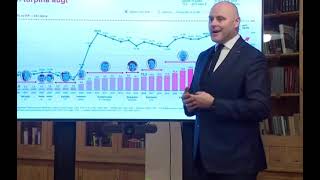
European Parliament President Roberta Metsola has emphasised the importance of a bio-based economy for European competitiveness and autonomy. The European Parliament is prepared to defend research and innovation funding in the upcoming European Union budget negotiations, R. Metsola pledged in her speech at the “New Wood” – Uusi puu exhibition, created by the Finnish Forest Association, which showcases existing bioeconomy solutions.
“We need more funding for research and innovation. This issue sometimes disappears from our agenda, and it is vital to bring it back to the forefront. You can count on this Parliament to champion innovation in the upcoming long-term budget negotiations,” said R. Metsola, stressing that investments in the bioeconomy are mutually beneficial – they make companies more competitive, create new jobs, and reduce pressure on limited resources.
R. Metsola praised Finland as a pioneer in developing renewable wood alternatives: “In your land, with its abundance of forests, you [Finns] are putting one of our richest resources to use and paving the way for a more resilient and sustainable Europe.”
Bioeconomy solutions are already on the market
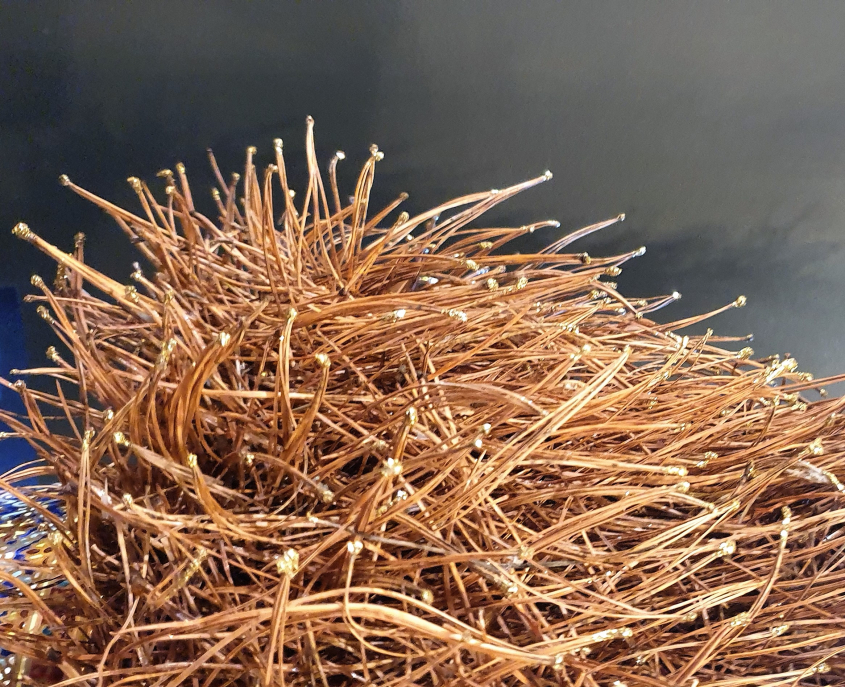
The “New Wood” (Uusi puu) exhibition, which was on display in Strasbourg during the November plenary week (23–25 November), demonstrates the versatile applications of wood, cellulose, lignin, and other forest industry by-products. Dozens of product examples show how wood-based solutions are replacing fossil-based materials in packaging, construction, hygiene products, textiles, and the chemical industry – ranging from a dress made using wood from sunken ships and acoustic panels from timber offcuts to a car tyre with a wood lignin filler.
The exhibition's patron and Member of the European Parliament Katri Kulmuni pointed out that bio-products require political stimulus: “Currently, we see attempts in the EU to hold back the very development that should be encouraged when it comes to bio-products. Ideally, the extraction, processing, use, and recycling of a product’s raw materials would take place entirely in Europe. This would strengthen the economy, create jobs, and improve our strategic autonomy.”
Finnish Minister of Agriculture and Forestry Sari Essayah emphasised that Strasbourg is the right place for such an exhibition because it is in the European Parliament that decisions regarding the future of biological materials are made. The exhibition has previously been visited by European Commission President Ursula von der Leyen in Brussels and by King Charles alongside Finnish President Alexander Stubb in London. As project manager Virpi Korhonen noted, the high level of interest proves that policymakers need concrete examples to facilitate the practical implementation of the bioeconomy.
The innovation potential of Latvia and Finland in the forest sector
Although Finland is a global leader in the commercialisation of bio-products, Latvia also possesses a strong scientific base. Both countries share a common goal – to move away from the export of cheap raw materials (roundwood and low-processed sawn timber) and to gain higher added value from every cubic metre of wood without increasing harvest volumes.
Finland has created a large-scale industrial biorefining ecosystem, primarily specialising in innovative textile fibres, such as Spinnova and Ioncell, smart food packaging Metsä FreshPack, and biocomposites. This development is driven by close cooperation between the Technical Research Centre VTT, Aalto University, and the research centres of large forest groups such as UPM and Metsä Group. In the practical market, this has already resulted in products like car tyres with lignin filler by Nokian Tyres and UPM, acoustic panels from production by-products by Fiberwood, and wood hydrogel cosmetics. Finland's main challenge at present is the restrictions on forest resource use imposed by EU legislation and the tightening of tax controls on primary processing.
Latvia, in turn, stands out for high-quality wood chemistry, biopolymers, innovative thermal insulation materials, and modern timber construction (CLT and LVL panel production). The main drivers of innovation in the country are the Latvian State Institute of Wood Chemistry (LVKĶI), the Latvian State Forest Research Institute “Silava”, and Riga Technical University. Latvian scientists have created world-class solutions such as cryogenic insulation for the space industry, lignin and cellulose biopolymers, as well as fungal mycelium and wood composite materials. However, alongside the fight against restrictive EU regulations, Latvia’s biggest challenge is the slow transition of scientific discoveries into large-scale industrial production, which is hampered by a lack of investment and processing plants.
What should Latvia do and how?
Latvia must work closely with Finland, Sweden, and Estonia in EU budget and legislative negotiations to defend research funding and prevent excessive regulations that hinder the use of wood as a substitute for fossil materials.
Technologies developed by the Latvian State Institute of Wood Chemistry, such as the application of lignin and micro/nano cellulose, are world-class, but Latvia must purposefully attract investment to establish industrial-scale biorefining and deep-processing plants.
Increasing the visibility of Latvian bio-products. Similar to Finland's Uusi puu initiative, Latvia must create a joint national and industry stand or a travelling exhibition for EU institutions to demonstrate Latvia's achievements in timber construction and wood chemistry.
Green public procurement must be a market driver. The state and local governments must stimulate demand for local innovations by prioritising bio-based construction materials, packaging, and everyday goods in their procurement processes.