


Due to trade issues and geopolitical shifts, Canada is increasingly looking across the Atlantic. While Ottawa is promising billions of dollars in investment to become a strategic partner for Europe in energy and the supply of critical raw materials, customs tariffs imposed by the USA are forcing Canadian timber producers to seek new markets in Europe, creating direct "competitive stress" for producers in Northern Europe and the Baltics as well.
Gas and hydrogen – ambitious plans and market reality
During a visit to Berlin, Canadian Prime Minister M. Carney announced plans to attract multi-billion investments in energy and port infrastructure to strengthen cooperation with Germany and other European countries. Although Canada has already opened a liquefied natural gas terminal on the west coast for deliveries to Asia, exports to Europe require new infrastructure on the east coast – including the expansion of the Port of Montreal and the construction of a new port in Churchill. Canadian Energy Minister T. Hodgson emphasises that the country is ready to supply the world's greenest natural gas, as clean energy is used for its liquefaction, and aims to become a major supplier of low-emission hydrogen to Europe in the future. However, energy analysts are cautious.
There are currently no LNG projects in the investment phase on the Atlantic coast, so actual deliveries to Germany are not expected before 2030. Europe plans to reach climate neutrality by 2050, and Germany by 2045. Experts warn that by around 2030, there will be a surplus of natural gas supply in Europe, which could make Canadian projects economically unviable.
Critical minerals – a shared goal to reduce dependence on China
Both sides see much better opportunities in the field of critical minerals. Germany and Canada have signed a declaration of intent to strengthen the extraction, processing, and recycling of raw materials. Canada points out that it can create the world's only complete supply chain for rare earth metals – “from mines to magnets” – outside of China, which is crucial for the competitiveness and security of European industry. This is also confirmed by three new memoranda of understanding between metal processing and mining companies from both countries – Vacuumschmelze and Torngat Metals, Enetrag and Rock Tech Lithium, Aurubis and Troilus Gold.
Timber market – a “silent threat” to Baltic and Northern European producers
While Europe sees Canada as an ally in energy, the situation in the forestry sector is much more strained. Traditionally, the European Union has not been the primary destination for Canadian timber, as approximately 75% of sawn timber exports went to the USA; wood pellets, pulp, and coniferous sawn timber are primarily brought to Europe.
The situation is changing rapidly due to the high customs tariffs imposed by the USA – now almost 35% – on Canadian coniferous sawn timber. As the world's largest exporter of coniferous sawn timber, Canada is forced to urgently redirect its products to other markets, actively looking towards the UK and continental Europe, where it has free trade advantages – the CETA agreement.
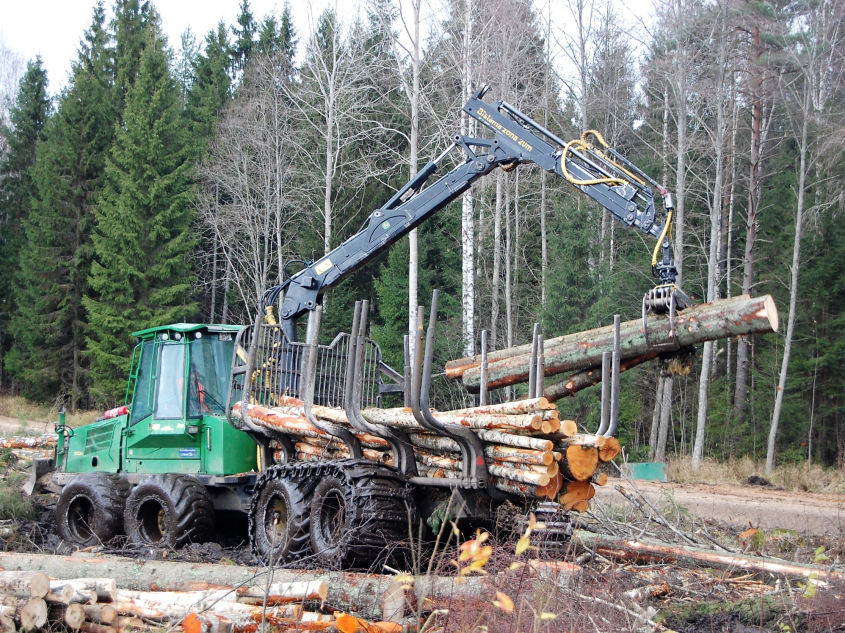
Forestry experts warn of several risks, as an influx of Canadian sawn timber into Europe could create direct competition for local sawmills, reduce demand for local sawlogs, and put pressure on roundwood prices. Sweden and Finland, too, may reduce exports across the ocean due to US tariffs and increase supply within Europe itself, further intensifying competition for Baltic exporters.
Although the rapid expansion of Canadian timber into Europe is currently being slowed by expensive transatlantic logistics, differing construction standards, and the strict EU Deforestation Regulation (EUDR), the trend is clear – the Canadians are looking for a new place in the global market, and European entrepreneurs will have to reckon with them both as a strategic partner and as a strong competitor.
Sources: European Union and global bioeconomy sector information websites