



You were recently elected chair of the “Silava” Scientific Council.
Yes, and before that I spent a dozen years as deputy chair of the council. The Scientific Council is a collegial body of the forest research institute whose purpose is to advance “Silava’s” scientific development. My motto is to provide data-based support for forestry, including for the dynamic changes it is going through. “Change” is the key word of our time. We feel the effects of climate change more and more, and there is a growing need for innovative, bold solutions that help forests and forestry adapt and also help us make use of the advantages that arise. The political environment is changing just as dynamically: the European Parliament adopts stacks of new documents, and it is important that we in Latvia implement their content wisely, in a way that fosters our country’s balanced development.

Change is also under way in the research environment, and competition is growing, as the results of the Latvian Council of Science’s calls alone demonstrate. In these circumstances it is essential to close ranks, to encourage cooperation within the institute, to work together on larger-scale initiatives, to support the growth of young scientists and to develop ways of supporting scientists-to-be – our doctoral students. In this respect the Latvian forest sector has the advantage of a doctoral study programme of its own, in forest science. Equally important is our involvement in delivering study programmes at other levels in forest-related fields, disseminating the results of our research and fostering cooperation with other institutions supervised by the Ministry of Agriculture and with forest sector participants and stakeholders.
Our previous conversation with you and Andis Lazdiņš* was very well received, both in the sector and at “Silava”. That is excellent, but... as you know very well, persuading fellow forest scientists to take part in a popular-science conversation on topical subjects is far from easy.
You are right, up to a point, mainly because researchers’ focus is and will remain research. But here too the key word is “change”. In recent years a number of valuable initiatives for informing the public have been launched and are continuing quite successfully – the “Silava” podcast, for example, which helps information circulate. Comparatively speaking, we are heard more, and what we say is published in a variety of information and news outlets. Of course, there is still room to do our bit and to carry information to a wider audience.
On the subject of the institute’s visibility, I think it is worth mentioning the IUFRO** congress held this summer. “Silava” was one of its organisers, and for the first time we had our own stand at the exhibition complex where the congress took place. Over the course of the congress there was great interest in us, in our work and in our research topics. I very much hope – and indeed I know – that this will continue to increase our visibility; what is more, we have already received several invitations from Scandinavian and Canadian research institutions to join project consortia. Those could be called concrete results of getting the information out.
The IUFRO congress. Can we speak of the international visibility and prestige of our forest science and our forest scientists, and in what terms?
Outside Latvia, given our scale, we are reasonably well known. Our participation in Horizon projects testifies to that, and we are participants in and leaders of LIFE projects too – where, incidentally, no one is invited without international recognition. If the invitations are there, and there are comparatively many of them, it is clear that we are known and valued. That does not mean we can rest on our laurels, though – it is essential to maintain and build on that recognition.
Your colleagues in the field of science – Latvia’s historians – sigh from time to time that their work tends to run from one project to the next, and worry that more than one successfully started piece of research may be left unfinished once the project ends. “Silava” has a whole series of long-term projects that we know well...
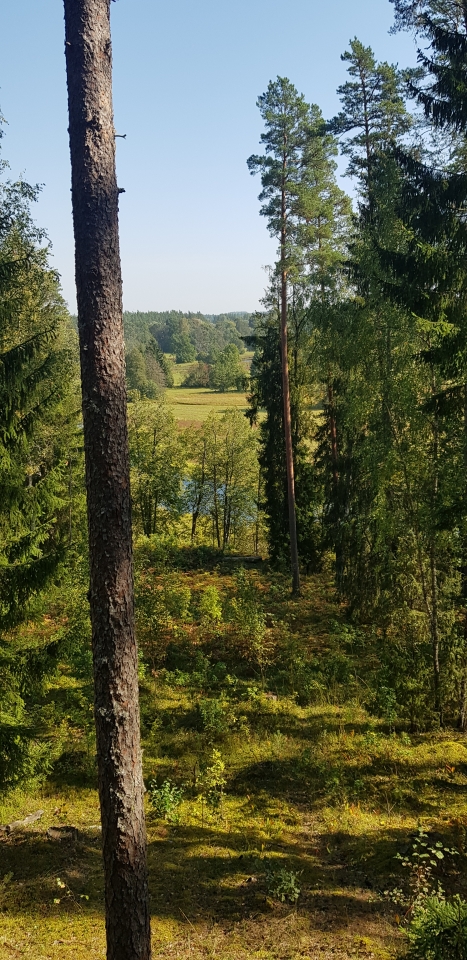
Yes, the forest sector, which works with long stand rotation cycles, also has a better grasp of long-term research. The far-sighted actions of its past and present leaders have created opportunities for cooperation in delivering, for instance, the National Forest Monitoring programme or the forest tree breeding programme, whose current cycle ends several decades into the future. Of course, many studies are shorter term – which is why the institute’s overall strategy matters, holding them all together like the scales of a cone.
A great deal of time goes into preparing applications, so we are looking for ways to make that more efficient. It is a pity when an idea fails to find funding, or when one source of funding ends and the next cannot be secured. But we are used to this way of working – we hang the idea up like a bath whisk in the attic and wait for the right moment to take it down and put it to use. There are cases where that moment comes only ten years later.
Scientists of the future. What is “Silava’s” cooperation with the LBTU Faculty of Forest and Environmental Sciences like?
I have already mentioned that two aspects matter in this cooperation – passing knowledge on to students, and forming the next generations of scientists. Some of “Silava’s” scientists-to-be do their doctoral studies at other Baltic universities, but the majority choose the Forest Science study programme, for which I have been responsible for eight years now. We cooperate with the Faculty of Forest and Environmental Sciences on research in various fields – forest landscapes, biological diversity and particular aspects of climate change mitigation, for example. By combining our competences we can assess in more detail how various forest growing questions also affect the properties of the end product of wood processing, which matter both economically and from the point of view of the climate change mitigation already mentioned. Both sides gain from mutual cooperation founded on respect and clear principles!
What research topics have the doctoral students chosen?
Very varied ones, matching the sector’s current concerns and, accordingly, the broader research topics of which the doctoral students form part of the team. At present most of the questions requiring a scientific solution or explanation come from outside – various European Union directives and regulations that are adopted, after which we consider how to implement them in Latvia. For example, one of the measures formulated at European Union level for maintaining biological diversity is identifying and protecting ancient forests. But what are ancient forests? They can differ substantially between countries and between climatic zones. What matters is not only the age of the stands but also the history of the area (continuity of forest cover) and a sufficiently large contiguous area, so that even under the dynamic influence of natural disturbances it retains those components of biodiversity for whose conservation the areas are set aside in the first place.
Another example is the Nature Restoration Regulation adopted this year, which states, among other things, that forests must maintain deadwood “at least in a satisfactory amount”. What does that mean? In Mediterranean forests, for instance, some of which we in Latvia would call pasture with scattered trees, it will be one figure; in our hemiboreal forests, another. Without research and data there is no arriving at such a figure.
Public attitudes to forestry are likewise both changing and being changed and steered – which calls for a more varied range of solutions for forest owners, for work on understanding these shifts, and for explaining the importance of forestry. Here both interdisciplinary scientific cooperation and cooperation with various media matter, for example www.zemeunvalsts.lv
Market changes matter too – monetary value is now attached to things that used to be taken for granted, such as clean air or carbon stocks. Solutions are being sought and found for where not only wood but also other components of trees, or of vegetation growing (or grown) on forest land, can and might be used. At the same time, requirements are tightening on the sources of these materials – forestry there must be balanced and sustainable, which is what the various certification schemes describe.

Turning from science to practical matters – this summer’s big question about “potentially valuable habitats”. We have lived through “key” habitats, “valuable” ones, “especially valuable” ones, “European specially protected” ones, European... and now we have arrived at potential ones. Is such excessively fine hair-splitting, bringing in a broadly interpretable qualifier like “potential, potentially” (that is, possible or possibly), scientifically justified, and is it not time to agree that there are habitats, full stop – rather than splitting, dividing, stretching or characterising them in all manner of ways...
The present situation could be described as chaos, and it is hard to judge where it has arisen deliberately and where through chance coincidence. In any case the chaos is considerable, and it is essential to put an end to it. Both so that the bioeconomy can function normally, make plans and forecasts, and attract investment. And all the more so that nature conservation itself can “improve” – moving on from the primitive stage of “just get more area” to a considered increase in the value of protected areas through various habitat management measures within the areas already set aside. Clearly defining a larger-scale network of protected areas and the overall percentage of protected territory is the foundation for ecological landscape planning and for dynamic protection at forest massif level, which is an effective, science-based and contemporary approach.
Coming back to the details of your question: if we consider the word “potential” ... then “potential habitats” means quite literally every forest in Latvia, and “potentially habitats” means all of Latvia’s fields as well – because without a human presence they will grow over with shrubs and later with trees. What is more, this happens fairly quickly – there is a good deal of land that before the Second World War was agricultural land and on which a habitat of European Union importance has now been recorded.
The cartographic layer of “potential habitats” that has now been created is not correct, because it did not even come from what was recorded during the nature census, but was produced at the desk – defining areas on the basis of their current forest inventory data. So we have not yet finished with Nature Census I, and, ignoring its results and the knowledge gained from it, we are about to start Nature Census II at the forest owners’ expense. Why do I say at the forest owners’ expense? Information about habitats, including possible ones, is used in forest certification (in FSC, PEFC and SBP alike, as a risk mitigation measure). Given the inconsistent use of the concept of “habitat” and the precautionary principle, de facto the areas in this cartographic layer are excluded from forestry for as long as it takes the forest owner to find a specialist who can survey them and determine whether or not they qualify as a “real” habitat. The situation with “potential habitats” therefore has a substantial social impact and places a disproportionate burden on forest owners, and it runs directly counter to the approach used in Europe in environmental protection, namely working “with” the forest owner rather than “against” them.
The weather of recent years – storms, heavy and prolonged rainfall, large hail – has periodically brought a problem to the fore: protected areas suffer considerably too... Everything in nature changes. After the huge downpours in Zemgale at the end of July, more than one colleague in the sector was furious to see what the so-called untouched areas now look like compared with those that have been sensibly managed. How do you, as a scientist, assess this situation? Does the upkeep of protected areas match the purpose for which they were created?
I would divide your question into two parts. Firstly, this confirms what our research has found and what our models incorporate – that with well-considered forestry we can strengthen stands’ resilience to natural disturbances and extreme weather. Forest owners can think not only about maximising the wood harvest but also, through purposeful work, improve the resilience of their stands compared with a situation where nothing is done at all. Sometimes in the media, and in the information space where the next European-level regulations and initiatives are formulated, one hears or reads the view that a forest that is not tended but left to itself is bound to be resilient and that nothing can touch it. We can see that this is not so! Through management we are thinking about both the resilience of the stand and all the other values that society receives from forest stands.
The second part of the question, about whether a protected area matches its purpose, cannot be answered briefly, because it depends on... the purpose of the particular protected area. If we are talking about a nature park, where the aim is a combination of biological diversity and recreation, then I would say it does not. If it is an area designated solely for conserving biological diversity, then the match is very good, because it is envisaged that in such areas trees will die as a result of natural processes, creating a suitable habitat for saprophytes and for the species that feed on them.

One day the Forest Certification Council of Latvia had a call from a forest owner (also a farmer) in Zemgale. In the last storm (at the end of July) the trees on a forest compartment on her property, said to be a habitat, were completely flattened; the trees are lying on the ground, and the loggers called in to clear the damage said the timber could only be used (sold) as firewood. The forest owner enquired about this at the Nature Conservation Agency, whose representatives urged her to ask the sector’s NGOs.
Of course, the specific situation needs to be looked into in more detail. Firstly, if it is an area protected by law, nothing can be done – it makes no difference whether there was a storm or not. We can only assess the ecological consequences. As for removing the area from the list of protected areas because of the storm, most likely no one will even try. Looking at the question on its merits – if the area is designated as the nesting site of some bird of prey, it would probably be logical to say that its protection status should be changed to commercial forest and managed accordingly. If the restriction was imposed for some other purpose, then changing the status may well not be logical.
I can only repeat that nature conservation needs a fresh approach, a bird’s-eye view – that is, at the level of the forest landscape. By that I mean that the points (sites) of protected areas within the forest landscape can change – if we find something very valuable in a place that has not been protected until now, something else can be taken out of the existing network of protected areas. If we clearly defined a core network of protected areas and the percentages – how much we protect and what – all forest owners would have far more clarity. At the moment, unfortunately, a forest or land owner can do nothing more than write angry letters.
As someone who knows the sector, do you understand why these questions have been deliberately drawn out over the years rather than resolved? At the moment it looks as though the only people unhappy with this disorder are forest owners, people in the sector and scientists.
That I will not be able to explain; it is purely and simply a matter of political will.
This year, it seems for the first time, senior state officials voiced the idea that if a ministry is responsible for a sector that is being attacked without grounds and untruthfully, the ministry’s representatives must step in and explain the situation. At what point would a scientist who sees that a situation is wrong be prepared to step in?
In any sector and in any situation there are two separate processes. One is obtaining and processing scientific data and building arguments; the other is taking political decisions, in which those arguments are either taken into account or not.
At present Latvian forest science is strong and competent enough to provide clear arguments and answers. For the forest sector as a whole, and of course for us as a body of scientists, it is very important that this remains so in the future too. So that at any moment – today, tomorrow or in ten years’ time – there is sufficient scientific capacity to find and formulate answers to the questions of the day. By providing those answers to energetic ministry staff and other representatives of the sector, decisions can be taken and solutions introduced that ensure the sector’s dynamic growth.
* https://www.zemeunvalsts.lv/pasaule-nav-vietas-kaut-kur-citur-saruna-ar-dr-silv-ari-jansonu-un-dr-silv-andi-lazdinu-latvijas-mezzinatnes-instituta-silava-vadosajiem-petniekiem
** https://iufro2024.com/