


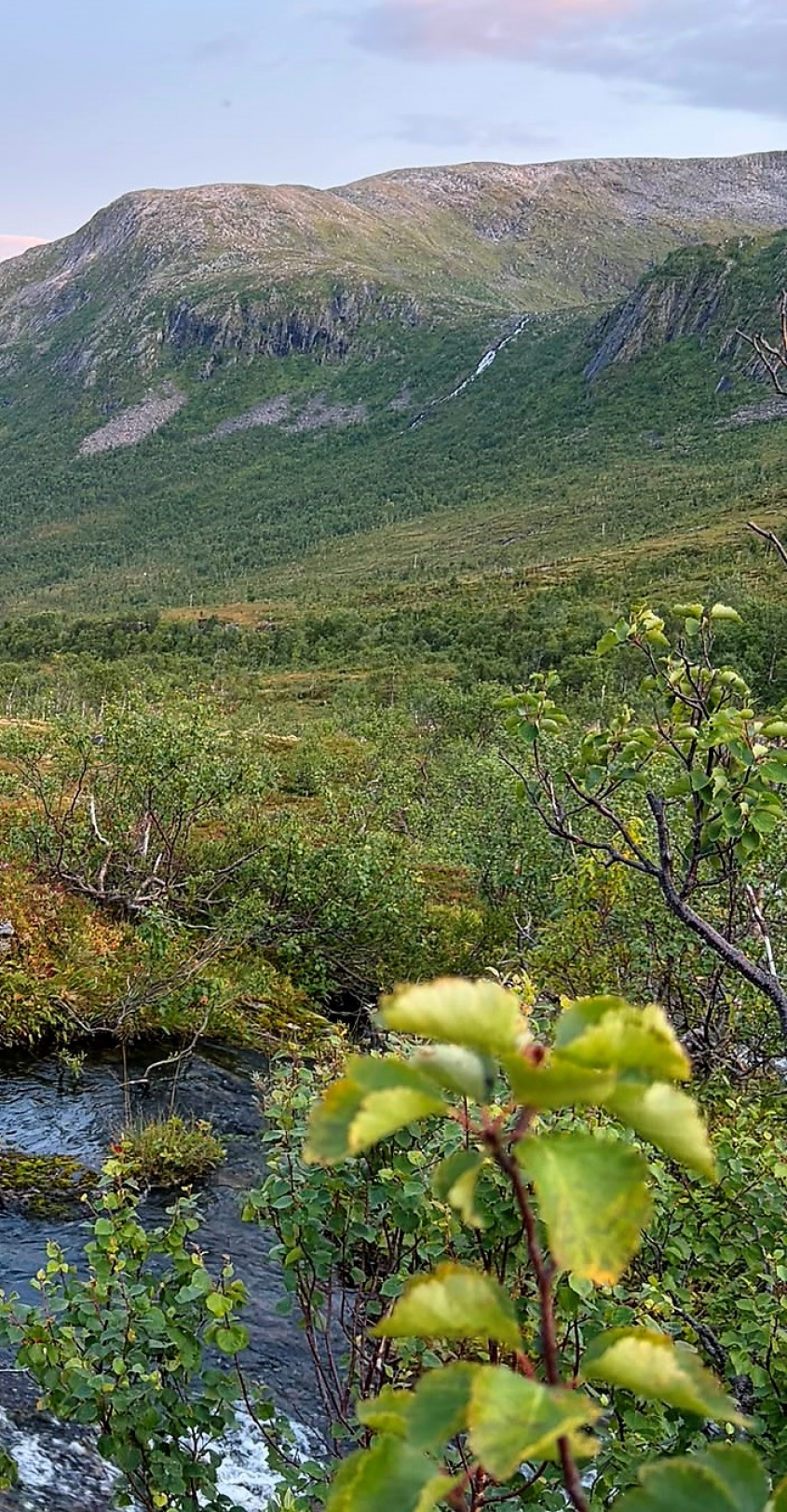
In Finland, a mining permit might be issued for the first time within a Natura 2000 protected area, following an application by the company AA Sakatti Mining Oy for the Sakati project managed by Anglo American. The project proposes the extraction of nickel and copper beneath the unique Viiankiaapa (Viiankiaapa) mire in Lapland. The project has triggered widespread debate, as it could set a precedent for bypassing nature conservation regulations across the entire European Union.
The Sakati mining project and European interests
Viiankiaapa is an intact aapa mire ecosystem, which has been included in the Finnish Mire Conservation Act since 1988 and in the EU Natura 2000 network since 1998. The company submitted an application this May to obtain a special exemption permit. This possibility arose because, under the European Union's Critical Raw Materials Act, this nickel and copper extraction project has been classified as being of “overriding public interest”, which allows for the acceleration of the permitting process. If a state or the European Union identifies a project as being in the overriding public interest, it means that the benefits provided by that specific project to society as a whole outweigh nature conservation at that same location. This is a legal caveat that allows for the “bypassing” of nature conservation laws, provided no alternative solutions can be found.
The European Commission and the Finnish government, based on the new Critical Raw Materials Act, see two specific public interests in this case.
The first is Europe’s strategic and military security. Currently, the European Union is almost entirely dependent on other countries—primarily China and Russia—to supply itself with high-grade nickel and copper. (Incidentally, we also have nickel here in Latvia, but more on that later in the article.) These metals are critical not only for electric vehicle batteries but also for the defence industry, military equipment, communication systems, and energy grids. Reducing dependence on third countries is defined as a public interest concerning the security of all Europeans.
The second factor is the achievement of climate goals—the so-called green transition. For Europe to move away from fossil resources and transition to renewable energy, massive quantities of copper (for both wiring and wind turbines) and nickel (for batteries) are needed. Brussels argues that if these mines are not built, society will not be able to transition to a “green economy”, and global climate change will cause even greater damage than the loss of a single mire.
Why are environmental activists and indigenous people protesting?
Environmental activists and local residents point to a major paradox in this definition, asking: how can the destruction of a unique natural site be in the “public interest”? Although it would seem one should understand that a single mire is NOT more valuable than independence and security...
Critics, however, believe that the term is being used in this instance as a cover to defend the financial interests of a large private corporation, Anglo American, while the local community—the residents of Sodankylä and reindeer herders—lose their living environment and traditional culture. It is emphasised that it is in the public interest to preserve intact nature and carbon stores—mires—in order to fight the very same climate change.
Environmental organisations, including Greenpeace Nordic, warn that the establishment of the mine will irreversibly alter groundwater levels, drying out the mire and destroying the ecosystem, while releasing a huge amount of carbon stored in the mire into the atmosphere. The expected lifespan of the mine is relatively short—only 20-25 years.
According to a survey by the research agency Verian, approximately 79% of Finnish residents do not support mining in nature reserves, and the Sakati project itself lacks majority support among voters of any party represented in the Finnish Parliament.
The decision on granting the exemption status is currently being evaluated by the Finnish Ministry of the Environment, while the European Commission's opinion on the mining plan is expected by the end of September.
How did a nature reserve end up in the sights of the industry?
The Viiankiaapa mire, located approximately 15 kilometres north of Sodankylä, has been granted double legal protection. Since 1988, the area has been included in the Finnish Mire Conservation Programme, while since 1998, the mire has been part of the European Union's Natura 2000 network. The mire serves as a home to rare bird species.
In 2009, Anglo American began geological exploration in this region, discovering a rich polymetallic deposit. As the ore bodies stretch deep beneath the nature reserve, the company spent years working on environmental impact assessments and technical designs. The project’s legal “breakthrough” occurred in March 2025, when, in accordance with the new European Union Critical Raw Materials Act (CRMA), the European Commission granted the Sakati mine “strategic project” status. This regulation allows for bypassing standard nature conservation restrictions if a project serves an “overriding public interest” and significantly accelerates the issuance of permits. In August 2025, local environmental authorities deemed the nature assessment conducted by the company to be sufficient, which allowed it to officially submit an application for an exemption permit. The decision-making process by the Finnish government and the European Commission has reached the final stretch.
“Green transition” and minimal impact
Anglo American and the project proponents emphasise that the Sakati mine is critically important for Europe's economic and technological independence. This justification is based on three main pillars.
First, these are materials for future technologies, as the deposit hides huge reserves of copper, nickel, cobalt, platinum, and palladium. The company points out that these metals are vital for Europe’s “green transition”—the production of electric vehicle batteries and wind turbines, as well as for artificial intelligence infrastructure and defence systems.
Second, these are “next generation” eco-technologies. The mine’s design has been developed as part of the company’s FutureSmart Mining concept. It will be a fully underground operation, which will be managed remotely and automated. The company claims that the direct surface projection of the mine will affect only about 1%, or less than 50 hectares, of the total area of the Viiankiaapa protected territory, minimising the visible impact on the environment.
Third, so-called ecological compensation is planned. Acknowledging the risks, the company promises to compensate for the damage caused to the mire by investing in and taking on the protection of other equivalent and threatened natural areas in the same region.
Irreversible loss and a dangerous precedent?
While local residents do see economic benefits in the project through jobs and tax revenues, there is strong resistance within the wider public and the nature conservation community. As we pointed out earlier, according to a survey conducted by the research company Verian and commissioned by the Finnish Association for Nature Conservation, 79% of Finnish residents do not support mining in nature reserves. Naturally—the question arises here regarding the “framing” and methodology of this survey...
It should be noted that the Sakati project currently lacks majority support among voters of any political party represented in the Finnish Parliament. Environmental organisations, including Greenpeace, highlight what they consider to be an absurd balance—the life cycle of the mine is estimated to be 20-25 years, yet the destruction of the mire ecosystem will be permanent and irreversible. Even if the mine is located underground, it will inevitably change and lower the groundwater level, which will cause the unique mire to dry out. The peat layers of the mire have acted as a carbon sink for thousands of years, and as they dry out, a huge amount of carbon will be released into the atmosphere.
Once again, the region’s reindeer herders are also vocally opposing the project, as their grazing routes and traditional way of life are directly threatened by this industrial development. Reindeer herders in the Nordic countries always oppose industrial development—that is a fact.
Activists warn that the Sakati case will be a litmus test for new European policy. If Finland and the European Commission allow for the “destruction” (in eco-activist terminology) of a Natura 2000 area in the name of critical material extraction, a legal precedent will be set that will allow for the sacrifice of protected natural areas in a similar way across the entire European Union. A decision is currently awaited that will show what will be more important in European priorities—the promised “green transition” with its material extraction or the protection of biodiversity that has been hard-won over decades.
How is nature conservation subordinated to industry?
The European Union’s Critical Raw Materials Act (CRMA), which entered into force on 23 May 2024, has caused tectonic shifts in European environmental law. Its main goal is to reduce Europe’s dependence on China and Russia by stipulating that by 2030, at least 10% of the strategic raw materials needed by the EU—including nickel and copper—must be extracted within Europe itself.
Researchers point to a serious contradiction—approximately 85% of all of Europe's critical mineral deposits are located directly beneath protected natural territories or within less than 5 km of them. To realistically extract these resources, the CRMA introduces a legal mechanism that allows projects to be declared “strategic”. This status ensures accelerated permitting. State authorities are given strict deadlines by which mining licences must be issued—usually no longer than 27 months.
Projects are defined as objects that meet the criteria of being in the “overriding public interest”, which gives states a legal basis to apply exemptions to strict European Union Habitat and Water Directives.
Is it causing concern elsewhere in Europe as well?
Sakati is not the only example. Similar struggles are currently taking place across the northern part of Europe. For example, in Swedish Lapland, the government, based on the goals of the CRMA, has accelerated the issuance of permits for the Nunasvaara South graphite mining project led by the company Talga Group, which is also located in a nature reserve and is facing massive resistance. Eco-activists across Europe are raising the usual alarm and warning—if the Sakati mire is “sacrificed”, it will serve as a green light for the industrialisation of nature conservation zones. Curiously, it seems that this hysteria has intensified specifically after February 2022...
How do underground mines affect the mire?
The greatest concern among the public and scientists relates to how massive underground infrastructure will affect the mire’s complex water system. The existence of the mire and its unique flora and fauna are completely dependent on a constant supply of nutrient-rich groundwater and surface water basins. The mire’s peat layer acts like a sponge. If the water level drops by even a few centimetres, the mire begins to dry out irreversibly.
Although Anglo American plans to carry out only underground work and use a more than 5-kilometre-long underground tunnel system to transport ore out of the protected zone, critics believe that the risks remain high. In order to work in the underground tunnels, water that enters through cracks in the rock must be continuously pumped out. This creates a “drainage effect” on the surroundings, drawing water from higher layers and lowering the groundwater level directly above the mine.
The company claims that by using the latest generation of double-shield tunnel boring machines (TBMs) and performing massive cementation or waterproofing of the tunnel walls, water ingress will be limited to a minimum. Furthermore, one part of the deposit that was too close to the surface was excluded from the plan. Nevertheless, so-called independent experts and environmental activist organisations are once again persistently questioning whether it is possible to completely prevent the formation of cracks and water leakage at such a massive scale.
Sami and reindeer herders' rights
Another problem—the Sakati project affects an area that is historically and practically closely linked to the traditional way of life of Lapland’s indigenous people—the Sami—and local Finns—reindeer herding.
Reindeer herding is not simply an occupation; it is the “backbone” of the culture and survival of Arctic communities. Reindeer require vast, undisturbed areas and seasonal migration routes. Even if the mine is located underground, its surface infrastructure—ventilation shafts, heavy transport roads, noise, dust—fragments pastures and scares the animals. The Viiankiaapa mire is a critically important place where reindeer take refuge from insects in the summer and find food.
Local reindeer herding associations—paliskunnat—and Sami activists are resisting the project using legal tools. They refer to the UN International Covenant on Civil and Political Rights (Article 27), which protects the rights of minorities to practice their culture. In the history of Nordic courts, for example, the famous Fosen wind park case in Norway provides a precedent where the court recognised that large-scale industrial projects on reindeer grazing lands violate the rights of indigenous people.
Local residents and representatives of the Sami Parliament express sharp criticism, noting that the “consultations” organised by the mining company have been merely formal. They believe that the new European CRMA regulation has created a situation in which the state and corporations can ignore the veto rights and views of local residents, rushing projects in the name of strategic independence.
This situation demonstrates a sharp conflict of interests, where Europe’s desire for global independence, security, and “green” electric cars is being achieved directly at the expense of local nature and centuries-old indigenous traditions. Of course, another question is—would indigenous people and eco-activists prefer to live in threatened, economically backward, or even occupied countries?
How did the idea of nickel extraction in Latvia arise?
In Latvia, news of potential nickel, copper, and even platinum deposits was widely reported some time ago. Kurzeme, specifically the South Kurzeme region, was mentioned as one of the potential sites for deposits. However, it did not lead to the start of extraction at the time. What is the background and history of this story?
The main “detonator” for this idea was Canadian Latvian and experienced geologist Andrejs Bite, who worked for the mining exploration company Ginguro Exploration. A. Bite, while studying historical Soviet-era drilling data in Latvia, noticed an interesting coincidence—Latvia’s deep crystalline basement rocks are very similar in composition to rocks in Canada and elsewhere in the world where rich nickel, copper, platinum, and palladium ores are usually found. In collaboration with scientists from the University of Latvia and Riga Technical University, initial analyses of some historical rock samples were performed. The conclusion was intriguing—geological indications suggested that the presence of metals in the earth's depths was real.
Why Kurzeme?
The foundation of the earth's crust—the crystalline bedrock in which such metals could form—is located at different depths in Latvia. Kurzeme and part of Zemgale were geologically considered the most interesting zones for two reasons. Firstly, in Kurzeme, the crystalline bedrock is located relatively shallower (in some places around 400-700 metres underground) than, for example, in eastern Latvia. Although the depth is significant, for modern underground mining, it is a technically quite easily reachable target. The second thing is geological structures, as it was precisely in south-western Latvia that deep drilling was carried out during the Soviet years while searching for iron ore and oil; the materials obtained from the drillings showed magnetic and gravitational anomalies, which usually indicate nickel-copper sulphide ores.
There was, of course, interest from Canadian investors, but the process stalled due to several serious obstacles. To confidently state that there are enough metals there for mine construction to be profitable, new, very expensive test drillings must be carried out, each costing hundreds of thousands of euros. Investors were not prepared to invest such high risk capital without state guarantees. Latvian legislation at that time—and for the most part still—is not suited for heavy metal mining. Issues of subsoil ownership (Who owns what is located 500 metres beneath a private meadow—the state or the landowner?) and strict environmental protection laws created too much legal uncertainty.
Similar to the Finnish Sakati project, any plans in Latvia for heavy extraction industry that could affect groundwater and the environment would immediately encounter aggressive resistance from local eco-activists. This, in turn, would also make a large part of the public very negatively inclined, as we have seen for a long time in matters regarding the use of Latvia's forest, land, and peat resources.
Sources: European Union and Finnish information websites