



At the beginning of the year, an article appeared online regarding a problem that zemeunvalsts.lv has addressed more than once – the forest and waste, or the forest and items that have no place there (1). Since hoping for the situation to improve on its own would be optimistically naive, we continue to seek clarification: what to do, when to do it, and how to act.
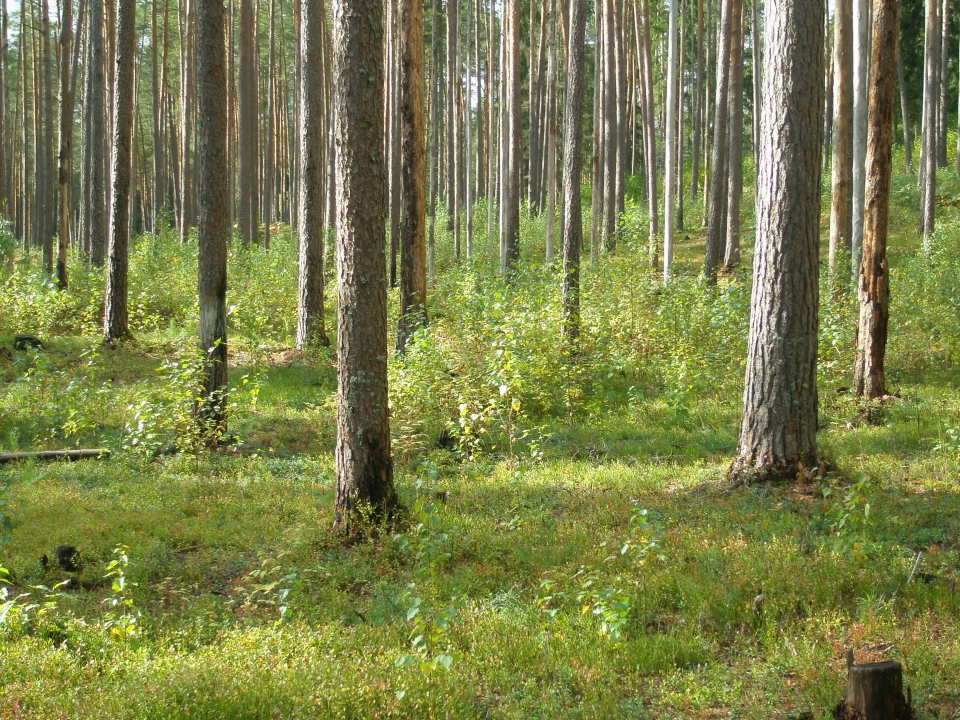
Looking at the computer screen during our remote conversation, a snow-covered pine forest is visible in the background, with a beautiful young forest stand in the foreground.
We try our best! Young forest stands – forest regeneration – are among the main tasks and responsibilities of the Silviculture Department of “Latvijas valsts meži” (LVM). They are our primary focus.
Browsing the web, your name can be seen not only in connection with young stands and silviculture, but also in explaining and persuading on an issue that has been discussed at great length – namely, the forest and waste, which should never be there, nor end up there.
One can work in several directions. As we must undoubtedly speak about people and their habits in this regard, I will start with a well-known fact: “How are we succeeding in changing habits? ... Not always quickly and successfully.” For a large part of society, habits are not very good; people continue to act as they have learned, as they have seen others do, or as they have done until now. From whom have they learned? From parents, from experience, from past events – the explanations are varied. I think one can definitely ask social anthropologists: “What encourages or prompts people to carry or take unnecessary items to the forest?” If we speak about changing habits, informing and educating are important. It is easiest to change views and habits in younger people; here I am thinking of schools and kindergartens. We at LVM are doing this, and my colleagues are working actively.
The other thing is to offer and make waste sorting more accessible so that the opportunities to hand it over are available to everyone as conveniently and cheaply as possible. It is good that a large part of society uses the opportunities offered by waste collection sites. However, there is one “but” – these are available in larger settlements, while the relevant service is lacking in more remote or small rural villages. We also have a number of settlements that do not have a defined status, such as horticultural societies. Sometimes they lack a clear legal status, clear ownership, or it is unclear whether it is a town or the countryside. The municipality does not invest in these areas or sees legal problems in doing so, and horticultural societies and the forests around them are some of our “hot spots” in terms of waste.
One option is to offer ways to sort waste and hand it over for free, another is to provide financial motivation for residents. Unsorted waste and its disposal cost much more, which gives people a choice – we pay more but do nothing, or we sort and pay less. In my opinion, the most logical and fastest path to a solution is waste sorting, the provision of sorting options, and the possibility to hand over sorted materials for further recycling. Speaking of the latter, it is known that recycling is not as simple here as one would like. When it comes to sorted materials, I see opportunities to develop, for example, business and recycling areas that we are not yet familiar with. As February approaches, we hope that a certain volume of waste left in the forest will be “taken” by the deposit system. This is a step towards order and changing habits, which, as I mentioned, is not and will not be simple. While some people aged 50 and over remember what it is like to go somewhere with a bag or satchel full of glass bottles, there are quite a few people who do not remember or know anything of the sort.
In an interview with Sandra Bērziņa, Advisor on Environmental Protection Issues to the Latvian Association of Local and Regional Governments (2), we talked about the fact that even for people well-informed about the situation, it is not always clear where to turn or what to look for if, for example, they need to get rid of an old slate roof.
If we talk about hazardous waste (including slate), we must look at at least two situations. How does slate end up in the forest? One way is that the owner of the old roof or the stored slate carries out the repairs and removes it themselves. Another case is when the homeowner has commissioned a roof replacement, including the disposal of the old material. There have been cases where the contractor undertakes to do it all (assumes certain obligations), receives payment, but... the load “never reaches the landfill”. When the load ends up in the forest, the owner responsible for the forest, whether we are talking about LVM, a private owner, or... well, they are responsible for collecting the waste dumped by other people. The second situation describes a sufficiently large portion of waste (construction debris) ending up in the forest, namely, the customer might be very honest, pays for the work, but does not control the contractor “to the end”, while the builder manages to earn more this way. Seeing loads of construction waste dumped in the forest, my story becomes quite clearly visible. I will emphasise again – in the current situation, the quickest results in the fight against pollution of the forest, ditch banks, or fields would certainly come from waste sorting.
Silviculture. How has it happened that over time there has been a noticeable development of an explicit desire in society to regularly lecture professional foresters without knowing anything?
There are several causes. Forest management and the forest are, by all means, public spaces where any changes are quite clearly visible. For example, when logging begins (which is usually discussed the most), it is very noticeable and attracts attention. Let us say, “I have lived in this place for 40-50 years, there was a forest, there was a windbreak, and now only a small strip of forest remains. How so?” Another thing is that in Latvia, the public space and public engagement in the exchange of information and opinions have changed rapidly over the last 20-30 years. For instance, 40 years ago, someone would write a letter to a local or central newspaper, a few people read it, others did not notice. So what? Today, almost anyone can express a public message, and just as easily, anyone can respond to it. At the same time, there is a good opportunity to choose which information bubble or circle is closer to everyone. Information bubbles are different, and the people in them and their numbers are just as varied, ranging from a few dozen to thousands. The choices are wide. From the perspective of the ability and freedom to express opinions, the information environment has completely changed. Whether you are a doctor, a teacher, a journalist, or a forester – if your work and activities touch upon a sufficiently broad public space – you must be prepared to eventually receive questions about what is happening, how, and why. Forestry is a field where questions are and will be asked a lot; I agree, we might not feel very comfortable in such a situation because a forester is more of an introvert: “I know what I am doing, I am trained and educated, I feel at home in the forest, why should I explain anything to anyone.” Currently, that is no longer quite the case. You must always have arguments in your pocket to answer. We must also accept the information environment in which we live. I think it will only develop; the “old days” will not return. The better we can explain, the better the public understanding of what we do will be.
If I own 58 ha of forest that I decide to let grow on its own, without tending, doing, or touching anything, will it be green, and to what extent? Can I be proud of doing nothing?
To some extent, it will be green. But we must count on the fact that we are truly doing nothing and also gain nothing from these 58 ha. We do not gather firewood, which is almost impossible in a less forested region, for example, Zemgale or Latgale. We do not pick mushrooms or berries, we do not tap birch sap. It will be green until the moment the ecosystem of the 58 ha we own starts to change. In any place, if we leave it alone and do nothing, changes happen anyway. Maybe in 100 years, one might be able to see that the situation in these 58 ha is quite green, but if we speak about the very significant “work” of the forest on a planetary scale – oxygen production and CO2 sequestration – the untouched forest will not have as high a potential for oxygen production as it would have in a situation where the forest is purposefully managed. For European society, in this regard – when and what to do – when and what not to do – a choice lies ahead – what will be the priority. I hope it will be pragmatic and scientific, not political. If the high goal is to reduce CO2 emissions, doing nothing in the forest is neither the best nor the fastest solution for achieving the goals. Speaking about Latvia – balance is important; there will certainly not be a situation where all the forests in the country will be commercial or turned into plantations. That will not happen, and besides, natural conditions will not allow us to act that way. By the way, it is well known that to achieve certain nature conservation goals, in some cases, a forester must lend a hand to the forest; otherwise, nothing comes of it.
Young forest stands and planning. Considering the changing climate, is there gradual thought being given to broad-leaved forests?
If we speak about forest regeneration practice, we currently have no such plans. Of course, we know the beech well, we know other broad-leaved species, but we do not yet use them in forest regeneration (which, by the way, is not allowed by our obligations as a certified company). So far, other species have not been used in afforestation of lands or plantations either. Looking into the future, together with our colleagues at “Silava”, we have participated in and worked on research to understand which species might be promising not in the immediate, but in the more distant future. We are talking about species that, under the influence of climate change, could replace existing ones and increase the proportion of broad-leaved forests. Currently, the spruce performs “this function” quite well, but the beech has a similar nature, it is a shade-tolerant species with good commercial value. We are still watching what happens with the ash – we have ash forests, there are still stands untouched by disease. Signs show that young ash stands are showing signs of health. We are also thinking about maple. Of course, there are century-old beech plantations from the time of the barons in Latvia, but we still consider this species an alien. Currently, sample plots are being studied, but we are thinking ahead so that we are ready for a situation when high-quality planting material is needed.
Latvia 2050. What will it be like?
The state of Latvia in 2050 is still on the world map. The country is self-sufficient, with a self-reproducing society. We have managed to improve the demographic and social situation, the departure of people has ended, and Latvia has a healthy, competitive economy based on environmentally friendly and smart solutions, including agricultural and forestry production. New products, new materials, smart recycling. Society perfectly understands what is happening in nature and what is happening in the national economy. We still have a stable population of capercaillie and black storks, which feel good alongside humans. I think that as time passes, opportunities will have arisen that we do not know about today, namely, how else to use available resources. We live in a potentially very good place.
Young people in Latvia
I must say I have fulfilled the minimum demographic programme; I have three children. An opinion on the next generation is undoubtedly formed because you see not only your own but also their friends whom you meet. Young people are freer in their thinking, and the environment in which they grow up is different. That is our potential. A certain lack of purposefulness gives rise to reflection because there are so many choices, and currently, there are no doubts about the existence of a second chance, which can encourage a certain “drowsiness” – it is fine. If you are halfway to a goal, never mind, there are other opportunities. There are excellent and diverse educational and business opportunities. A larger number of people can find their place specifically in their field of interest, to develop their talents. We, the older generation, have the task of ensuring this environment and making it stable. Let young people go away, gather experience, and return to express themselves magnificently and powerfully here, in their own country. Patriotism, economy, and social issues must be viewed in connection; they must go hand in hand. Just as in forestry there are environmental, economic, and social aspects that create balance and sustainability, it must be the same at the national level.
1. https://jauns.lv/raksts/zinas/480376-meza-piemeslotajus-latgale-ker-ka-detektiva
2. https://www.zemeunvalsts.lv/jaruna-par-vides-aizsardzibas-pasakumu-izpildijumu-intervija-ar-sandru-berzinu-latvijas-pasvaldibu-savienibas-padomnieci-vides-aizsardzibas-jautajumos
Photographs by Edmunds Linde, Pixabay, and zemeunvalsts.lv used.