




The administrative-territorial reform “reached” Latvia during C19, which was severely felt by quite a few industries. How has one of Latvia's favourite destinations for lovers of natural landscapes, tourism and music – the Sigulda region – fared during this time?
Māris Liopa, Chairman of the Forest Certification Council of Latvia, and Pauls Rēvelis, editor of zemeunvalsts.lv, talk to Uģis Mitrevics
When travelling to Sigulda, “classic things” usually come to mind – the Gauja and its ancient valley, Turaida Castle, the Opera Music Festival, and nature trails.
It is an old and well-known truth that the living room is often different from the kitchen. The time I have spent working in the Sigulda Council has been fascinating. I must say, I have experienced three municipal (administrative-territorial) reforms while in office. The first was in 2003, when the town of Sigulda “voluntarily” merged with the parishes of Sigulda and More. That was a time when the More parish was in the Cēsis district, and the fact that a municipality from one district was merging with one from a neighbouring district was perceived as a serious shock to the system at that time. The second reform was in 2009, which I would call a forced reform, when the Allaži parish was added to the Sigulda region. Just now – in 2021 – we had the latest reform, with yet another increase in the region's territory.

When asked about my experience and further development, I usually refer to these three stages of the region's development, because every merger brings new sensations, new tasks, new situations and responsibilities. The principle of voluntariness in merging territories is good, because by taking this path, the local community can unite or merge faster – if the leadership manages to reach an agreement, the community does too. That is what happened in 2003; in 2009, Allaži was added to us not exactly voluntarily, as I mentioned, and, unfortunately, the people of Allaži felt that way for quite some time.
Any reform of this kind requires about 10 years for a united sense of regional community to be gained through smart and good work. We already have our own shared traditions – Allaži caraway liqueur, the bird cherry trees of Sigulda, and the very powerful timber industry and farmers of Allaži. Also, in the newly created region, the newcomers have given us all a sense of scale; the region is much larger, even if not as personal as it once was. That is one of the side effects of reform – you cannot be 100% sure that you know everything.
Ogre Municipality Mayor Egils Helmanis mentioned in our conversation that during the time of the previous (pre-reform) municipality, he had travelled and become familiar with every road and path.
In even earlier times, K. Ulmanis walked and travelled around Latvia, but today that would not quite work out. For example, to visit all the educational institutions in the region on 1 September last year took me the whole day, and besides, I only had the opportunity to shake hands and offer congratulations in each institution, nothing more. The region is quite large.
I am getting to know the region's roads and non-roads through work and solutions. For example, I recently met with residents of the former Inčukalns region, who sent me a message that things were “bad in their village”. I was invited personally, I went there, met the people, saw the bad road and the fallen electricity poles, which often force people to live in darkness. Getting to know the area happens through seeking solutions and having the opportunity to learn about problems on the spot – you cannot make decisions if you do not know the problem.
As the region has become larger, business has also become stronger.
The region has strong farmers and timber processors, food producers, a service sector, tourism entrepreneurs and others. As a result of the reform, the Mālpils and Inčukalns regions joined us with their business (especially timber processing) giants. We do not have the sea, no ports on the Gauja or an airport, but overall we are a small, bright micro-model of Latvia, where we see the processes and rich resources that dominate the country. The municipality tries to use its resources as best as it can, thinking about how they can bring benefit. “Sitting” on resources is not wise.
The region is quite forested.
Yes, but the region does not own many forests! We have already auctioned off some forest areas when it became clear that we would have to plant forest in their place. In the expanded region, we have hired a specialist who is responsible specifically for forests.

Two years of the C19 pandemic with long and numerous restrictions, which very directly affected tourism, and one of the centres of Latvian tourism is the Sigulda region. How did you cope?
One of the sectors that was hit hardest by C19 was the hospitality industry. In Sigulda, as is known, many music and art events take place, which also “stopped”. While our catering businesses survived the first moment of shock by delivering food to people's homes, in hospitality and hosting guests there were no options; these sectors did not work for some time. We supported our own as much as we could, for example, with tax policy; right here in the Sigulda Castle Quarter, we discounted the rent for small entrepreneurs, so to speak, we were accommodating to Sigulda's exporters, which, undoubtedly, is the tourism sector for us.
Another serious service exporter in the region was and is the Sigulda Hospital, whose work also stopped during C19. People from Sweden, Norway and the United Kingdom were treated in our hospital, and the number of patients before the pandemic was several hundred.
Whatever it may be, the war made people quickly forget about the problems of C19.
If you compare us with other municipalities, we had a certain advantage in hosting asylum seekers from Ukraine – namely – in Mālpils there were already renovated premises that were “waiting” for their next life cycle; the region had the opportunity to react quickly, accommodating nearly 200 people in these premises. People immediately needed a school, which Mālpils has, and a kindergarten, which is also “on the spot”. A separate group was even created for Ukrainian children. We had a concrete place to offer. The Sigulda region has taken in about 500 asylum seekers, of whom slightly more than 400 have stayed, and some have returned to Ukraine.
At first, there was hope that the war would end quickly. Unfortunately, that did not happen.
That is precisely why we understood that it was necessary to survey the arrivals in order to understand the situation and plan who and what we should count on. The country lacked this kind of information summary. For example, we wanted to find out – will you stay or not; is it 100% clear that you will stay, or will you still be thinking, etc. If such information is obtained, we can make further and sufficiently accurate calculations in the municipality – what will be needed, who and how much will be necessary. We understand that so many children will go to kindergarten, and so many children will need a school. If the situation is clear, it is easier to work and plan long-term, which is why preparation is necessary. I know and I read that many are returning to Ukraine, I know that there is a very specific number of people who do not plan to return; they have nowhere to go, because, unfortunately, everything has been destroyed.
People are learning the language, children are going to Latvian schools, this is a good example of how things should happen – that suits us!
We have seen a different situation in more than one state institution – people who have lived here for 50-60 years still have someone translating from the Latvian language for them.
This is not right and you cannot blame politics or integration for it – the blame lies with the person themselves and their understanding of who we are in Latvia and what is happening among us. Such a person is in Latvia only physically, but mentally, unfortunately, they live across the border; their values and ours in no way coincide. It must be added that this is also a time for realisation, seeing and understanding very clearly who is doing what and how.
The Canadian Ambassador recently visited Sigulda, sharing his experience. The Ukrainian community in Canada (already before the start of the war in Ukraine) was, it seems, around 2 million strong, and the state policy there is simple – “if you have arrived in Canada, speak our language and work within our system”. Canada does not have Ukrainian schools or anything specifically designed just for them. That is the state order, and it is the simplest path – excessive accommodation is not always right and it is not always used as intended or planned. As we already discussed, if a person has not been able to learn basic things like the language for 30 years, they will not do so in the future either.
Now many “suddenly” admit or notice the mistakes made in the 90s (and also later) regarding the language issue.
I agree, but it is easy to talk now. Many could not even imagine that the propaganda channels of the neighbouring country were like that... I think that only a few sufficiently smart people, who are closely connected to similar processes, understood the situation at the time. The fact that the media is such a powerful and poisonous weapon, we only see now. Unfortunately, part of our society has also been subjected to it, which we also did not notice in time.

What should be done?
The immediate agenda is clear – the country's military and economic security. What do I see as different? The National Alliance's primary goal is a Latvian Latvia. From this follow all further tasks, for example, the well-being of the Latvian people, which includes everything – energy independence, education, health, any area where we compete with our neighbours. A very important task for the next government is to do everything so that the gap forming between society and state power does not become any larger. This could be tried to be reduced, for example, through farsighted long-term decisions in education and health, and the tax system.
Also very important are the decisions that are made with a clear vision of cause-and-effect relationships. For example, entrepreneurs often complain that no one talks to them and no one consults them on issues that are important to them. So one decision is made, another one is made, a third is being prepared, perhaps each touches a different industry, but as the decisions add up, a situation is formed that divides the authorities from society. The government's actions in the case of Covid 19, limiting trade and the service sector, was a striking example of this.
One mistake can be forgiven, but mistake after mistake, I doubt it... Erroneous decisions give society reason to say that something is not happening as it should. The main task of the Saeima is to speak to society in the same language.
In a recent poll, 62% of Finns approaching retirement age claimed they would be okay with increased immigration so that there would be someone to earn their pensions... Speaking of Ukrainians, would it be such a bad thing if people came to Latvia who accept our order, learn the language, live and work here? We do, after all, have a large demographic pit.
I am very worried that many state-level decisions are made thinking about how to celebrate the cemetery festival with dignity and honour. Yes, the cemetery festival, not celebrating something else!
Why do I talk like this? “Let us reduce the road network, because fewer people are staying in the countryside.” “Let us close schools, because there are fewer people.” ... Such decisions, one after another, pave our way to the end – that is where we are heading, “affording only what we can afford”. That is not the right policy! I cannot say convincingly that my great-grandchildren will live in a “sunny, everlasting Latvia”. The National Alliance has somehow grasped this understanding and is trying to change it. Some demographic indicators have increased or stabilised, but the path to reaching “zero” is still long, and every decision that promotes birth rates and more Latvians in Latvia is welcome. That is the big plan and goal – not to think about solemn cemetery festivals, but to make Latvia long-lived. Those are different rules of the game. Yes, maybe we need to tighten our belts! Yes, maybe one school or another needs to be closed, but in this or that rural area, for example, small entrepreneurs or organic farmers should be supported! I think a portion of young people, wishing to live outside the city and wanting a suitable environment and healthy food for their children, would gladly move to the countryside if there was something to do there, if there was work. In the countryside, there should be a school, a kindergarten, a road, a place to work and develop your small production facility, etc. That is the big plan – not to gather in cities – but to think long-term. That can be changed step by step, starting with the little things.
A fair part of society actively opposes production or business “in their own parish”.
I agree, resolving such questions is not simple. For example, not such a distant story about the school reform in the region. Several years ago, it was necessary to merge schools. I went, walked and talked with the residents seven times – as many people, so many opinions. In these meetings, even before the reform, it was often heard: “If my child has to study in Laurenči, then you in the council will really get it!”
Not quickly, but we arrived at a decision. The city's educational infrastructure is now in order, and the once-abandoned school in Laurenči, where part of the windows were boarded up and about which the parents of the students did not want to hear, is now the educational institution where parents stand in line for 24 hours, lighting fires to sign their children up there. Look, a success story!
I am not saying that it will always go this well, but it happens, while elsewhere they do not even try to start explaining and fighting. I certainly do not advocate for children to have to study in combined classes, like in the old days. Right now, it seems the simplest solution is to close the school, because somehow there isn't...
I recently read about events in the Alūksne region, where they wanted to close several schools. Here is the side effect of the situation – simple mathematics and calculations lead to extremes, but if there is no school, the local community in that place effectively ends. That is what you should start with when deciding on closure! Here, a farsighted and understandable decision is necessary. You have to understand what we gain and what we lose. I want to emphasise, especially in the current situation, that this is how we lose those who will defend their land. Can we be guided only by mathematics alone? We need to look for tools on how to operate in the countryside. For example, the already mentioned organic farming, which is being introduced in Latvia step by step. Why couldn't a family grow quinces and process them right there? Why not support them with a targeted tax policy?
Concluding the thought on education, Sigulda is now a city where young families want to send their children to school – we also have a music and art school, and good opportunities for active recreation. In my opinion, in order to keep people in the regions, the educational infrastructure will be decisive. That was clear 10 years ago. The city of Sigulda and the “old region” (before the 2021 reform) are not a commuter region for large cities, and, which is a real pleasure, we have more children being born than people going to the other side.
How many?
Currently, there are more than 32,000 residents in the region; in the “old” region, 230-250 were born each year, and 170-190 passed away.
Sounds like an ideal model for Latvia!
We can be proud of the families of our region! Many households have three or four children. The families of the region are large! Of course, there is also the so-called technical increase – people are moving to live with us from more distant places, where there are no roads or they are difficult to drive on, there is no school, no hospital. As a result of a combination of many circumstances, Sigulda has been the only city in recent years where the number of residents is growing, not falling, as elsewhere in Latvia.
In Riga, it is very annoying to see the stalled repairs – for example – the Brasa Bridge or Ģertrūdes Street.
If you try to save money, you often “break” a lot of what was planned. In Sigulda, corrections and additions also appear in various infrastructure projects; we work, change, fix. For example, there is a construction project where during the construction process “suddenly” dolomite appears, even though it is well known that the city is built on a layer of dolomite. The author of the project, look, for some reason has not taken that into account!
Also important – in recent years, there is a great shortage of workers, for example, currently in the social sphere, in education, in almost every sector. The past winter was also a serious test in economic matters, for example, in terms of snow clearing – it literally snowed half a metre twice... In the region (the new one), we spent 300 thousand euros for this purpose in one month. What to do? Big money... Maybe... Of course – clean! We cleaned and still got it from the residents, who thought that they had to wait too long for clean roads and streets.
Also in Sigulda, as in most of Latvia, street repairs are very current. In the region, we do it gradually and thoughtfully. For example, the improvements are felt as a priority by those residents of streets who have been responsible and connected to the city's communications. If you have connected to the water supply and sewage – great, your street is first on the list! Here we kill two birds with one stone – the money for centralised water supply and sewage has been spent, but the number of those who have connected is inadequate. Why pay fines? This is also cooperation and interaction between the government and society.
Elections are approaching, when we ask interlocutors about Latvia's further path, which, for the most part, is unclear.
The Saeima is a reflection of the people. You vote for who you want to resemble or who you want to trust. In the Saeima, we see who we are, we see who has to cooperate and work together. Some do not understand others. This understanding, however, comes only with maturity, with experience.
In Latvia, a certain unpleasant side effect is observable – we very diligently and assiduously fulfil and overfulfil requirements that are set somewhere. For example, European Union norms – it is necessary to observe all that in an exaggerated and diligent way. It is not bad, but it seems it is already too much!
Another not-so-distant current topic – banks and their policy. Yes, we were in the grey zone, yes, we had to get out, clear! We got out, signals appeared that the created situation was seriously braking the economy... People started to re-register companies in neighbouring countries, a certain stagnation was forming – at that moment many red lights were burning: “It is bad, action must be taken!” Over-zealousness on the part of the locals is to be assessed very negatively. “The papers are in order, but the country is lagging behind in development.” How to change that? That is a question of thinking and generations. Also of various, let us say, tax policies, which are complicated for us. If there is clarity, it is easier for an entrepreneur to plan, and easier for the state to calculate. The unpleasant conclusion of the last few years – a project is negotiated for four years, built for one; unfortunately, that is a formula that works stably in Latvia.
The large Sigulda region has unexpectedly acquired a busy parish that was once under the control of Limbaži – Lēdurga.
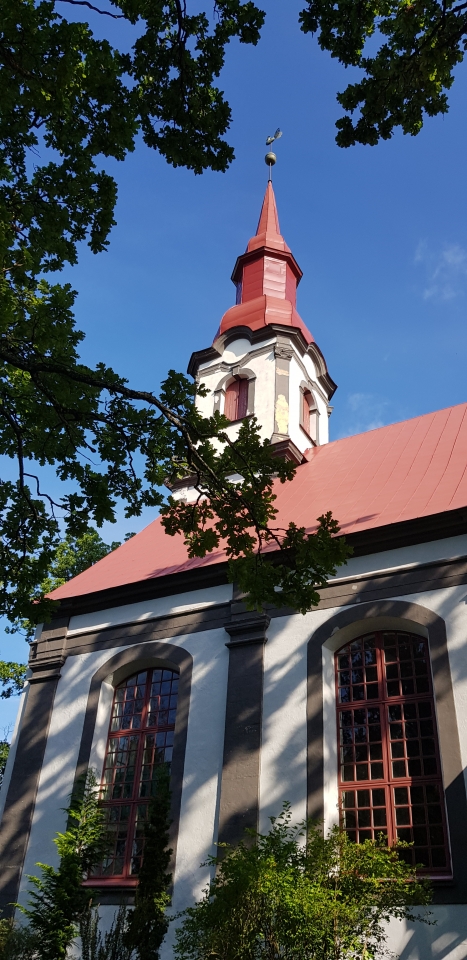
The Lēdurga parish was included in the Krimulda region back in 2009, because the people of Lēdurga wanted it that way. Much like the More parish “joined” the Sigulda region. I personally like Lēdurga and the parish very much, a lot there relates both to pre-war Latvia, for example, the beautiful Lutheran church in the centre of the village, and to older history – Garlieb Merkel. I will immediately mention a question to be resolved – 7 km from Lēdurga is Vidriži (Saulkrasti region), there is a school both in Vidriži and in Lēdurga. It is stated in the education reform – every region must deal with these issues.
That is good, there must be a common state policy. But, what will two adjacent municipalities do with the schools? In the case of Lēdurga, we already got it from the ministry regarding the discrepancy in the number of students, but I find it hard to imagine that there could not be a school in this place... For us, it is a sacred place.