




An interview with Guntars Šņepsts, a researcher at LVMI “Silava”
Last year’s discussion in the “Dienas Bizness” studio (2) and during the LMSP conference held at the beginning of December (3,4) highlighted a somewhat unscientific but politically relevant quirk – a desire to define in figures or percentages (which are also figures) how much of nature (the environment) we need to protect. Does this align with scientific evidence and research, and if so, how?
As I understand it, the question is about the European “Green Deal”. I would like to point out that I interpret it for myself as follows: the new European political trend is focused on removing 10% of the land area from economic circulation or activity. But, in my opinion, one should not equate “nature protection” with a “ban on management”. Certain natural values must be protected rather than banning management on a certain number of hectares. Often, natural values can only be preserved through proper and purposeful economic activity, and, of course, there are places where economic activity must be prohibited to preserve natural values. To understand how much and what needs to be protected, we first need to identify what we have and in what quantity. Working in the National Forest Inventory, I know that we, as forest scientists, are capable of answering a range of questions affecting the forest sector – we just need to be willing to ask them and know how to do so. Since 2004, 16,157 sample plots have been regularly surveyed and measured as part of the forest resource monitoring. Within the framework of the National Forest Inventory, first- and second-level air pollution monitoring is carried out, where tree crown conditions are assessed, and the chemical composition of water, litter, ground cover, and air, as well as other environmental parameters, are determined. Likewise, biotic risk monitoring (forest disease and pest monitoring) is conducted; recently, monitoring of damage to young stands caused by deer species has begun, as well as biodiversity monitoring.

16,157 sample plots are for forest monitoring. Biodiversity monitoring is a relatively new process...
Yes, 16,157 sample plots are for forest monitoring, but not all of them “fall” (are located) in the forest; we survey all of them, and in all sample plots, the land category is evaluated. In approximately 12,000 sample plots, trees or shrubs are measured, where people measure all these trees and shrubs according to the methodology. Speaking of trees, we know the fate of every measured tree – it has died, been felled, has grown into the stand, or continues to grow, and if it continues to grow, by how much it has increased. At the moment, we have accumulated information on approximately half a million trees, and this number is constantly growing. Biodiversity monitoring began in 2019; within its framework, landscape, species, and genetic diversity are all assessed, thus involving specialists from geneticists to botanists in the monitoring. As part of this activity, we collect information from genetic resource stands and conduct DNA analyses. Colleagues assess potential habitats across all forest resource monitoring plots – hollows, thick branches, broken trunks or branches, etc. A portion of the monitoring plots is surveyed by botanists who assess the vegetation so that we can return in five years to evaluate how the vegetation changes in different forest types and regions. I am only involved in this activity (monitoring) by helping with technical issues in organisational matters, so I cannot explain it in more detail; you should ask my colleague Jānis Donis.
The data obtained is quite accurate. How can it be presented to the public in an understandable (popular science) and prominent way? As is known, in recent years, with the active participation of incompetent and ignorant people in the sector, a “woodpecker” has been “hammering” into many minds: it is disappearing, being felled, oh dear, oh dear, there will soon be a desert in Latvia. The scientifically obtained data from those performing the monitoring are in stark contradiction to what part of society has remembered...
“The felling of our forests” has been chanted for decades, but foresters simply cannot manage to fell those forests (laughs). Nowadays, it is popular to think incorrectly (unscientifically), especially if one mentions green, eco, bio... I must say – many fall for such words. Unfortunately, there are people (a part of society) who hear only what they want to hear, what fits some of their preconceptions. Similarities can be seen in the current situation with masks and restrictions – “we are being zombified, we are being deceived, we are being used”. It is similar with forest issues – there will (unfortunately!) be people to whom you can tell, show, and take to the forest, but they will not accept or understand what they have seen and heard. Yes, indeed, the increase in forest area and growing stock will remain incomprehensible to such people because “it cannot be so, because it cannot!”
We at “Silava” are ready to show and tell. The National Forest Inventory data is publicly available – use it! In 40 tables, Latvia’s forests are viewed from various perspectives. The question is: do people want to use the data and information? Or is it more popular to “pretend to be green” and complain?
Can everyone understand the mentioned tables?
Yes and no. In my opinion, there are tables that every educated person should be able to understand, for example, the distribution of forest stand areas by dominant tree species and age decades. But, of course, there are tables that a person not connected to forestry will not be able to perceive correctly. But if they don’t understand, they can ask someone who does! Colleagues at “Silava” talk about these issues quite a lot: at seminars, conferences, telling students (in the hope that students of the Faculty of Forestry share the information with friends and family members), and organizing Forest Days. I allow that more serious work is needed with children and teenagers, who will then tell their parents and grandparents what they have heard and learned. We have a wiser young generation growing up, and perhaps parents will hear information better from their children than from scientists.
One thing, though: scientists must talk about their work, but... at their core, they have their work – to research. Telling and explaining is necessary, but, unfortunately, this task is not at the top of their list. There is also the topical issue of promoting scientific research; I doubt there will be many fellow scientists who would be ready to prepare popular science articles often and regularly; they simply won't have the time.
Should an experienced scientist immediately clutch their heart upon seeing a man in a tie or glasses speaking nonsense on a TV screen?
I wouldn't yet count myself among the experienced scientists (laughs). But answering the question – if the speaker realizes that they are manipulating facts or “half-truths”, or withholding parts... I wish them good health, and I hope they manage to live with their conscience! In my opinion, we should be more worried about those speakers who do not know, do not realize, and do not understand, but who speak convincingly because they know how to talk well, and that is their conviction. Here we really cannot do anything, because arguments do not work against conviction or belief. Perhaps we should encourage journalists not to invite such people to speak publicly, although nowadays, in the age of the internet, everyone can find a place to express themselves without much effort. The only thing we can do is try to educate the public.
Over time, many develop experience and an understanding that every speaker speaks more or less from their own, or their interests' and knowledge’s, perspective. Yes, everyone has different pains or concerns, and this must be taken into account! If facts or information about an eagle or a stork cause someone worry or anxiety, they will look for reasons and perhaps even deliberately look for fault in forestry.
The years 2020 and 2021, with the virus and the change in lifestyle, show that quite a lot of people can be fooled very easily.
It seems it is not so much about being fooled as it is about what a person wants or does not want to believe. A part of society “falls” for a “fight” against something that in the forest sector is a “pseudo-green call to fight against forest felling”.
Is it in the power of a scientist or another person to change that? Likely not, which is why one must speak with those who understand, and with those who listen and want to understand. People who have an opposite conviction or hidden business interests will always seek arguments to prove their belief, which sometimes can be objective, but sometimes non-objective, or even deceitful. In the end, to strengthen their opinion, it is claimed that forest scientists have been bought (Smile). Apparently, a person has such a belief or conviction that is hard to change...
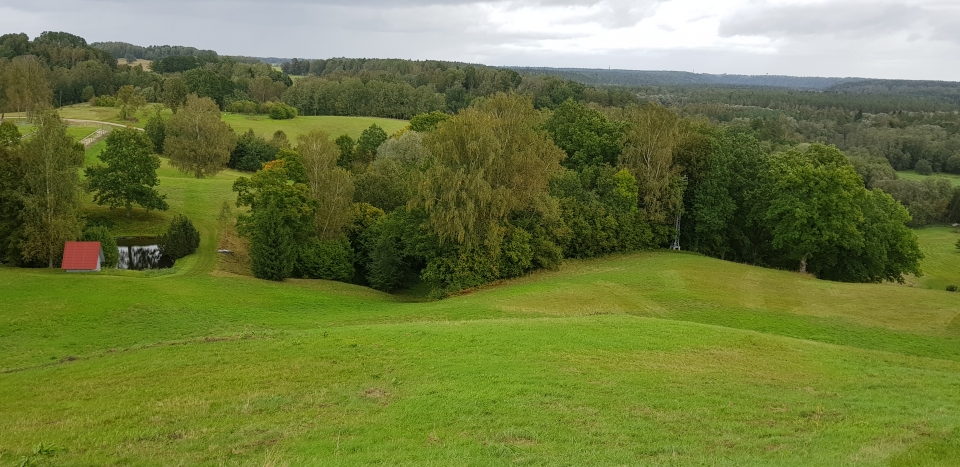
The increase of forest area in Latvia. That is said to be not good... There is talk of 50%, 52%, and even 57%.
57% would be the area that includes all forest lands, not just forest stands alone, but also swamps, forest rides, roads, and ditches. If we take forest stand areas separately, they have increased by approximately 60,000 ha. The answer to the question – is this good or bad – will depend on those who answer and who evaluate: farmers will say – it is not good if the forest land area increases at the expense of agricultural land, as has happened. To the dissatisfied farmer, one must immediately ask in return – why do you allow this to happen?
Not exactly scientifically, but intuitively, judging by experience, we experienced the largest increase in overgrown areas in the late 90s, when privatization was underway and work activity in rural areas gradually decreased. After recovering their land, people initially still worked it, but as time went on, they either left the countryside for the city (in search of a better life or work) or realized that it was cheaper to buy milk in a shop than to keep a cow; therefore, the land was neglected. The recent increase in forest area at the expense of agricultural land should be considered a result of the Rural Support Service’s campaign. In this campaign, they encouraged the afforestation of abandoned agricultural land. Intentional afforestation is not a widespread or frequent phenomenon; we see more land being left fallow or neglected, with it gradually becoming overgrown. Of course, the opposite also happens – there are farmers who get rid of trees, of the overgrowth, and try to “return” the land to agriculture, but... it is an expensive undertaking, and not possible everywhere; in some places, the trees are already so big that nothing can really be changed.
In monitoring, we see that the areas of meadows and pastures are decreasing; they are basically being converted into arable land. Dairy farming, which was popular in Soviet years, has to some extent been replaced by beef cattle farming and grain growing, which is why such large areas are no longer necessary for pastures. Thus: in the national forest monitoring, we can see changes that are related not only to forests but also to other land categories.
Do the location and number of monitoring sample plots change?
The number and location of sample plots have remained unchanged since the first cycle (2004-2008); we have completed three full monitoring cycles, and the second year of the fourth cycle is underway. The selection of sample plots took place via computer, generating a 4x4 km grid of tracts in the ArcGIS program, with four sample plots located in each tract. We use a GPS system to locate the sample plots. In the center of the sample plots is a piece of rebar, which is how we find them – it is the only identifying mark. Rebar is not driven into agricultural land so as not to unintentionally damage the farmer’s agricultural machinery, but we survey these sample plots in every cycle and evaluate the changes. We measure the same trees in the sample plot, provided, of course, that they have survived during the cycle, with trees that have grown in added to the tally. Each year, about 3,200 sample plots must be surveyed to cover all of them in five years; then we start the cycle all over again.
On the “Silava” website, there is a detailed overview of monitoring results and methodology (1). In 2004, when monitoring began, there was a need to know what kind of resources we had. In the next cycle, we looked at the increment. Now, based on monitoring data and the knowledge gained from it about forest growth progress, we are modeling what the forest might look like in the future. As a result, we can answer the question of what will happen to forest resources in the future if we manage them in one way or another. We have modeled how forest resources might change if the rules for tree felling (main harvest diameter) and regeneration were changed. In my opinion, we have debunked the false claims that as a result of the mentioned amendments, forests will be felled more, old stands will disappear, and “thick” stands will disappear. The forest area will not change because the rules do not provide for deforestation. They will not become younger and thinner compared to everyday management either. Since forest regeneration rules provide for more regeneration with selected spruce and pine, the area of forests older than one hundred years will increase over time, because, unlike grey alder stands, conifer stands are capable of reaching such an age, and compared to aspen stands, such an age for conifers is relatively small (in relation to the species' biological age).
We also model the situation in the future; we use monitoring results to explain issues in the European Union regarding carbon storage and sequestration, and GHG emissions. We are scientifically “diving deep”.
What is the situation with overgrown and already decaying forests?
It is difficult to answer what a decaying forest is. It can be something different for everyone. It is easier and more correct to talk about mature and overmature forests, which, of course, are not always decaying forests. They exist! Mostly found in protected nature areas, but also in forests without a ban on economic activity, mature and overmature stands accumulate. Since the first cycle of monitoring, the area of mature and overmature stands has increased by approximately 50,000 ha. Therefore, one more counter-argument for those who say that “forests are being felled too much”. Do we need to “accumulate” mature and overmature forests? In protected forests, yes! But in commercial forests? Perhaps in small volumes as a reserve or safety buffer, yes, but 1/5 of the area, as it is now? It must be remembered that in Latvia, land is only as little or as much as it is, and it is necessary to manage it as efficiently as possible. Otherwise...
1.http://www.silava.lv/petijumi/nacionlais-mea-monitorings.aspx
2.https://www.zemeunvalsts.lv/mezos-sapude-miljardiem-eiro-
3.https://www.zemeunvalsts.lv/jurgis-jansons-lvmi-silava-direktors-vadosais-petnieks
4.https://www.youtube.com/watch?v=W_EOFbDkseg&feature=emb_logo