



Māris Liopa, Chairman of the Forest Certification Council of Latvia (LMSP), and Pauls Rēvelis, editor of zemeunvalsts.lv, talk to barrister Gaidis Bērziņš in this interview
My family has owned property in the Kolka parish of what is currently the Dundaga (or upcoming/reunited Talsi) municipality for more than twenty years. Since there are many opportunities in this day and age, I quite often consider spending more time at this property than I have until now. Undoubtedly, I care about what is happening in the Dundaga municipality, along the coast, and in the new Talsi municipality. I would be happy to contribute my experience and perspective to solving current and problematic issues, which would benefit the municipality and its residents.
In recent years, a “regional” disparity in thinking has become sharply visible in Latvia; for instance, the lack of understanding among Riga residents regarding what is happening outside the capital's centre. Gradually, but surely, the coastline is being taken away from Latvia (its residents) again...
I certainly do not agree, and will not agree, with replacing the pines growing in coastal dunes with luxury villas, as has happened, for example, in Jūrmala. All situations require a proportionate approach. Some time ago, I walked the entire length of the Baltic Sea coastline in Latvia: there are places where you do not meet a single person for hours on end. There is no infrastructure either. The environment is undoubtedly beautiful and magnificent, but... it is also abandoned. Why not encourage our own people to develop their homes here?
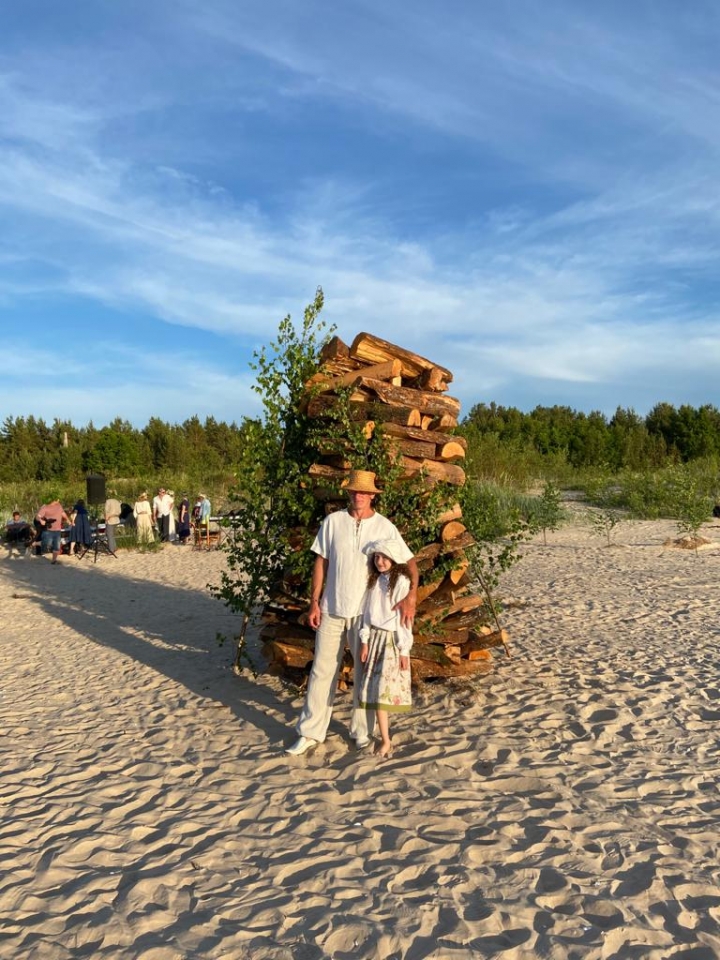
Various problems have been left in the coastal area. In more than one place, we still see abandoned Soviet army structures or the remnants of military objects. By the way, in Soviet times, people were quite purposefully “pushed out” of the coastal zone. I have researched these events a little: during the process of creating collective farms, many services necessary for people (work, schools, kindergartens, shops, etc.) were concentrated, for example, around a larger village or town, thereby indirectly forcing locals to move to more densely populated areas where there was work and where it was easier to travel to. For example, to Kolka or Roja on the coast. The roads back then were what they were, and public transport ran infrequently... Gradually, bit by bit, coastal villages became empty.
Furthermore, if we think about historical justice, it is sad... There are many people who have now regained the properties once taken from them or their ancestors. It is not always the exact property (plot of land) that once belonged to the family that is recovered. Alternatives have been offered, which many have agreed to, but... these alternatives (these land plots) come with various restrictions. Historically, it was possible to build houses on the property, but upon receiving compensation property, it turns out you cannot do anything... Why? There is a range of both justified and unjustified restrictions that often make it impossible to use the property. Unfortunately, this has happened in more than one place in Latvia.
Is there still a chance to change this?
Yes! But... over the last two or three years, an obvious excess (exaggeration, disproportion) can be observed in the “green” interpretation. The relevant provisions of the Protection Zone Law have not been changed for years, but their understanding and application in the activities of the responsible authorities have gone in a wrong and distorted direction. For example, not long ago, the construction of residential buildings in coastal villages was possible; now, it has become overly complicated.
If a person sees from publicly available information before purchasing a property and sorting out the documents that there is an encumbrance, that building is not allowed, and that compensation is due, there is nothing to object to. It is clear: what you are buying and how! That is not buying a pig in a poke. But if a person buys a property without an encumbrance... and then the problems start with encumbrances that appeared later, that is neither understandable nor acceptable.
In my legal practice, there are cases that illustrate how habitats are identified on a property and how they are registered (entered) into the public database OZOLS. Explanatory information about habitat mapping can be found on the Nature Conservation Agency (DAP) website: mappers (counters) will come, survey your property, notify you in advance, and eventually, the owner will receive the results of the mapping. Unfortunately, there are many examples where a person (the owner) was not notified of the mapping, nor was the mapper encountered or seen, but... the owner looks in OZOLS and sees that their property is coloured green or yellow, which means the existence of habitats on that property. Sometimes, after a while, there is nothing of the sort anymore (the colouring appears and then disappears).
The recording system is constantly changing, and in my opinion, it has not justified the investment and is not working as it should. The situation where data changes quite often, and the way it is changed and supplemented, can in no way be a basis for imposing restrictions on properties.
For example, there is a road from the centre of Mazirbe to the sea (the parking lot and the beach). At one time, the DAP very actively supported the need for a parking lot at the end of the road so that visitors would not park their cars wherever they pleased near the sea. The parking lot is now there (though waste management is still not in order). The Kolka parish administration found a way to tidy up this road by attracting European Union funds. What happens? The DAP categorically rejects the road maintenance because, in OZOLS, it is visible that there is a habitat on the road... Yes, on the road! Why and how it is on the road is unclear. As soon as there is a habitat, you need an expert and... the chances of getting permission for road work are slim. What can be concluded: the DAP wanted a parking lot, but the municipality cannot maintain the road leading to it. I do not know how to politely name and evaluate this!
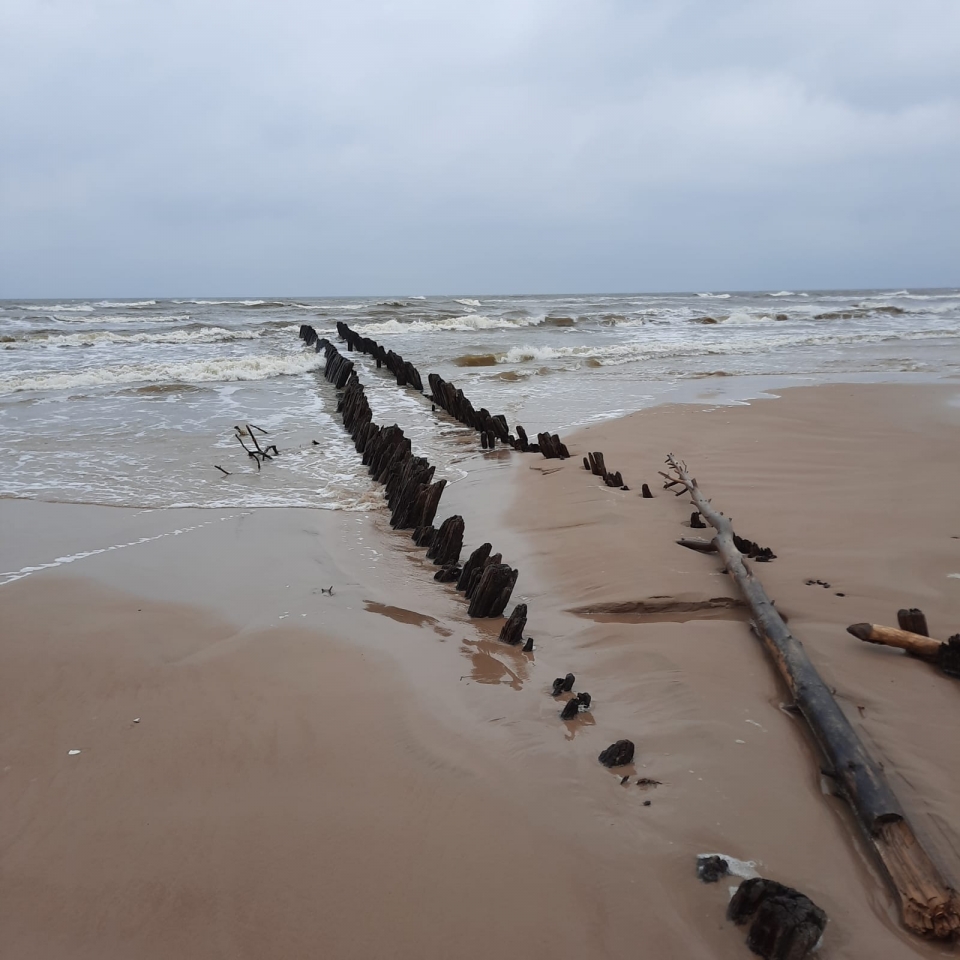
How do I see the situation on the coast? Let us assume there is a property with a protected dune. The owner is told: you own 2 or 3 hectares, you cannot build near the dune or in the dune, but go ahead and build elsewhere on your property, following building regulations. Yes, the DAP will want to supervise and inspect; please, that is no problem!
I have also encountered this situation: a person has managed, worked, nurtured, planted... and “received” a habitat. Therefore, as a result of the owner's activities, biodiversity has improved, for which they are being punished in a real and tangible way.
To what extent can one restrict? The Talsi municipality is quite forested and rich in values
Saeima deputy Ilze Indriksone submitted amendments to the Protection Zone Law, which have not yet been examined. During the discussion in the Saeima, the already familiar demagoguery began: the pines will disappear, the dunes will be gone... Well, well... We laughed about this, saying that soon enough, people would be included in the lists or descriptions of habitats in Cabinet of Ministers regulations. Not even the Livonians, but even Latvians on the seashore will become a rarity and highly protected. Is that the goal?
There is another unpleasant precedent that is being gradually implemented by the DAP in connection with territorial planning. In the Dundaga municipality, they have been “fighting” with this plan and the work on it for several years, and it seems that the Council of this convocation will not finish it; the work will remain on the shoulders and responsibility of the new Talsi municipality. Speaking of coastal villages, one problem is the habitats I described, but there is another: the DAP believes, “Honoured Dundaga municipality territory planners, you have marked the coastal village territories as too large.” How so? The territories have been marked up to the borders of the last house in the village, but they think they are too large. “They must be smaller!” What does that mean? The village territory is “trimmed”, and if a property is left outside of it, completely different requirements will apply to it than in the village just a few dozen metres away... That is not good! Again, there will be properties with newly created (newly invented) restrictions.
I think one of the first jobs for the new Talsi municipal council will be to bring the Minister of Environmental Protection and Regional Development to the coast and show them the Mazirbe road, the properties, and a few other things in person, so the minister can explain, while looking the local people in the eyes, whether their goal is to make this Latvian territory empty, or... What exactly does the ministry and the minister want to achieve with ill-considered actions?
There has been frequent change of power in the Talsi municipality during this convocation. What can the deputies not agree on?
There are plenty of reasons for the inability to agree: a bit of the old style of thinking, fragmentation of the council, very personal ambitions, mentality, and also a lack of desire to work. What I have seen myself—before the last change in leadership, there were a lot of intrigues and behind-the-scenes actions in the Talsi municipal council, but when they were offered to take power into their own hands and were offered support, the answer was—no, not us...
If there is no understandable order in the council, what do the people of the municipality, for whom the council works, say about it?
Clearly, it is not good! Before elections, various surveys are often conducted; this year, one of the most frequently given answers was: the people of the municipality want proper management in the region. At the moment, the issue has stabilised. Unfortunately, a similar example is in the Dundaga municipality, where there is no leadership at all... One must ask: what does this mean—people trusted you by voting, but you... do nothing and even hinder others. The Dundaga municipality is large in area, with a small population.
How have the negotiations between Talsi, Roja, Mērsrags and Dundaga for reunification been going?
Work is underway. It is slightly delayed and hindered by the lack of power in Dundaga, where the municipality does not delegate people to working groups, so information exchange is not complete. For those who are working, the work is constructive.
By delving into various issues, I see that there are no unsolvable problems.
The southern part of the Talsi municipality is affected by the railway, which is still called a modern mode of transport. There is no passenger train to Ventspils with a stop in Stende; there are many smoking buses on the Riga-Talsi and Riga-Ventspils routes...
This should be asked of the management of “Pasažieru vilciens”. I have not heard from residents that they need a train, or perhaps they do not think about it because they are used to it. If there were a train, they would probably use it! The Stende station is quite close for the people of Talsi and Sabile and would be convenient.
A year ago, they were saying that in an emergency, pubs outside Riga are having a good time – plenty of work.
Pubs, for the most part, are still in winter hibernation. But there are two good examples of how small businesses are operating. The “Vizbuļi” pub in Bērzciems, which is in the Tukums municipality. During the Covid-19 period, quite a few Riga residents who work remotely found a home in the village. The owner of “Vizbuļi” says that in the last two years, outside of the season, there is a lot of work, and there is no time to sit idle. The second example: in Mazirbe, there is a small shop that is often sold out... So, activity has not gone quiet.
Yes, last summer there were many guests from Lithuania on the coast, but... They do not leave any money! They arrive in a car or a camper where they can spend the night; they bring a lot of food with them and mostly do not buy anything here. So—they use the infrastructure, but do not leave money. While being happy about tourists, we should not forget the practical side.
The first mandatory tasks for the new Talsi municipal council
The administrative-territorial reform and the accompanying practical issues must be completed. For example, in similar institutions in different municipalities, employees have different salaries (which would need to be harmonised). What will happen to the current municipal employees when they merge? This would be one complex issue. Speaking of management, the law includes so-called level 0 management, or a structure chosen by the residents (a public council). In Talsi, it would be important to have representation from Kolka, Sabile, Roja, etc. Parish administrations, it seems, will remain and will be appointed as before. The law, however, has not yet been passed; we have to see what the final result will be.
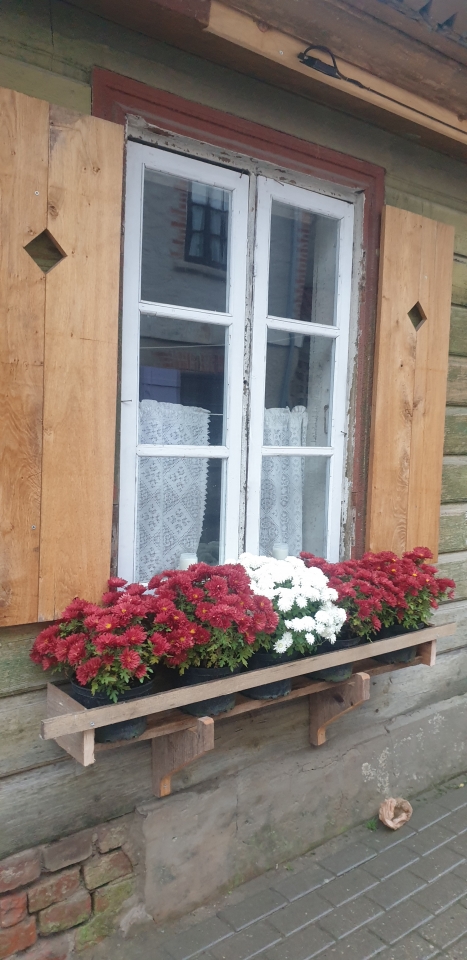
The next task—territorial planning. Furthermore, the creation of a multifunctional hall has been started in Talsi, the work for which has already taken four or five years; it is a public-private partnership model. It is felt that the people of Talsi are waiting for the next Council's work in the development and completion of this project, as it would be a tourist attraction. Looking at cultural issues, good work has been done in Roja—the stage—which, like all of us, is still “waiting” for the end of Covid-19 so that the locals (and not only them) can experience and enjoy good cultural events.
There will be two ports in the municipality: Roja and Mērsrags
The ports are small, but quite different. Mērsrags has more cargo, Roja—yachts. In the Roja port, there is an opportunity for young people to learn to sail yachts; this has also been supported by the municipality, so potential for development is seen here. However, the Roja port has a very serious problem—the burden of old debts, which has formed approximately since 2007, when the port was deepened; the debts have accumulated, and the question will probably have to be solved at the national level, because it is impossible for the municipality to pay the debts.
What to do so there are no peripheral areas in the municipality (in the bad sense)? Kolka, Sabile, Stende, Dundaga... What about cleaning up abandoned places? How to force private owners (collectors, owners of run-down properties) whose yards are full of scrap to tidy up their property? Or, for example, near Sabile, there are frightening-looking crumbling hangars. After all, there is Pedvāle, there is the Sabile Wine Festival, there is the road to Kuldīga, which many travellers take, who also see the mess.
The question of peripheral areas is broader: it is linked to the existence of schools and the accessibility of social services in parishes. As I know, there is a plan in the Talsi municipality to keep everything existing that is needed by the residents. I think there is a certain specificity in the Dundaga municipality, which, as I mentioned, is sparsely populated (about five residents per square kilometre). Coastal regions need a special approach. For example, if two children need to be taken to school from a village, the council must do everything to get these children to school, rather than driving the children and parents away from the coast or forcing them to move.
Regarding the cleanup of specific places—the municipality has the opportunity to prepare and adopt binding regulations, in which to concretise and specify the requirements for property maintenance. If the owner does not do so, start with warnings, offer solutions, and only then... reach for the whip.
Talsi is and will be the largest employer in the municipality. Currently, an inventory of properties has been started, which the new council will finish. The municipality needs a clear and definite housing policy so that it is possible to invite people by offering them work, infrastructure, and, if necessary, housing. The municipality has good cooperation with the Talsi Entrepreneurs' Club. We must think about attracting young specialists, because, for example, the shortage of family doctors... the shortage of other specialists... How to invite them to Talsi, what to offer? We need a carrot, which, metaphorically speaking, can be an apartment or housing, the availability of kindergartens and schools...