



If we want to increase the prosperity of the state and society, we need manufacturing, the result of which must have high added value, emphasizes Normunds Ramanis, Head of Metalworking at “Stiga RM”. In the conversation, he stresses that a large proportion of Latvian companies engaged in metalworking provide mainly simple technological processes, and there are not many companies that carry out the entire production cycle from design to manufacturing. “Stiga RM Metāls” is one of them.
Normunds Ramanis is interviewed by Māris Liopa, Chairman of the Forest Certification Council of Latvia, and Pauls Rēvelis, editor of zemeunvalsts.lv.
Did you have any experience in metalworking before working at “Stiga RM”?
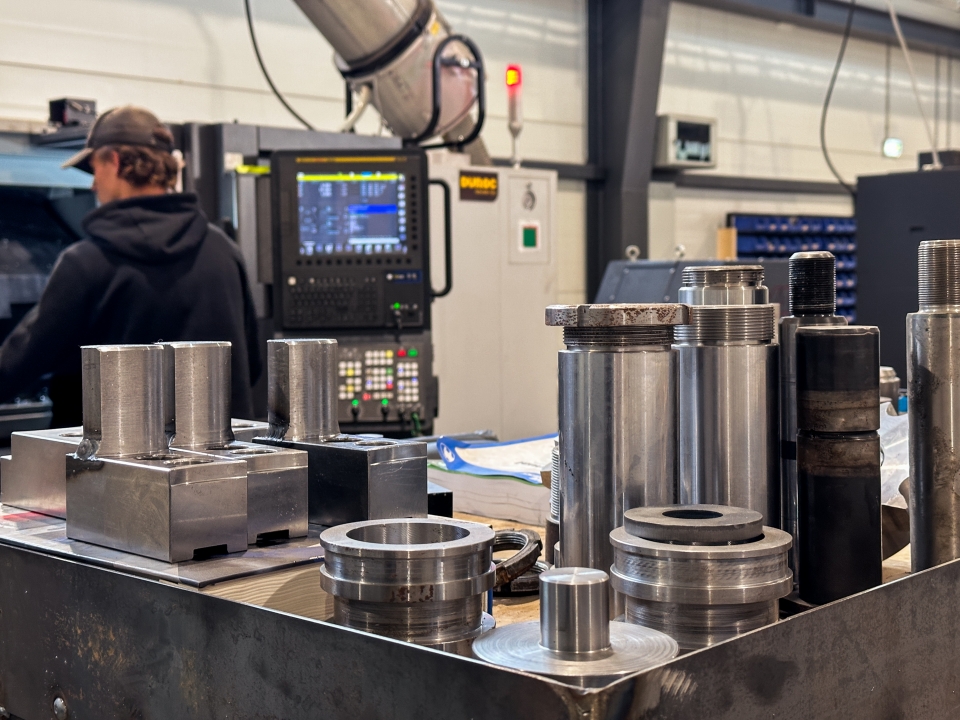
I have been involved in metalworking since 2005, when I started working in a small family business. The orders were interesting but small. The work at “Stiga RM” is on a different level and scale – whereas previously I gained experience in the mass production of parts for building structures, now I can talk about the highest peaks in mechanical engineering. In the metalworking plant in Tukums, we produce a wide range of equipment, such as conveyors, which require extensive knowledge at every stage of production, because we design everything necessary on-site at the factory.
Since 2023, we have had two designers working for us; before that, there was one, but we realized that we needed reinforcements because the volume was only growing. Both colleagues are graduates of the Faculty of Engineering at LBTU, and their work experience is slightly different. Using the opportunity to generate ideas themselves, to improve and perfect processes, they draft, design, and draw everything that is ordered and that we dream up ourselves, often “putting our heads together” with colleagues at the Kuldīga plywood factory.
Visiting Kuldīga, listening to Viesturs Krēvics, director of the birch plywood factory, who proudly emphasized more than once: “This was produced here, this is our work...” and seeing what has been achieved, thoughts of what is often heard crossed my mind: “Metalworking? Yes, Liepāja had the “Metalurgs” [factory], which was closed! Is there anything else?”. A few years ago, the people of Saldus were happy to talk about their metalworking companies, and now we can hear it from the people of Tukums district as well...
I would agree – there are many metalworking companies in Latvia that part of the public does not know about, even though they encounter the results of their work quite often in everyday life. I have not studied the statistics to evaluate the situation very accurately, but as far as I know, a large part of these companies are engaged in the production of metal building structures. For the most part, this is a simple technological process – cut the “iron” to length, cut it, and weld it. There are not many companies that design and manufacture themselves, that is, carry out the entire production cycle.
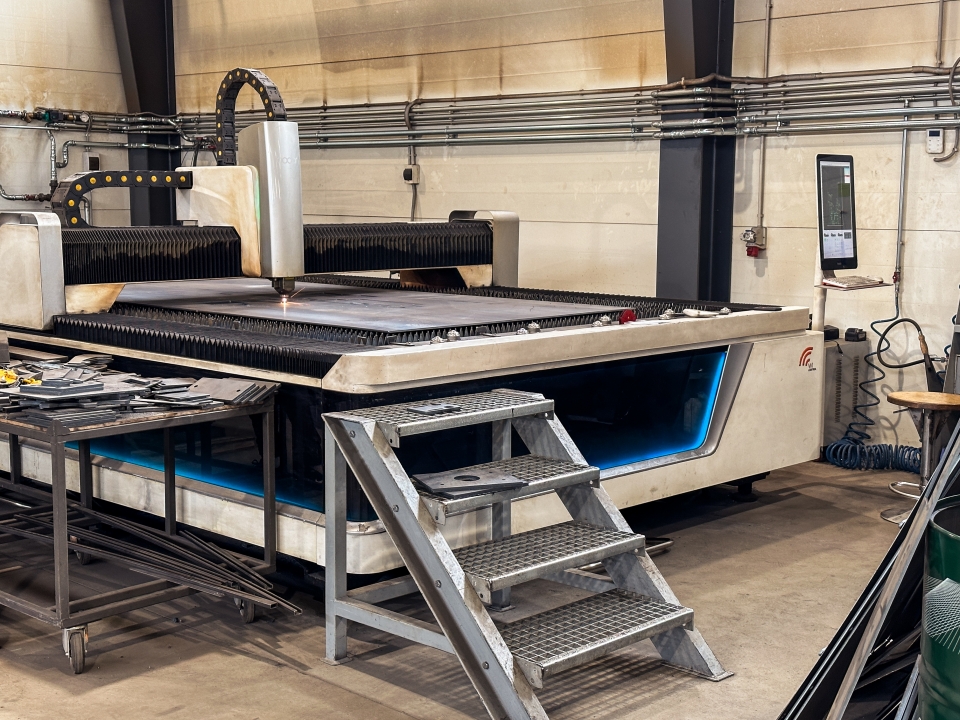
As is known, the reason for creating and founding the metalworking company was “Stiga RM's” need for metal structures that are required “not tomorrow or the day after, but yesterday and today”.
Well said! When the development and modernization of the Kuldīga birch plywood factory began, it became clear that it was necessary to change the old equipment, with which it was already becoming difficult to produce quality material in the necessary volume. The company's management chose modernization and reconstruction – new buildings, new, more modern equipment. If until then our experience was mainly associated with repairing old machines, then upon installing the new equipment, a series of necessary side-processes began – a small platform is needed here, another conveyor there, etc. In cooperation with the equipment manufacturers in Finland, the company's management agreed that we would produce the parts that we can manufacture in Latvia ourselves. I will add that the Finnish company plans and designs, but often uses outsourcing in production, for example, companies in Poland and Latvia. The Finns know how to design (know-how) a debarking machine, for example, but the remaining parts, such as conveyors, are already a relatively simple process. Over the years, the company's employees have “honed” all the equipment to perfection. We work according to their drawings, at the same time, as I mentioned, we also find some flaws or nuances that can be improved. By communicating with colleagues in Kuldīga, we explain that this or that assembly, diagram, or process can be simplified or made more convenient. There are small details that are worth improving because our people will work with the respective equipment.
The issue of raw materials has always been relevant in the metal industry. Has the geopolitical situation affected it?
Ukraine was one of the largest suppliers of steel in Central Europe. When the war started, the market for raw materials “showed” for several months that many companies had not been prepared for such a turn of events. One could even say that a certain vacuum of materials set in.
The situation remained unclear for a long time because no one understood or knew what would happen, what to expect, or what to predict. Prices literally jumped to unprecedented heights. If companies had the finances and the opportunity, they bought reserves. We also built up stocks so that it would be possible to produce when necessary. At the end of last year, the situation began to stabilize, and now the market is “normal”. Currently, we purchase raw materials from Poland, Germany, Italy, and Scandinavian countries.
There is a future for production automation. What is the experience of the colleagues working in the factory?
Everyone in the team has experience in metalworking, but when hiring, for example, a CNC machine operator who has graduated from the Riga Technical College with a specialization in mechanical engineering, the company paid for his additional training. I can say that this colleague has grown professionally a great deal with us. We have two CNC operators who work with all CNC machine tools and can replace each other if and when necessary.
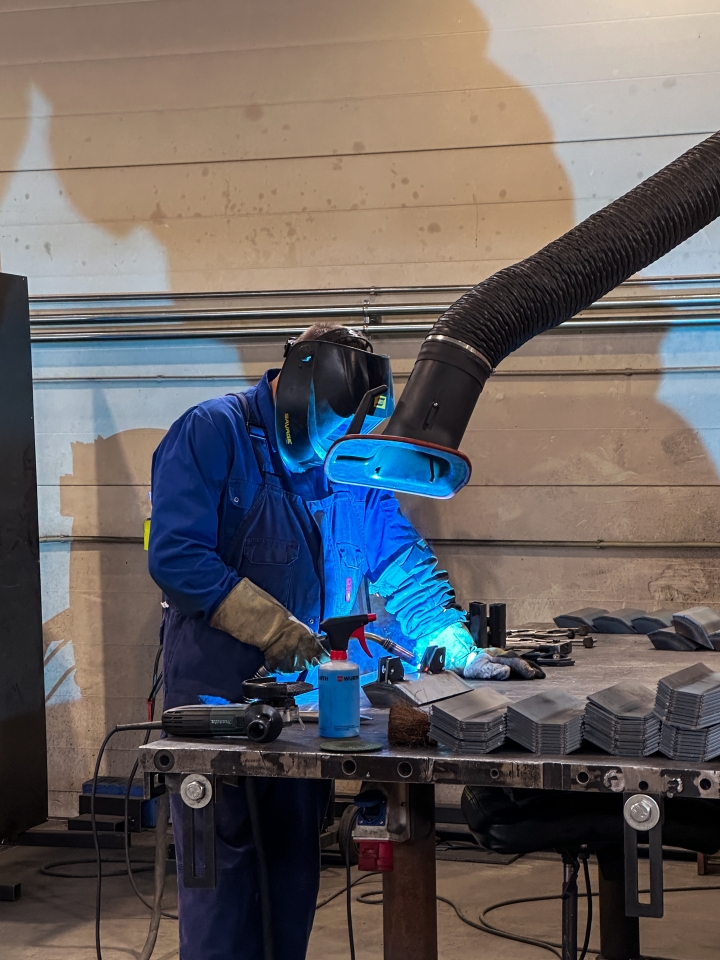
An important position, as one can see in the factory, is a welder. Are welders trained in any educational institution in Latvia?
Based on experience in my previous workplace, I remember that I have hired young people who have just finished relevant courses. Regarding professionals of the older generation, I must say that in the Riga area, many welders for some reason do not speak Latvian and do not want to learn, I do not know the reason, but such an attitude is not acceptable in the company. We invited young people who wanted to learn to work; everything depends on the desire and attitude. There is a great opportunity to compare – once there were enough people who came to work just to “check a box” because “one has to work somewhere, one has to do something”. Now the younger generation pleases with their attitude and thinking – we come to work and get paid accordingly for it. The thinking is changing.
Of course, a lot depends on the attitude of employers towards employees. I know many who think about their employees and development. “Stiga RM” is undoubtedly one of them.
So we are not talking about an advertising campaign with a sign on a car: “People are a value!”, but about a visible, tangible, and understandable attitude for everyone.
I would call it mutual synergy. The company provides good and comfortable working conditions, and the employee makes their contribution to the company. Everyone has their own contribution and input.
A question that is often relevant in the forestry sector. You mentioned young colleagues who start working almost fresh out of school – how prepared are they for practical work, and how well do educational institutions prepare them for work?
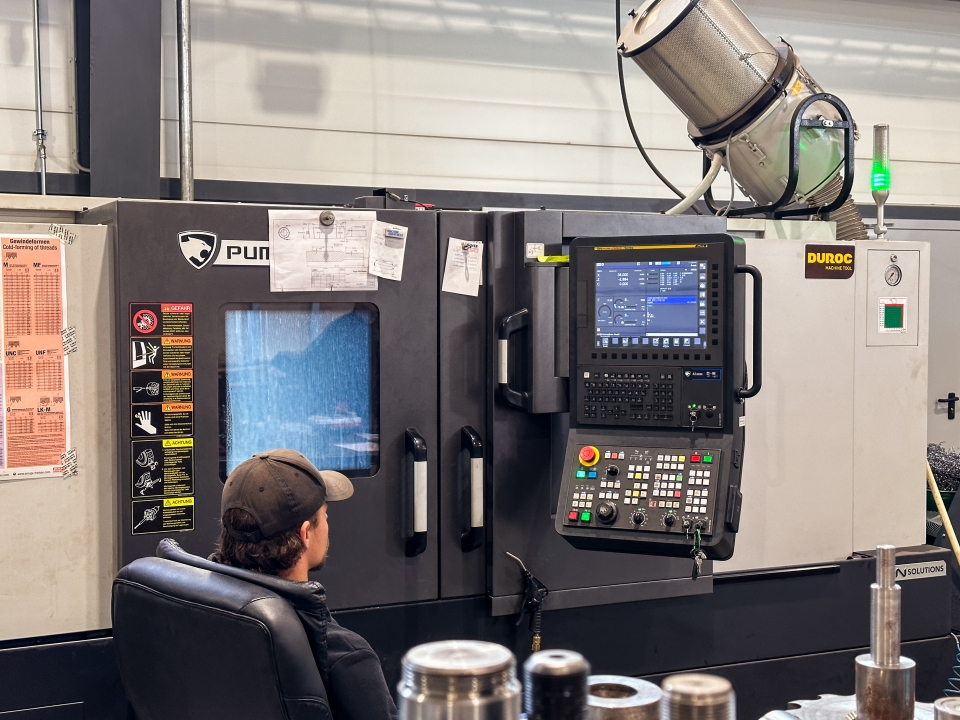
In colleges, technical schools, and higher education institutions, everyone has the opportunity to practice during their studies. During the internship, the young person both gains real, tangible skills and understands whether they are truly interested in this work. Of course, to a certain extent, it is also a game of chance – which company you end up in during the internship, what the team is like, what your supervisor is like; when you master and learn what is necessary and take your first steps, it becomes clear whether the chosen profession is the right one.
Are there opportunities for young people from educational institutions to have an internship at the factory?
So far we have not taken any, there have been interested individuals, and in general, such an opportunity exists. Here, one would have to emphasize language skills again, which applies both specifically to knowledge of terminology in the metalworking industry and to daily communication in general. We live in Latvia, we have one state language, and either you speak Latvian, or we are not on the same path. Such an attitude will undoubtedly also be seen later in relation to work duties.
Speaking of the company's further plans, it is understood that the work schedule for a certain period of time is clear.
Exactly – our plans are clear and determined for two or three years! We will probably not stop at what has been achieved, because there are many ideas, development will continue, and there is a future for production. If we want to raise the prosperity of the state and society, we need production, the result of which must be high added value.
Developments of the last few years – the European Green Deal, carbon footprint, sustainability reports – do they affect the company's work??
Regardless of which manufacturing industry we are talking about, one must strive for the ecological side, that is, manufacturing in a way that is less harmful to the environment.
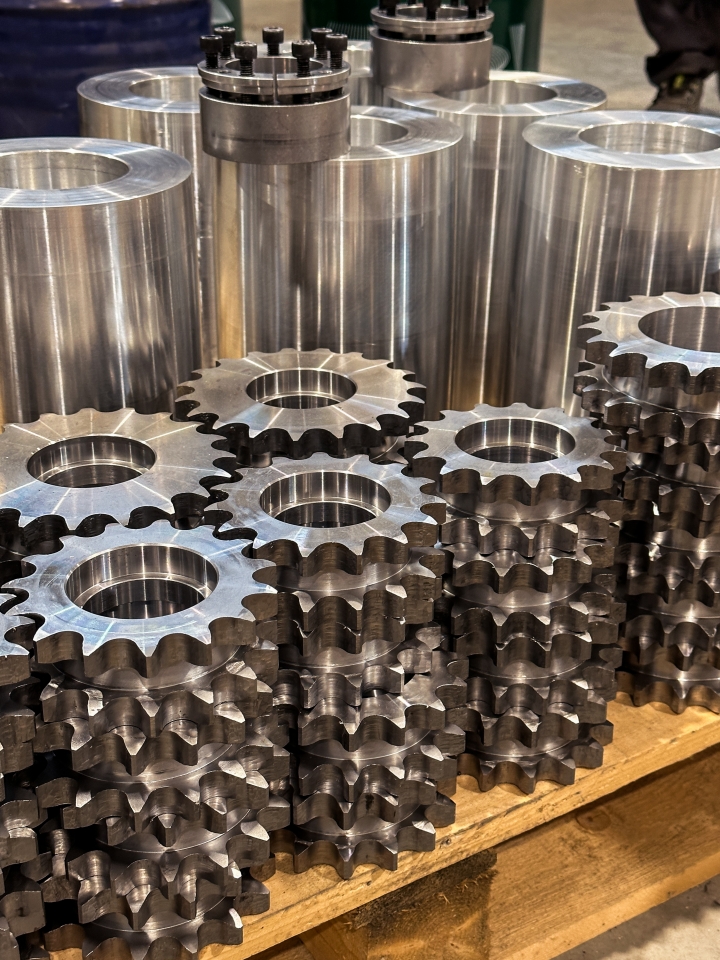
It seems that no manufacturing process can completely avoid problematic issues: when cutting metal, metal shavings remain – that would be one; in laser cutting, there are both fumes and gases, without which welding work is impossible. Innovations appear – laser welding – which, however, only applies to thin materials, whereas when working with thick ones, existing methods must be used. Production is not yet that highly technologically advanced.
How many people work in the metalworking factory?
In metalworking, there will be “more than a dozen”, in the car service right next door – twice as many, but in total more than 80 employees. I personally drive to work from Jūrmala, the majority of my colleagues are from Tukums district, which is very important from an employee's point of view – the less time you spend on the road, the more time is left for family and yourself. One of ours has 16 years of work experience in Great Britain. He does not want to return there – yes, the salary was higher, but you feel like a stranger, you are not and will never be a local, but little by little, as time goes by, you see that the children speak Latvian only at home, and you conclude that it is not really what you want.
Regarding the upcoming move of the factory to Šlokenbeka...
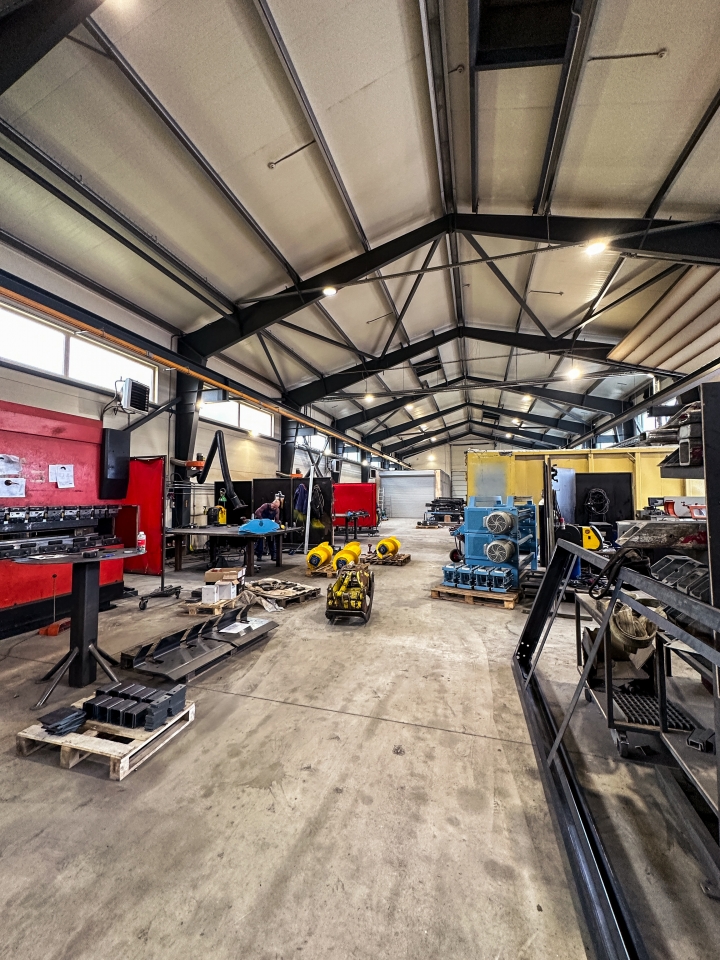
The metalworking plant started work in 2018, in 2022 it was expanded nearly two times and it seemed that now we would be able to work at full capacity and everything would be great for a while, but... a year has passed, and the premises have already become cramped. “Stiga RM” recently purchased the premises of a discontinued company, and they are very suitable for metal production. After carrying out minor renovations, we plan to move in the spring of 2024 – spring for Latvians is associated with the moving day (Jurģi), and such a day awaits us too.
Moving is necessary, it must be renovated, but production must not be interrupted.
That must be taken into account and planned; perhaps there will be a pause lasting a week, no more. The company's auto department will continue to work in the current premises. We have both log trucks and a fleet of light vehicles, there will be enough work.
Do you see new neighbors, entrepreneurs, working in the industrial park of Tukums district? In previous conversations with Andris Ramoliņš and Jānis Osis, the hope was expressed that there would be some.
I also hope so, although there is no information about new projects or plans yet. Knowing the situation in the banking sector, money has become very expensive, and if a company is not large and strong, it is currently very difficult to implement new projects. Many good ideas run into the need or lack of funding, and the cost of money.
Will you be looking for new employees for the new premises?
We are already doing that! We have completely occupied and utilized the premises where we are currently talking; we will need new employees, and one of the solutions could be working in two shifts.
All the metalworking factory's production currently relates to “Stiga RM's” internal demand. Has there been no interest from other potential clients?
Of course there is, but we are forced to refuse because we are fully occupied with our own work. Speaking with the company's management, it has become clear that upon finishing the large projects, including the modernization of the Kuldīga factory and the Tukums acoustic board factory, we are preparing for a situation where we will have stabilized as a serious and competitive team in order to enter the export market.
Are there other high-level companies in Latvia that have a specific core business and are capable of supplying themselves with what is necessary within the company?
I know several companies in other industries; a sufficient number of large and serious companies have their own production facilities that work specifically for the company's needs. Such a situation is logical from both a business and a practical point of view – a company must be able to be self-sufficient; one cannot do without it. If you rely 100% on outsourcing, there may come a time when a production line that must run in 24/7 mode can stop. Downtime is very expensive, and we can only solve it ourselves. A simple example – if something breaks or stops on a Friday evening or Saturday morning, one cannot wait until Monday, one must deal with it oneself.
In your opinion, how should Latvia's future be evaluated, and what is your view on the current situation?
The future belongs to manufacturing companies. Latvia does not have large natural resources, except for timber; entrepreneurs must strive for the highest possible added value and the production of this type of product. Transforming logs into acoustic boards or plywood, as in our case, or into furniture, or any other product that will add value to the wood. Production must be as modern, automated, and robotized as possible, where the education and knowledge of employees has and will have enormous importance. In such jobs, getting new, skilled, and interested specialists will not be a problem. To attract employees, there must be good working conditions. A great many companies in Latvia are introducing so-called robotic arms. A robot does not get sick, but it is controlled by an operator. We must ensure high productivity in order to pay a good salary. Latvia's future is undoubtedly in automation and modern manufacturing.
The Latvian state can have a significant place in the development of the forest sector and its processing sector – woodworking – by implementing it with reasonable actions and appropriate decisions, especially on the very important issue of long-term availability of wood resources, as well as adequate action in overcoming market failures.