
Landowners have no issue with natural values, including protected bird species and their conservation, but they believe a “major overhaul” is needed in the procedures for determining (identifying) protected natural values, how their existence (status) is re-evaluated after a certain period of time, and, moreover, that the owner or their authorised representative must be required to participate in this survey.
The importance and necessity of such procedures were highlighted in a discussion organised by “Dienas Bizness” in cooperation with the portal zemeunvalsts.lv regarding how restrictions on economic activity are imposed, what opportunities landowners have to influence this, and what could be done to reduce conflict situations between landowners and those who set the restrictions. Landowners expressed their conviction that such a “major overhaul” is needed as soon as possible, while simultaneously reviewing compensation amounts for those who are denied or restricted from economic activity. Compensation for restrictions on economic activity must be fair and proportional to the value of the property.
Years of running in circles
“Everything began in 2013, when a compatriot living abroad who had inherited land decided to sell their property, dividing it into agricultural and forestry land. The company was ready to purchase the forests, and to ensure a correct valuation, the owner commissioned a forest inventory, which was carried out and submitted to the local office of the State Forest Service (VMD). The document was accepted without corrections or objections, and without any mention of a micro-reserve or protected area. SIA “MS Kārkli” purchased the land with the forest and requested a felling permit in accordance with the forest management plan. On 3 June 2013, the Kandava division of the VMD Zemgale regional forest administration issued one (with a validity period until 31 December 2015). Like a bolt from the blue in mid-summer, the same VMD Kandava division issued a notice (on 21 June) regarding the revocation of the issued felling permit because a black stork micro-reserve had been registered on 21 June 2010,” Mārcis Sniedziņš recounts the past events. He did not hide his surprise, as in the 11-hectare forest (which is surrounded by clear-cuts, and where logging has continued in recent years), there is neither a black stork nor its nest.
“How could it be that the State Forest Service accepts a forest inventory plan and issues a felling permit, but then announces that a micro-reserve was established there three years prior?” asks a puzzled M. Sniedziņš. With today's knowledge and experience, he believes that they should have exercised their right to log the forest at the time and recovered the funds invested in it. “Back then, I believed in the rule of law in Latvia, so we packed our saws into the cars and left the forest, which we could have logged based on the felling permit issued. Now I believe I acted incorrectly,” concludes M. Sniedziņš. He was surprised by the types of documents the court accepts for evaluation, but was not surprised by the court's decision that the micro-reserve had been registered at the specific location; meanwhile, when “MS Kārkli” could have claimed damages from the state institution, time was dragged out, and the micro-reserve disappeared from the territory in question – it was revoked, which in turn was challenged by ornithologists. “Paradoxically, it turned out that no one is interested in the actual facts of the case – what is or, conversely, is not realistically visible and present in nature, but entries in databases are sufficient, which in turn means that there is a circle of people who can record a forest as being suitable (appropriate) for the protection of specific bird species or wildlife without even visiting it,” says M. Sniedziņš.
Neither the forest nor the money
“I recovered my house together with the land (23 ha) and decided to renovate the building; I saw the forest, which had reached the state-mandated felling age, as a source of funding. I did not receive a felling ticket because a black stork nest was found, even though I have never seen the nest nor the bird itself. Despite this, a felling ban was imposed on 10 hectares of forest,” reveals Miķelis Taukačs, owner of “MTS serviss”. He also wrote a request to the Nature Conservation Agency to conduct a repeat survey, but the owner himself was not invited to participate, and after receiving a reply in November that the survey concluded the “nest is occupied,” he lost hope.
“Now my property has become a buffer zone for a lesser spotted eagle nest found on a neighbouring property, so I am ‘overwhelmed’ with restrictions on all sides,” is how M. Taukačs describes the current situation. He admits that he is currently left without a forest, as the 90-year-old forest, once valued at around 60,000 lats, has simply perished – it has become overgrown, and there is no money to invest in his house either. “I receive 160 euros per hectare, which they kindly provide as compensation,” says M. Taukačs. M. Sniedziņš adds: "If there is an expert statement that the forest has lost its value, the micro-reserve should also be revocable."

A glimmer of hope after 20 years
“At one time, there was an opportunity to purchase a former Soviet army base with land near Garkalne, which we did. Problems began in 2005, when we wanted to obtain a building permit for construction – it turned out that the military had taken great care of nature, so the area was included in the Natura 2000 programme to protect the European roller. Furthermore, there are now other bird species – the hoopoehoopoe, etc.,” Aigars Orskis reveals his experience. He was surprised at the time by the fact that he had not received a single letter regarding the inclusion of the property in the Natura 2000 programme. “We cannot do anything on the property, not even enter by car to check what is going on, because the local residents living nearby immediately call the police. At the same time, these vigilant police informers do not hesitate to drill into the birch trees on our property in the spring to collect sap, pick mushrooms and gather firewood in the autumn, and use it as a place to walk their pets.”
However, the Nature Conservation Agency did not allow the property to be fenced; the only thing permitted is to pay real estate tax on land that we cannot use in any way, explains A. Orskis. He admits that he has never managed to see a European roller on his own protected property, whereas the owners of neighbouring houses have seen one even in their own yards, even though their properties are not located within a protected area. “We have not lost hope and continue to fight to be allowed to carry out at least minimal construction in this area, especially since the foundations and ruins of army buildings (warehouses) are still there,” describes A. Orskis. He notes that draft documents have now been prepared that will allow one building to be constructed per land plot. “It is better than nothing, but one must account for the fact that on average, an owner has 3 to 5 hectares of land,” adds A. Orskis. He mentions, however, that those who acquired this property in 2000 already have grandchildren who perhaps, after several years, will actually be able to build themselves a house.
Too much freedom
“There must be control – what is written, where, and why specific people are ‘determining’ restrictions. At one time, we approached a European-certified ornithologist to receive an expert opinion, but instead received a reply that he had no reason to come to the property because ‘there is nothing there’ – data in the ‘Ozols’ database had been changed. It is that simple! But we are talking about 12 hectares and 320,000 euros, which not even the grandchildren will earn back, especially if the owner, as a legal entity, cannot even receive those 160 euros per hectare if they have been operating at a loss,” M. Sniedziņš points out regarding the problem. He reminds us that, in parallel, one must calculate the costs of legal services in administrative litigation, which over six years has amounted to about 60,000 euros. “Now we must find funds to pay the court fee required to file a claim in civil proceedings – 6,000 euros. This means that everything is being done to ensure it is impossible to fight for one’s own justice,” concludes M. Sniedziņš harshly. In his opinion, property surveys should be documented, thereby preventing unnecessary tension between landowners and those surveying, identifying, and setting the restrictions. “Just one example: an ornithologist announces – you have a lesser spotted eagle nest found, but when I say – I will ask another expert to survey it and provide a corresponding opinion, after a few hours the local surveyor cancels their previous report because it is supposedly not a lesser spotted eagle nest. How is this to be understood? Does this Latvian expert lack knowledge and understanding? Is this some strange coincidence?” M. Sniedziņš outlines the range of questions. He points out that in such situations, questions arise about how well-founded and realistic the found natural values and the restrictions and bans set for their protection actually are.
The surprises never end
“About six months ago, I received a letter from ‘nature counters’ that natural values had been found right in a coniferous forest, which occupies only 3 hectares out of the total forest territory, but for some reason, restrictions are imposed on the entire 12 hectares. It is paradoxical that in 2019, in litigation regarding this same territory, it was concluded that there was nothing valuable or protected in it. An answer was promised as to how this is possible, but so far it has not been received,” M. Sniedziņš recounts his experience. He admits that he lives in the Abava Valley, which is a Natura 2000 territory, and his experience shows a strange situation. “When the nature counting began, I sent an official letter to the responsible institution stating that nature counters are forbidden to visit any of my properties without my presence; in my presence, none of the counters found any natural values. At the same time, in a newly purchased property (adjacent to the existing one), natural values were found. This means: if the owner does not participate in the survey, everything will depend on the integrity of the surveyor,” says M. Sniedziņš. He points to another problem, namely, biologically high-quality grasslands. “I have 0.4 hectares of them on my property, where, after a long correspondence with the Nature Conservation Agency, I planted 70 apple trees in order to receive support from the Rural Support Service. In 2021, the trouble began, because as a land unit, it was decoded as an apple orchard, for which I received threats of being held accountable for allegedly destroying biologically high-quality grassland. They come and inspect, but do not establish any destruction of the grassland. What is the struggle about? About what code is in some database or about nature conservation?” M. Sniedziņš expresses his experience. He is by no means the only person in Latvia with similar problems; other landowners just do not speak about them publicly. “Unfortunately, in the past, land and forest were an asset one could rely on, not like, for example, cream with a specific expiry date. However, at present, investments in land and forest can no longer be considered secure, because at any moment they can turn into zero, without any possibility of recovering what was invested,” reasons M. Sniedziņš. In his opinion, it is not right that landowners only have obligations, while their rights are increasingly reduced or their possibilities of use are narrowed. “How long will the rights of landowners be less important than the interests of everything else?” M. Sniedziņš rightfully asks.
Fair compensation
“If the state cares about natural values and their protection in deeds, not words, and the specific owner is prepared to sell the land, the state should buy it at a price that would not be less than 30% of the real market value (wood in the forest and also the land), if it is not denied or restricted from economic activity,” suggests A. Orskis. In his opinion, that would be a good choice for a person. “If the land value for a neighbour is 10 €/m2 and next door it is 0 euros, that is a significant difference,” says M. Sniedziņš. In his opinion, fair compensation is a vital foundation for the owner (unless they are prepared to sell the property in question) to be interested not only in the existence of natural values but also in their preservation. “I fear that reality may be very different from what is written on paper and seen in databases. Perhaps, to preserve the natural values that exist in reality, completely different tools are needed. For example, support for biologically valuable grassland is 56 euros/ha, but the owner cannot do anything else with it but mow the grass at a specific time, and mowing costs more than the amount of support. This means that there is no economic motivation to work with this land, which has biologically valuable grasslands – its value is zero, while the value of adjacent land used for economic activity is around 5,000 euros/ha,” says M. Sniedziņš. M. Taukačs points out that, according to the information at his disposal, compensation amounts elsewhere are higher – around 500 euros per hectare. At one time, the state paid for the timber existing in the forest (where economic activity was restricted). He would agree to such a compensation mechanism, but would not be prepared to part with the property. “In this situation, no one will dare to impose and register empty bans because someone has to pay for them, but at present, one can register anywhere and anything, and one might not even have to pay for it,” says M. Sniedziņš. He points out that several solutions are possible depending on how the land in question was acquired, because the situation will be different if the land was inherited versus bought. M. Taukačs sees as another solution the long-term leasing of areas to the state where economic activity restrictions have been imposed.
Discussion video available here:
https://www.youtube.com/watch?v=RlrExFgqrOY
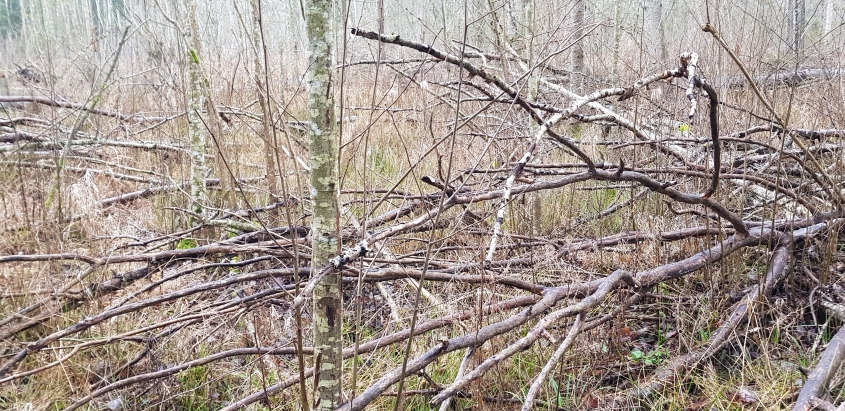
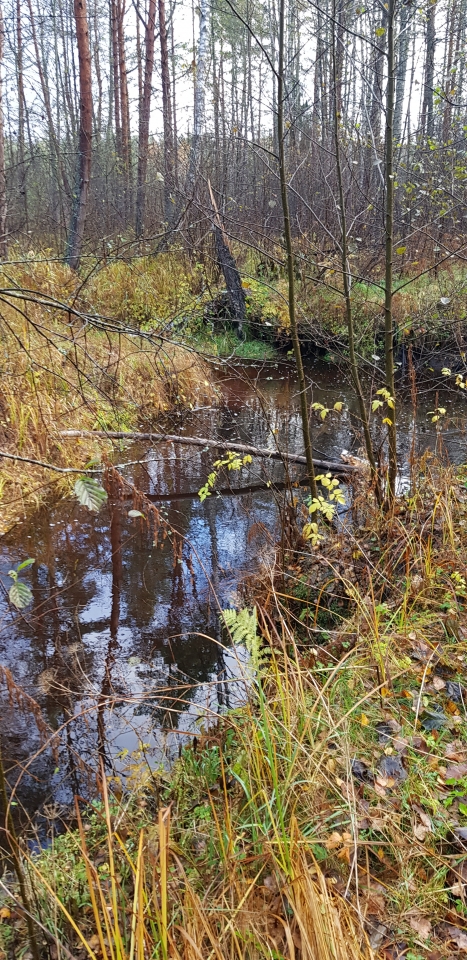
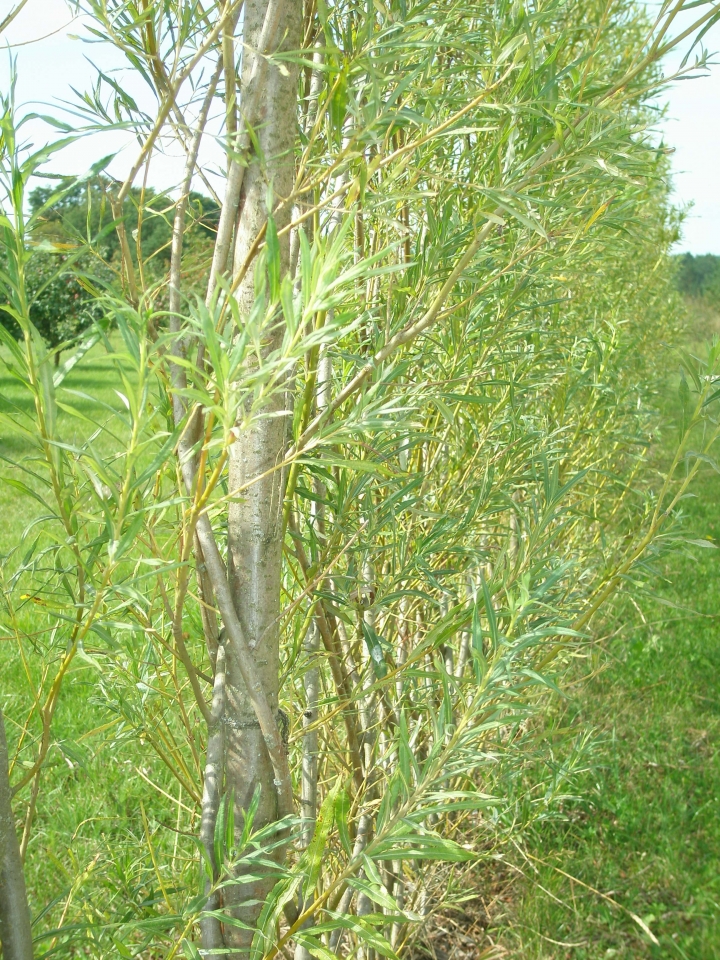
Photographs taken on the properties of the discussion participants were used.
Comments