




As this summer came and went, and continues to come and go, we had planned to publish this interview at the end of August, until our plans were very unexpectedly interrupted by the head of government. Things like that happen too.
It seems that in the last ten years we will not find a summer that everyone is happy with. Drought and the subsequent heavy wet weather characterise this summer. How is this viewed in the areas overseen by the Ministry of Transport?
In my political career, summer has been the time when one can accomplish things that, for various reasons and circumstances, have not been completed or for which there hasn't been time to tackle. The Ministry of Transport is one of those ministries whose work often involves various unexpected turns or emergency situations that take up a considerable amount of time. In the summer, you can plan your time yourself, prepare for budget negotiations, combine the priorities of the ministry with your own, so I enjoy summer in all its manifestations and keep busy at the ministry.
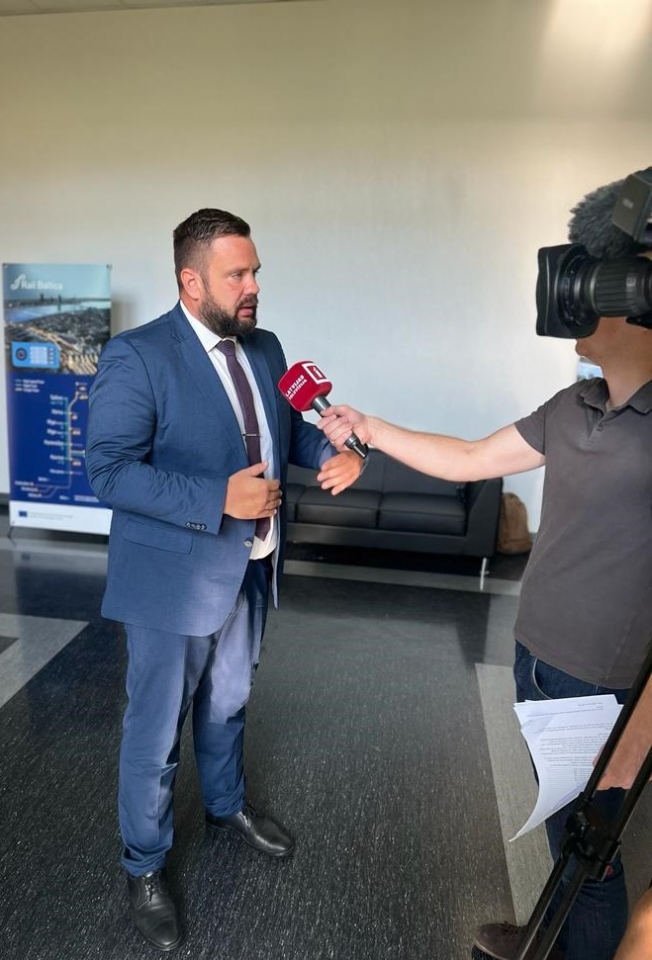
The Ministry of Transport and the minister’s office are located in the corner of a large construction site (perhaps one of the largest in Latvia at the moment) – all around, Rail Baltica is gradually taking shape, to which the connected reconstruction works of “Rīgas Satiksme” tram tracks and the reconstruction of Ģenerāļa Radziņa Embankment have been added. What does the responsible minister think, seeing day by day that and how the work of his sector is proceeding?
When I started working at the Ministry of Transport, I looked at what was happening and thought – the work often doesn't stop even at night, how long will the men keep up this pace. But – that's how it should be, that’s how it must happen, and the ministry’s main duty was and is to work through the final financial call from the European funds – so that there would be enough money (no shortage) and the work would not stop. What is currently happening at the Riga railway station hub and around Riga Airport is one of the most complex sections on the entire Rail Baltica route. As you mentioned in the question, in my opinion, it is very important that the work continues, people see it, and they see the progress of these works on a daily basis. If in the past talk about this railway line took place more in evaluating models in a virtual environment and thinking that “someday it will be”, now we can already see real work and real outlines. The progress is immense!
From time to time, critical talk arises that all state institutions, starting with the President's Chancery, the ministries, the Saeima, are concentrated in Riga. The Ministry of Transport is located in a place where, due to current construction work and corresponding traffic restrictions, no one would want to drive. Has there been any thought – well, is it the right moment to move the ministry outside the capital?
I like this idea. For example, in Jelgava, there is a castle that is not easy to put to use; sufficiently large and historic, even empty buildings can be found all over Latvia. I think, to begin with, it would be appropriate to experiment like this with institutions under the jurisdiction of the ministry to see how it happens, how people perceive it, and how they react.
Riga is the capital of the country, and its added value is its location in the centre of the state – in the past, we often heard the explanation that an institution is located in Riga because the road to it from all regions of the country is equally far or close. It must be taken into account that more than half of the country's population lives in Riga and the Pierīga region, and labour is available, so it is logical that state institution buildings are mostly located in Riga. What I find more practical – for example – our Estonian neighbours have several ministries located in one building, and I think there is great potential in that, even just in terms of mutual cooperation. If several ministries were in one building, in my opinion, the officials' desire to correspond instead of talk would disappear very soon; officials would know each other better and, accordingly, would cooperate better.
To me, entering politics from private business, starting work in the Saeima, continuing at the Ministry of Economics, and now – at the Ministry of Transport, it seemed strange that a day or two could pass during which you wouldn't see your colleagues. From time to time, a letter drops into the email inbox or a message arrives on the mobile phone, and that's it. I miss daily communication and direct contact. A modern office building, where different state institutions are combined, for example, various ministries and their subordinate institutions, would be much more effective.
In previous interviews for zemeunvalsts.lv, you emphasised that it is very important to you what the people of Tukums district, who know you very well, say about your work and how they rate it. The field overseen by the Ministry of Transport touches everyone quite tangibly – roads, traffic, transport. What do they say and advise the Minister of Transport in the Tukums area?
It is important to me that the people who cast their vote for my party in the election and gave me a plus are not disappointed, and that I live up to their expectations. Since I have been the Minister of Transport, the things and issues that we discuss with people are simple and well understood, including being very, very important. One of the basic necessities is (to be able) to get to work, to school, to the shop, to visit relatives, etc., without any problems. There are many needs, and I am asked very often about roads, their quality, and improvements for the future.
Nowadays there are no problems with communication – there are social networks, there is an opportunity to meet; if I go to Tukums district to play basketball, someone often grabs my arm and tells me that the road should be improved here and there.
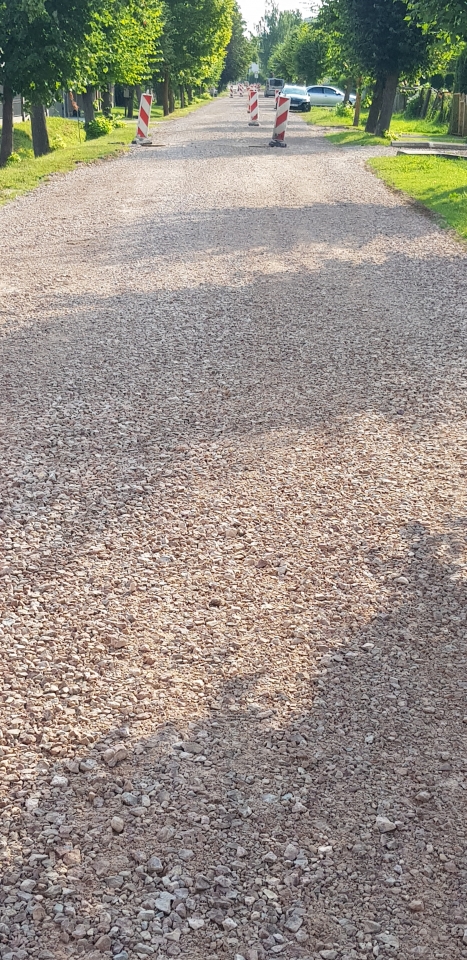
In the spring, the situation on Latvia's gravel roads is crazy. I have been on regional visits, and “Latvijas valsts ceļi” manages more than 10,000 km of gravel roads, which are often in a critical condition in the spring. This made me evaluate the situation, reflect, and gave me doping for the upcoming budget negotiations, thinking specifically about improving roads of local significance. For example, it is important that municipal centres are accessible from every parish, because it seems utopian to me personally to talk about education or health reforms if a person cannot normally get to the municipal centre where these services are available. Moreover, this centre is by no means too far away, but the road to it may be impassable. Yes, we secured additional funds in the budget for the local roads programme; we obviously won't repair all the roads with this money, but there are sections we have already tackled this summer, and there are those that are planned to be repaired next year. People appreciate this work because it is visible immediately.
As I mentioned, the spring of 2023 gave me a strong impulse regarding rural (gravel) roads. In Dobele district, near the Aizstrautnieki road, without unnecessary advertising or special invitations, I met with about 50 local residents who asked for nothing unrealistic, just the possibility to get from their place of residence to Dobele. At that moment, I seriously pondered where else in Europe a high-quality road would be a basic human need.
Over time, people's attitude towards road repairs has also changed. There was a time when any repair on any section was accompanied by nasty whining on social networks. Now, when the result is visible and you can no longer say that roads are better in Lithuania, the attitude has also changed. After all, you cannot get good roads without repair work.
This summer, active work is taking place on more than 80 road sections throughout Latvia. Perhaps some dissatisfaction is expressed from some side, but I invite you to be patient, because the result will improve everyone’s daily life. For example, in Gulbene district, where I was in July, various road sections have already been improved, and there is just as much anticipation for the continuation of the work by repairing the local roads to Beļava, Lizums, Tirza, and Druviena. The district leadership emphasised – if these roads are repaired, it will be possible to arrive at the district centre from every parish along a paved road.
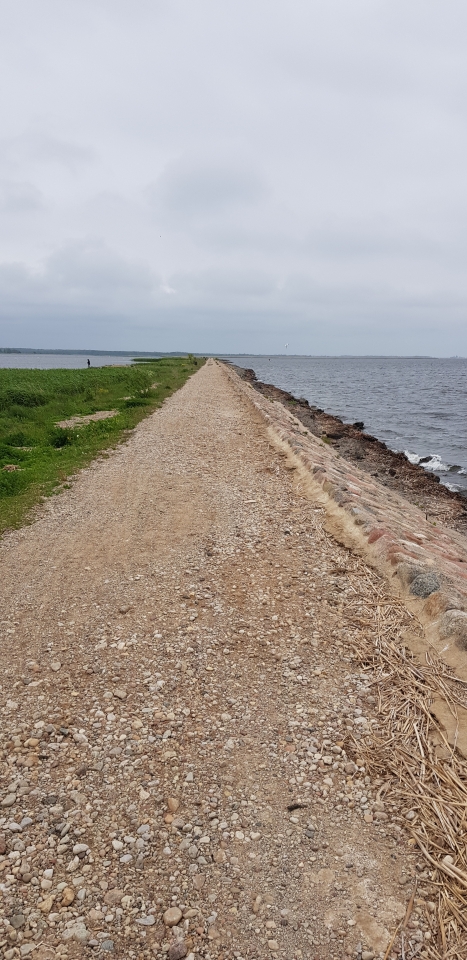
My personal dream and goal, associated with the first promise story of the administrative-territorial reform, which was promised to people and which they remember very well – is that it should be possible to travel from every parish to the district centre along a high-quality road. This promise is reminded to me from time to time, saying that such promises were made 15-20 years ago. Putting together the resources we have, and also praising my predecessors in the minister's office, I must say – the major state-significant roads have been significantly improved. Talking about road quality, talk of speed appears – a person now wants to get from Riga to Liepāja faster, and we must look for opportunities and solutions to make these roads and traffic safer and faster. The solutions in terms of finance are quite substantial.
At present, we have prepared a proposal for the construction of the Bauska bypass, using public-private partnership; I hope the Ķekava bypass will be completed this autumn (as planned). Bauska will be next, because the city's residents and the old town feel and literally suffer from the huge traffic flows that pass through the city every day. It is a very busy road. I will add that a bypass has been promised to the people of Bauska more than once, but without a plan, without corresponding funding... Within half a year, we have prepared the necessary documentation, which we are currently coordinating with other ministries. I hope that by the end of the summer everything will reach the point where this project goes for approval to a Cabinet of Ministers meeting. I will add that colleagues from neighbouring countries – Lithuania and Estonia – are also interested in this project, asking what we will do with the Via Baltica. The neighbours are actively investing in their road sections, we have the ahead of us mentioned Bauska, the bridge over the Salaca in Salacgrīva, and critical sections must be put in order.
Also on the agenda is the busiest road in the country – the Riga bypass; it must be rebuilt into a four-lane road. I will add that in the past, they praised our neighbours for very good roads, now the situation has changed, because, for example, my friends and acquaintances who have businesses in all three Baltic states also praise Latvian roads, praise the maintenance of Latvian roads in winter, Lithuanian colleagues come for experience exchange to see and evaluate the results of the public-private partnership in the construction of the Ķekava bypass, get acquainted with the double surface treatment technology, etc.
As I come from a rural parish, which I am truly proud of, I will think about the big roads, but I will not forget the small ones. On the wall in my office, there is a map that I look at quite often, and I know the critical road sections by heart.
Good words about Latvian roads are being said for the second, third year by industry colleagues who work in both Lithuania and Estonia. The “everything is bad” time regarding roads has ended.
Understandably, I am following the current situation. In the state and regional road sector, the situation is improving, which is obvious, but the state of local roads is deteriorating.
This summer, the people of Jelgava, myself included, were happy about the start of repair work, because the bypass, starting from the bridge over the Vircava to the Mežciems roundabout and further to the Lithuanian highway, was crying out for repair. In this section, by the way, there are also many transit cars.
The procurement for the repair of the Mežciems roundabout will soon be announced. We are talking about city transit streets and roads for which the state is also responsible together with the respective municipality. As you correctly said, it is not only the residents of Jelgava who drive on the bypass. In the budget negotiations, it was possible to financially increase the transit road programme because the demand from various cities was quite large and there were not enough funds for everything. In such sections, the investment is divided in half – 50% is invested by the municipality, 50% – by the state.
Do the massive road repair works have any influence on the recent message from the Competition Council regarding the road construction company cartel?
Since the announcement of the Competition Council, I see that the management of “Latvijas valsts ceļi” has drawn conclusions, the procurement system has been improved, and if there are any signs that there could be problems, they are being addressed; also in the road construction sector, apart from the big players, several medium-sized companies have appeared. Looking at the last 3-4 years, if previously on average two companies participated in tenders, now there are 4-5. In the visit I mentioned in Gulbene, the district representatives even mentioned 7-8 applicants. So the situation in terms of competition is improving. Of course, the recent price jump has an impact, but despite that, in the latest procurements, the price offered by entrepreneurs has been lower than planned.
In connection with the events mentioned in the question, I want to emphasise – we have someone to build, the industry has developed so that there would be no problems. The main duty of the ministry and myself – is to ensure a stable financial flow so that there is no swaying – up – down (there is money, there is no money, there is money, there is no money, etc.). We will finish the Ķekava bypass, we already know that the next major projects will be the Bauska and Riga bypasses.
Talking about competition issues, I have discussed them with the management of “Latvijas valsts ceļi” and clearly indicated that I will not be tolerant if anything similar repeats or I receive signals that such a practice is continuing. From the point of view of society, each such cartel takes away from us the opportunity to accomplish more for specific money. We have enough work, we already touched upon that in the conversation.
Can the discovery of a cartel slow down any work? One thing is the legal side, the other – you won't pave the road with decisions.
After the decision of the Competition Council, the work will not stop. Yes, I have heard it said – who will build then... There will be someone to build, there is no reason for concern! The work of the Competition Council must be praised; various agreements are being uncovered, which, unfortunately, show the way of thinking that was once customary and normal in the economic sphere. I want to believe that we as a country and society are growing and the competition is becoming more honest and open year by year.
airBaltic. One – many are happy about the opportunity to fly from Riga to many places and, preparing in time, not pay dearly for it. Second – the impression has arisen that the management of airBaltic from time to time just opens its pocket and the Cabinet of Ministers is always ready to pour something into it. Third – serious criticism is being voiced about the expenses of the airline's management. Responsibility is also demanded from the minister. What are the minister’s actual possibilities to indicate, suggest, or stop specific decisions of the management of a capital company? Many believe: the minister can call Martin Gauss and say that his salary will be reduced from tomorrow. Is that so?
I have thought a lot about this, because the ministry is responsible for more than one capital company. If any problems or failures are discovered in these capital companies, responsibility is demanded from the minister, while at the same time we talk a lot and emphasise good governance, which, in turn, means non-political interference.
airBaltic’s most important goal in the near future is to return to the state the investments that were made during C19. That was an agreement, and it is impossible to retreat from it. Based on the fulfilment of this agreement, I will evaluate the work of the airBaltic management. I will not hide it, we had a certain adaptation (getting used to) period, when I explained to M. Gauss and the airBaltic Council that I am not interested in their style of cooperation with previous ministers, it is important to me that the company returns the state-invested funds, that the company gains trust in the eyes of society.
Yes, I don't particularly like the situation with car purchases or bonuses that were once considered a normal phenomenon... I know how many companies went bankrupt during C19. I cannot turn back time, but I can certainly think about the future. Until the company (airBaltic) has returned the debt to the state, there can be no additional bonuses or premiums for the company's management. I cannot determine what salary someone will have in the company, I can express my position that there are no private companies in the country where there would be such salaries. It is obvious. I was promised that the new airBaltic Council will evaluate salaries in other airlines, compare, and draw conclusions. As I follow the work of airBaltic daily, it is important, I know the main processes. Yes, the airline has a fairly good international image, but it is our national airline and it is important that the people of Latvia also be proud of it and appreciate it.
Two years ago was the European Year of Rail. How do you evaluate the once quite active closing of railway lines for a time, as a result of which the rails also disappeared forever? At least for two directions, I have heard a very angry stance from local residents still – Balvi and Aloja.
Yes, in the past there have been decisions – “we are closing (freezing) the line for some time”. Unfortunately, they have led to the dismantling of the rails, and there are no more possibilities for line restoration; it would have to be built anew.
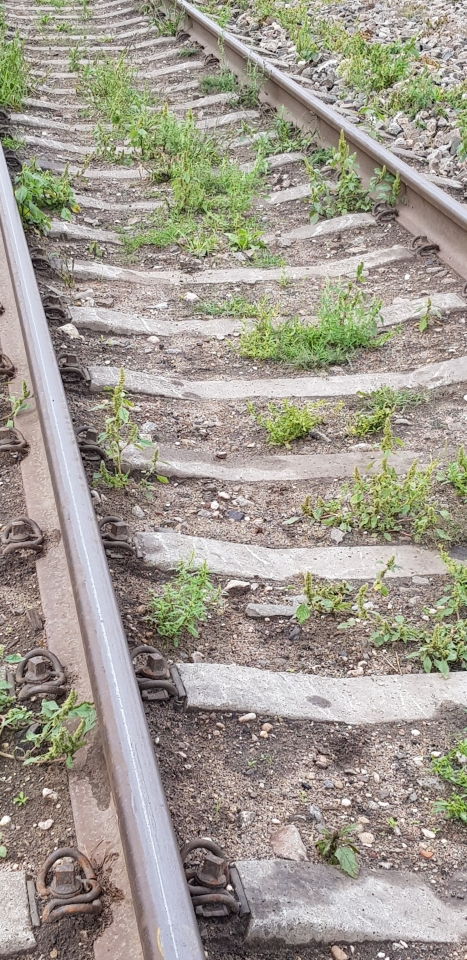
The railway network in Latvia is quite dense and good enough. Of course, we cannot compare it with the heyday of the narrow-gauge railways, but even now, the territory of Latvia is sufficiently well covered. I will not hide it – we are having very active negotiations with the Ministry of Finance about the future of “Latvijas Dzelzceļš”. All EU countries subsidise their railways and the maintenance of their infrastructure, similar to what happens with roads. There is also a corresponding legal regulation that the railway is not allowed to cover all costs from freight or passenger transport. At present, we have no clarity in this regard, the decision is being drafted in the Ministry of Finance heavily and slowly.
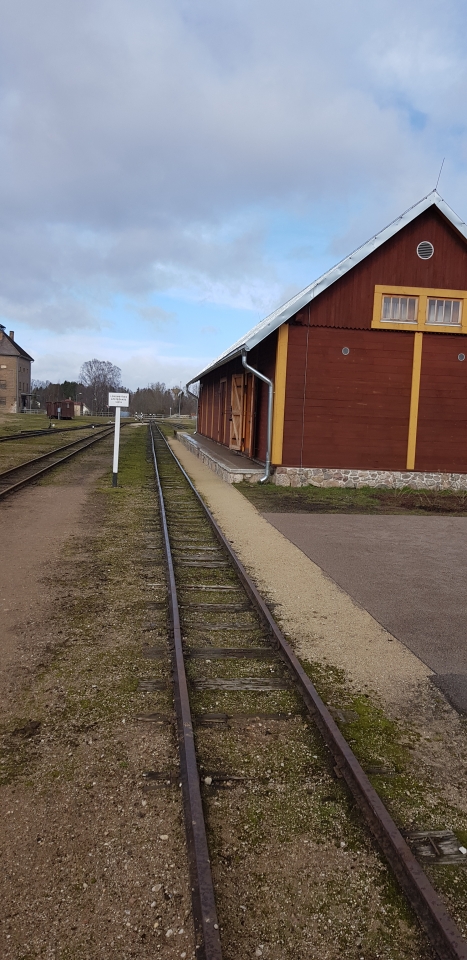
What can I say about railways? Being in the position of Minister of Transport, I will not allow the closure of any railway line; I have promised that to myself, I have promised it to my colleagues. Yes, it is felt that there are no longer large freight flows from the east, but... Recently, in Gulbene, talking about the restored passenger train line (Riga-Gulbene), we discussed that a stop might also be necessary in Jaungulbene; comparing 2021 and 2022, there are 16 thousand and 32 thousand passengers transported on this line, respectively. Daugavpils direction trains are full. In Liepāja, before we restored regular traffic, trains only ran on weekends. There is great interest in travelling by rail, people appreciate it, even though our diesel trains and locomotives are quite old. News is already coming in that the Liepāja line trains are very busy. We will have to look for opportunities for additional trips!
The train to Liepāja or Valmiera, or Daugavpils gets there fast enough and, what is important, it is in no way affected by traffic jams.
In the Liepāja direction, the section after Saldus is “slow”, it is being modernised, I think we will be able to “shave off” another 10 minutes there. The rails are our wealth, the infrastructure must be kept alive.
I think the people of Liepāja highly appreciate this opportunity, because, especially on weekends, getting in the direction of Riga is not simple. If in the past in social networks the people of Saldus wrote angrily that the bus enters Saldus at lunchtime with the sign “No seats”, I myself have experienced that in the morning hours of Sundays, buses with such a sign are already leaving the Liepāja bus station. Furthermore, thinking about Liepāja as the European Capital of Culture in 2027, good transport with Riga will come in very useful.
As I mentioned, “Latvijas Dzelzceļš” once transported sufficiently large freight flows, the company was doing well. But – concentrating on freight flows, passenger train infrastructure was left neglected – stations, normal train sets in which you can get on without problems with a baby stroller or in a wheelchair, normal station toilets and waiting rooms.
Recently, together with representatives of “Latvijas Dzelzceļš”, we met with local entrepreneurs to promote local freight transport. We concluded that there is a lack of access roads, we talked that it would be necessary to create a tariff policy also for a couple of wagons, not just for a full train set, for example, a couple of wagons would be very useful for the wood processing industry.
So, “Latvijas Dzelzceļš” was doing well until a certain time, and no one thought that one day all of that might not exist, even though, undoubtedly – certain signs were warning about it. Now we are trying to save many things, because – in short – we have inherited a railway that has no money and has old, worn-out infrastructure. That is what I have received and am trying to solve. We will finally announce the procurement for battery trains, so that it would be possible to travel in the direction of Liepāja, Gulbene, Rēzekne, Daugavpils, and Valmiera with a modern train. Possibly, in the near future, also in the direction of Ventspils. It is unlikely that the state will have enough funds to electrify the lines to Daugavpils or Rēzekne; the previous minister already abandoned this project. Battery trains are the most appropriate solution.
The question about train traffic with neighbouring countries – in the 90s it disappeared. For a short time, the Daugavpils-Vilnius train ran, C19 started. The Kiev-Minsk-Vilnius-Riga-Tallinn train ran once every four days, C19 and the war started... We hear talk about train traffic with Tartu, with Mažeikiai, maybe Kaunas or Vilnius, but we only hear it.
The Riga-Tartu train line is a real story. We have done everything on our part for this plan to be realised; there have been negotiations with the Tartu city leadership, whose ambitions are high enough. As I understand it, the Tartu leadership currently cannot decide between air transport or the Tartu-Riga train. The ball is in the court of the neighbours' decision.
Talking about transport with Vilnius – negotiations are happening. Opinions, however, are divided – the neighbours want the train to run through Šiauliai, we, in turn, want it through Daugavpils, because in this direction the passenger flow is intense enough and would have fewer losses.
Would two lines – one through Daugavpils, the other – through Šiauliai – be too much?
As negotiations are taking place, I would like to say that at the moment there is a kind of tug-of-war – through where the train should run. For the Lithuanian side, the Daugavpils direction is not interesting, for us – quite the opposite; furthermore, time must be calculated – it is normal to go in the morning, spend the day in Vilnius, and return in the evening. The Lithuanian proposal was to go in the evening, which, in turn, would mean hotels and additional costs for the traveller, effectively – in this regard, interests must be coordinated.
Since the Lithuanian side restored 8 km of the once dismantled railway in the Glūda – Mažeikiai line, the residents of Bēne and Auce are happy about freight train sets. The passenger train once ran to Mažeikiai, then to Reņģe.
Freight trains definitely run there, LDz Cargo operates throughout the Baltic region, they have the task of looking for freight, etc. As for passenger flows, as we already discussed, with Lithuanian colleagues we have only talked about connecting the capitals.
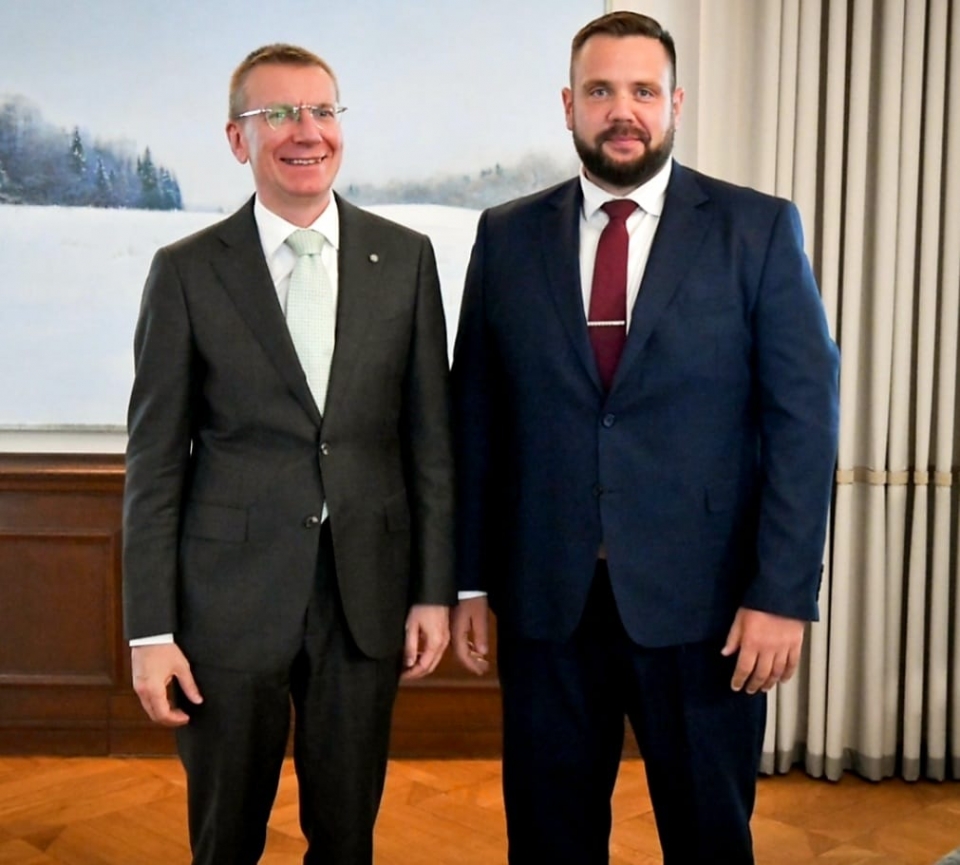
Your double colleague was recently elected President of the State. How do you evaluate the issues being argued about – undoubtedly Edgars Rinkēvičs will be helped by his experience in the foreign affairs sector, but many are very cautious in evaluating his long-term experience in the state administration system. At what point, climbing the career ladder, does experience start to hinder? You very justifiably take pride in your experience in private business, which gives you both understanding and certain advantages.
With Mr. Rinkēvičs, I have had the opportunity to work both in this and the previous government. He, in my opinion, is a very good diplomat and foreign affairs expert, with excellent experience in diplomacy and conducting negotiations. What hasn't happened! What hasn't been experienced!
He is an excellent solver of issues and a few compromises, which in controversial issues were suggested to the government, seemed just like a magician pulled out of a hat. I have no doubts about Edgars Rinkēvičs’s abilities to represent Latvia internationally. The question is – how will he fare domestically. We have not had a president for a long time who would be able to address, captivate, encourage people, inspire, for example, those gathered in a parish or city community centre. I really hope he will have time to be in small towns, rural regions, and parishes as well. If he succeeds in that, he will be a loved and respected state president.
The minister is not a judge, however... We read about legal proceedings, disciplinary cases, investigations, etc., but has it become clear to you why it went so incomprehensibly difficult and long for us with the electric train procurement? Where has the problem been?
In the Latvian state administration, there are very big problems in the management of large projects. We have noticed this in the development of Rail Baltica, where design and land expropriation are delayed by 4-5 years. That is – for example. At some point, financial flows start to stall, which makes the project disjointed. If we look further at the problems with the construction of the border, we must conclude again – if there is a large, serious project, delays begin. One can comfort people that things are similar in Lithuania and Estonia, but – what kind of comfort is that. It is difficult for me to judge historical events in which I did not participate, but when I took office, I was literally asked immediately when the new electric trains that are already in Latvia will start running, when they will be certified. ... They promised in August, August is here, the trains still cannot carry passengers, that worries me. On the other hand, there must be safety, Škoda is seriously working on certification, bureaucracy takes its toll, there are obstacles that are not related to Latvia. Also, thinking about your question, – definitely at some point someone becomes afraid of responsibility, someone perhaps has selfish interests, but – I will repeat – it is difficult to implement large projects in Latvia. This problem must be evaluated very critically and the situation should be changed.
Is it a lack of competent professionals, or are they exaggerated requirements, or everything together?
I think both, both. Both bureaucracy and the issue of professional people. For example, large IT projects. A person who has experience with these issues, working in the ministry, would certainly cause worries, working in a private company, because they wouldn't cope. In large procurements, there are both large sums of money and large temptations and risks. As the state develops, such issues actually shouldn't exist.
What is your cooperation like with the Prime Minister? What was it like returning to the team led by him?
I am a minister of this government and I focus on work in the Ministry of Transport, to breathe life into the ministry and have belief in me as a minister. Still, in almost every department, you can feel that historically this has been the most powerful ministry, which has had strong transit under its supervision and everything has been very good. Right now that is already history, in almost every area there are serious, solvable problems; part of the necessary changes perhaps are already late or delayed. Well, that is my responsibility, I am trying to do my maximum. I live and burn for this house, I hope the Prime Minister appreciates it. That is what is interesting in politics – one day they praise you – you are a good minister, and the very next day they dismiss you with a strange justification. In politics, you do not know whether this day in office will be your last. As I have some experience with decisions of this kind, I do not worry too much that any day in this job could be my last. For now, communication with the Prime Minister is good, I do not feel bitterness about the past.
Used photographs of Jānis Vitenbergs and zemeunvalsts.lv
Comments