


From 1 January 2023, all biomass used for the production of heat or electricity in Latvia must be obtained in a sustainable manner and this must be capable of being proven through documentation; this requirement may only be fulfilled several months after it comes into force.
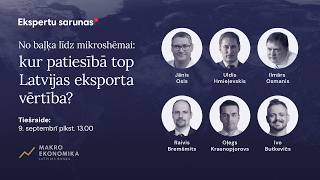
This conclusion was reached during a discussion organised by the magazine “Dienas Bizness” and the Latvian forestry and related industries portal zemeunvalsts.lv. It should be recalled that a directive will come into force on 1 January setting out the traceability of firewood used in district heating; if this is not provided, CO2 quotas will have to be purchased, which in turn will increase costs and raise heating tariffs.

No system in place
“On 2 November, the Cabinet of Ministers approved regulations stating that heating companies with a capacity of 20 MW or more must prove the origin and sustainability of their biomass. There is no real system for proving this. This means that, in all likelihood, heating companies will have to purchase CO2 emission quotas just as they do for natural gas, but the amount of biomass quotas will be twice as high because its emissions are about twice as high as those of natural gas,” explains Edgars Vīgants, a board member of the Association of Latvian Heating Enterprises. He emphasises that companies have no choice as they must comply with what is required.
“For this reason, heating company tariffs will not rise from 1 January; that may happen with a delay of several months, or perhaps even a year (due to the emission reporting system). This is no comfort to heat energy consumers,” E. Vīgants replies to the question of whether heating tariffs will rise from the beginning of 2023.
“The principle of proving biomass sustainability is nothing new; it has existed in some European countries for 7-8 years already,” explains Didzis Palejs, head of the Latvian Biomass Association. He points out that consumers in Great Britain, Denmark and the Netherlands have long required their suppliers to prove the origin, traceability and sustainability of the biomass supplied, as well as the volume of CO2 emissions generated during the extraction process. “To prove this, voluntary certification systems have been introduced, where the supplier and the consumers must be certified and the supply chain must prove its compliance,” says D. Palejs. In his view, everything in Latvia is being done at the last minute, just as it is in neighbouring Estonia, Lithuania and Finland.
“In Western Europe, a system for proving biomass sustainability was introduced several years ago. Since Latvia is one of the largest suppliers of wood fuel, companies that export this resource have long been facing the requirement to prove biomass sustainability and traceability; they already have the appropriate certification,” emphasises D. Palejs. However, he adds that these are relatively more complex certification systems and simpler systems should be introduced in Latvia.
Three options
“Since the Cabinet of Ministers’ regulations were adopted recently, one can observe a situation where people are looking for someone to blame rather than solving the problem on its merits,” concludes Jānis Švirksts, a board member of SIA BM Certification and a certification expert at the Forest Certification Council of Latvia. He points out that there are three types – a voluntary, a national, or an in-house system created by the company itself – which will attest to the sustainability of the obtained biomass. “In a situation where things are ‘burning’, the only real solution is a voluntary system, which is already being offered on the market and used in other countries. At the same time, there are companies that are waiting even in this situation. I urge them to start the certification process immediately by choosing one of the two systems, even though there are 14 in total,” adds J. Švirksts.
D. Palejs points out that the aforementioned 14 certification systems were mostly created for biogas and liquid biofuels and are not really suitable for solid biomass – wood – for which two approved by the European Commission are suitable: SURE and SBP (Sustainable Biomass Program). There is a third one, but, according to D. Palejs, it is only valid in the Netherlands and is not suitable for Latvia. “SBP is an older certification system; it is more complex, has a heavier administrative system, requires a longer time to obtain the relevant certificate, and the process is more expensive. The SURE system is simpler, is developing widely in Poland, Germany, Spain, France and also Sweden, and would be the most suitable for Latvia,” recommends D. Palejs. As another advantage of the SURE system, D. Palejs mentions the possibility of certifying non-forest biomass as well – wood obtained from overgrowth cleared from fields and ditches, as the SBP system does not offer such an opportunity.

“There are experts in Latvia who can help with the implementation of the SURE system,” notes D. Palejs, acknowledging that the minimum time for implementing certification, as shown by the examples of Poland and Germany, is about two months. Depending on the company’s own capabilities, arranging the record-keeping in accordance with the requirements could take three to four months.
“In practice, such a timeframe is possible. One thing is to go and carry out an audit on-site, which takes two to three days, but before that, a system must be in place (internal procedures, supplier evaluation), which takes the most time,” adds J. Švirksts. D. Palejs draws attention to the fact that certification is necessary not only for the consumer – the heating company – but that the entire supply chain must be certified, so consumers must carry out this process together with their suppliers, thus covering everything from the place of extraction to the place of consumption. “There are three pillars: the first is origin and sustainability, the second is the supply chain from the forest to the boiler house, and the third is the calculation of CO2 emissions,” concludes J. Švirksts. “Since the flow of wood in Latvia is well-documented at all levels, the experience of companies that carried out such certification in order to be able to export firewood shows that it is not very complicated,” explains D. Palejs. In turn, to ensure this process, according to D. Palejs, one or two employees might need to be hired.
There are still questions
“One of the most important tasks is to ensure the lowest possible heating tariffs for consumers. If heating companies have to hire additional staff to meet the requirements, this will reflect on the price and the consumer will pay for it,” explains E. Vīgants. In his view, it would be good if the government created a system in which heating companies would have as few burdens as possible. “I hope the ministries will find a way to create this,” emphasises E. Vīgants. D. Palejs points out that every heating company will have to create a system that can be ‘taken’ from voluntary certification systems and implemented in a specific company; the only significant difference is the CO2 calculation. “There are many unclear issues, especially if the most responsible heating companies have prepared for the winter and have stored biomass for this period.

What will happen to the stored biomass after 1 January? What will happen to the biomass supplied at lower prices by farmers who clear ditches and remove overgrowth, but for whom it is not their main business?” asks E. Vīgants. He admits that for heating companies, the only clarity is the need to report on emission quotas. “The biggest problem is time; another problem will affect the most diligent ones who have successfully stocked up on wood chips for the winter. How will it be possible to prove its sustainability retroactively? Intuitively, it seems this will not be doable, but I hope it will be, because otherwise it will hit consumers’ wallets,” explains D. Palejs.
“It will depend on the risk determined by the certification system chosen by each company regarding the origin of Latvian wood. If it is high, there will be one solution; if low, another – one that is favourable to consumers,” explains J. Švirksts. In his view, there will not be big problems with non-forest biomass, which has a clear documentary evidence base; the object of discussion could be those biomass extraction territories where some level of protection is set.
Risks of market redistribution
Asked whether, by setting new requirements for suppliers when organising new wood chip procurements, heating companies will reduce competition among potential suppliers, as smaller players will not be able or willing to meet them, which, in turn, could lead to market redistribution in favour of larger players, simultaneously raising prices, E. Vīgants answers briefly: “That is how it will be!” D. Palejs admits that in the initial stage such a situation could arise, as wood chip producers will also need time and finances to be certified accordingly. “Within a maximum of two years, the system will sort itself out, because there are very many companies in Latvia working in wood chip production and supply, and competition is high,” predicts D. Palejs. J. Švirksts believes that one cannot rely on the assumption that small suppliers will disappear, although centralisation may occur, and approved suppliers will play a greater role. It will not be possible to transport directly so as not to have a very fragmented audit system. It should be taken into account that the transport distances of small suppliers are and will remain relatively short.
Future questions
E. Vīgants points out that a discussion is currently underway in Europe to reduce the capacity threshold for heating companies from the current 20 MW to 10 MW or even 5 MW, meaning all requirements regarding CO2 emissions and wood traceability would apply to them. “The draft Renewable Energy Directive currently under discussion will also be adopted, which will make the use of biomass as fuel even more cumbersome,” concludes E. Vīgants. D. Palejs adds that the new directive will be implemented in two to four years, and Latvia should very sharply oppose its draft, because certain green organisations are trying to lobby so that primary fuel obtained from the forest, including firewood and branches, cannot be used in energy, which is nonsense.
“The fuel raw materials of forest biomass obtained in Latvia meet sustainability criteria, therefore there is reason to believe that forest biomass fuel obtained in Latvia is obtained sustainably, and the fact that someone can question this and use a directive to ban the use of branches and firewood for energy production is comparable to a tragedy for the Latvian economy and energy sector,” says D. Palejs. In his view, attention must be paid to this factor at all levels and state structures must react very sharply and ensure that such text is not included in the approved directive. We are talking about the definition and setup of primary biomass, because otherwise branch chips and firewood will not be considered a sustainable resource, for which, in turn, sawdust and chips obtained, for example, in the process of lumber production, will be considered.
“Latvia has discussed this problem, but in my opinion, the reaction has not been sharp enough. Some time ago, a study conducted in Sweden was published regarding what such an idea would mean for the Swedes – namely, a tragedy for both the economy and energy. There is no reason to think that the situation in Latvia would be any different, especially since the forest sector has an even greater role in Latvia’s national economy than in Sweden,” adds D. Palejs.
Discussion video available here:
https://www.youtube.com/watch?v=Zh8RxOI_cD0
Photographs from zemeunvalsts.lv used