



An interview with Elvita Ruka, Mg. art., publicist, and public relations specialist at the National Heritage Administration (NKMP)
A current trend is to talk about, discuss, or evaluate freedom as a feeling, a word, or a concept. At the same time, remarks from representatives of various professions and social groups (lawyers included) reveal a conviction that here in Latvia, we are suffering from an overabundance of regulations, frameworks, and rules. Can one really speak of freedom when there are too many prescriptions?
Freedom is born and lives in the mind – I understood this as a child. I remember the start of my literary pursuits: in the pioneer club, we had to keep a diary. It was like an album where you could paste things in, draw, and also write entries. I set to work with a great sense of duty and… I was given a template, and upon evaluating it, I concluded: what was written in the template was a beautiful lie. However, I wanted to write, it was very interesting, but… could I do it without lying? I flipped through it and thought – they are showing me, forcing a template upon me, but one can cleverly and wisely bypass it! Even back then I realized that doing nothing is the easiest way, but that is not for me. Whatever the rules are, you play along with them, but freedom and creativity will be preserved and will be captured in the writing. Of course, it is not worth boasting about such an experience, and I am not telling this as an example to be imitated, but… We, the “pioneer generation”, are more flexible; we do not wait for freedom from others and try to find it within ourselves. We developed a vital immunity back in the day: “One must treat stupid rules with a certain resistance and distance!” Over time, we have “become overgrown” with various rules, and their volume can already be described as a jungle of regulations… You could break your neck! My conviction – if a rule becomes more important than the meaning, each person is left with their personal choice – how far one can or wants to submit to it.

For example, in 2011 – 20 years after the collapse of the Soviet Union, I carried out the project “15 Crazy Sheep” – as an independent author, I traveled around my former homeland to get to know it! The paradox: in terms of ideology and stereotypes, the situation was equivalent – there is always someone trying to persuade you, shaping opinion, wanting the “ordinary person” to think exactly this way and no other… In my pioneer years, I was told what a beautiful and wonderful country we lived in, but I did not see it around me and eventually did not manage to see it… When the great power collapsed, we were already being told what a terrible country we had lived in, how everything had been horrible and wrong…
At least 20 years later, I wanted to see it with my own eyes. Thus began my travels through the former Soviet republics. That, however, is a different story.
Personally, I really dislike it when, through the mass media, someone wants to force an opinion or evaluation on me or others. Currently, it is easy to get lost in the volume of information because there is so much of it. Often, it is very superficial or “bought”. When reading, one must never switch off the internal control mechanism, understanding whether what has been published is important to me and whether it is to be “taken at face value”.
Freedom is making choices in everything – in deeds, in thoughts, in moral principles. It is independent of the state system, of politics; that is how it should be, but…
An example from life, from the field of cultural heritage. In Zemgale, there are two charming objects – Kaucminde Manor, where all the paperwork is in order, but the manor is “run down to the ground”, and nearby, the former Jesuit monastery of Skaistkalne, where priest Andrejs Mediņš is building a “new Kaucminde”. Yes, to him, the energetic and crazy one, papers are not a priority, one can “find fault and keep finding fault” with him, but so much has been done and accomplished – Brukna, Bārbele, Kurmene, and now also Skaistkalne… Everything is happening and, despite obstacles, the documents were also sorted out by the end of the year. This example “poses a question” – what is more important to us in the country – following the correct papers or striving for a result. Very often, bureaucratic form-filling does not mean a job done conscientiously and with meaning.*
Continuing about freedom: as a person, I am quite unmanageable, yet I believe that there must be order! Anarchy in the long run does not lead to anything good; norms provide frames within which freedom can best manifest itself. The question of freedom, here and now, is very, very essential! This is not about the currently “topical” face masks or the inability to buy something in a shop… The phrase “free in spirit”, worn out over time, is in fact the most essential one. I wonder if a person will ever have circumstances around them with which they are completely satisfied, but should they lose the feeling of individual freedom because of that?
The Kaucminde example is both very sad and precise. How to communicate it to the wider public so that the demand for rules and various descriptions would decrease? Especially since, if there is a photo on social media of the devastation of Kaucminde Manor, the reaction is predictable: “Oh, look how the state does not take care of an architectural monument!”
Kaucminde is not state property. It is an architectural monument, therefore activities within it are controlled and supervised. However, if the owner lies for a long time, if they do not fulfill promises and do not even take the funds allocated by the state for rescue work, the National Heritage Administration (NKMP) can only do one thing – start punishing instead of supporting! That is also what is happening now. Kaucminde is private property where ambitious plans have not been realized. Perhaps that is the main problem too – subjecting everything to money and commerce. If the only idea is profit, like it or not, you won’t get far. I will add that at an irrational level, it is clearly visible: if an idea is bright and correct, the necessary money unexpectedly “appears” or is found. If one tries to calculate and figure out everything down to the smallest detail, even a good intention may not succeed and often breaks off halfway.
I will not be harsh: things may not work out, failure is possible, no one is immune to failure! As a person in a creative profession, I know well what a lack of funding means – many good intentions are not realized. However, business people must think with a clear head and take on commitments they can fulfill. The current owner of Kaucminde Manor must talk, not hide or avoid – this is not an ordinary building, but a symbol significant to society. The NKMP’s attitude towards the manor’s owners has been very solid, with huge trust and accommodation. Funding for emergency work was allocated twice for the rescue of the manor, the third amount of money the owner did not take... Then the owner’s emails and phones started “falling silent”, letters sent and meetings were ignored. A dead end. Yes, things may not work out, you can make mistakes, but the situation must be resolved!

But, returning to what was asked: a 21st-century classic and fashion trend – anything a state institution or an institution’s employee does will be bad!
From the series of public comments, this is clearly visible. I worked at the National Heritage Administration, then the State Inspection for Heritage Protection, during my studies more than 20 years ago, and last year I returned to this institution. While in the late 90s, cooperation with the media was collegial, pleasant, and friendly, with shared goals and understanding of the public good, today the atmosphere is tense, nervous, one constantly has to “fend off something...”, to make excuses. There is a tendency towards tendentious news, a cult of negativity, overt or hidden aggression. The 90s and today – they are two different worlds!
If we each personally and individually create the state, as Egils Levits emphasizes, what, in your opinion, is that “state that does not do something”. Those are undoubtedly specific people. The recent (2018) topicality: many perceived the KGB agent card file very individually… As soon as they talk about something left undone – the word sounds “state”…
In my answer, I will stay more down to earth. No matter how many laws are written and invented, there will always be and remain the so-called “human factor” with both a “+” and a “-” sign. If someone whines that everything around is bad, they should start thinking about themselves – what is happening to the whiner and why they think that way. Something is not right with them personally.
If in work matters a person happens to conflict with their conscience too often, or if situations are otherwise traumatic or disruptive, I can suggest looking for another occupation.
How does a creative person look at another “fashion” trend: I am a person who understands that I need money, it doesn’t come from nothing, but… I won’t let anyone work for an entrepreneur near me. Without money, like it or not, you can’t get by, but earning it is not refined enough. If others want to work, let’s not let them!
The more people work and earn money honestly, the better it will be for everyone. That is clear!
The thought of “let them work and earn, but elsewhere” is “very close” to me (clear and understandable), because it is about shortsightedness! Many problems arise if a person has a tendency to see only their own interests, often – very narrow ones, and nothing else.
A painful example, which is very personal to me but characterizes the common trends, is Latvia’s negligence towards its own history, specifically towards aviation heritage. Latvia is the only country I know in Europe that does not have a national aviation museum! We have a very rich aviation history, we have excellent pilots and designers, we have built not only Latvian but to a large extent Soviet aviation as well… It is understandable that in Soviet times (so at least for 50 years) this topic was not highlighted – namely – there was no need to “stir the gene of Latvian heroes”, to tell what has been, how clever and skillful we have been, what we have produced, how strong the people’s aviation was, how well organized the military one… The dramatic political events of the 20th century dealt a huge blow – the clever minds of our pre-war aviation sector were either shot as early as 1941, or left in 1944, or were destroyed in Soviet camps after the war.
Flying as a concept is a very powerful symbol and also includes the “taking flight” of spirit or thought, highlighting daring and freedom. Yes, it is the sublimation of all upward-lifting forces! Those who do not fly, crawl – two opposites. And what is erased from the history of a people cannot inspire. That is not fair! I have researched this topic while defending my master’s thesis in museology, “Latvian Aviation Heritage. Potential for Musealization”, and I can say with full conviction that the silencing of this topic traumas the nation’s self-confidence. We have not deserved this! Why do they want to turn us into crawlers?**
In Latvia, the aviation symbol – Spilve Airport – is still alive and well, an object that should be worshipped as the cradle of Latvian aviation! It is one of the first airfields in any European city and still operates. Why has a Latvian aviation museum not been created in Spilve? The mentioned shortsightedness and related connections: poking around in one’s own little plot and no further. Searching for self-benefit, in which great things, ideas, and values are lost. Figuratively speaking: “Get up (on wings or a hot air balloon, or...) and look at the situation from above!”
In Lithuania and Estonia, the potential of aviation museums has been fully utilized; there are several of them and they are excellent; they influence society for the better. In Sweden, there are 27 aviation museums, of which they are very proud at an ideological level – “we are a nation oriented towards progress and development”. Against this background, we in Latvia can only be ashamed, even though historically we are the nation of pilots! Why are we silent about this? Why are we not using this resource?
We, the enthusiasts of this idea, approached the Ministry of Defence, the Ministry of Transport, and the Ministry of Culture, as well as the Riga City Council, because the building is under municipal management, with a proposal to collect and compile the scattered Latvian aviation heritage and create a gem – a museum at Spilve Airport. Then the vicious circle began, because representatives of each ministry, speaking separately, understand the issue, but... only in their own aspect. The first answer is always supportive: “It is needed!” But… we cannot do this, that, and this, and something else, because it is not under our jurisdiction... Okay, we understand, but is there something you can do after all? The answer is not clear…
Before Covid19, back in early 2020, aviation was a fairly flourishing sector. When we approached industry companies, the answer was joyful: “Yes, we want this!” But… there is this limitation and that rule, and… the law, and it forbids us this, doesn’t allow that… We want to support this idea, we understand that it is a moral duty of the sector, but we cannot grant it. Anti-corruption…
This, unfortunately, characterizes the situation in Latvia – there are many laws, often they are contradictory to each other, often they tie hands for work and action.
What would be the way out? Apparently, a special law is needed if no ministry within its competence can establish a national aviation museum and not let a unique monument perish! At the end of 2020, we, four public organizations (Association “Latvian Aviation Museum “Spilve””, Latvian Aviation Association, Latvian Aeroclub, and the Artists’ Union), wrote a letter to the President and the Saeima, pointing out that this matter and situation require complex attention and a solution, because current legislation does not allow the necessary to be realized. Shortsightedness and an overview are very far from each other!
Supplementing the story, I will illustrate the image of a narrow view: Latvia needs an economy and needs food, but… a pig or chicken farm in my parish or next to my neighbors will not be! Let it be somewhere else!
We need an Aviation Museum, but let “another” ministry organize it!
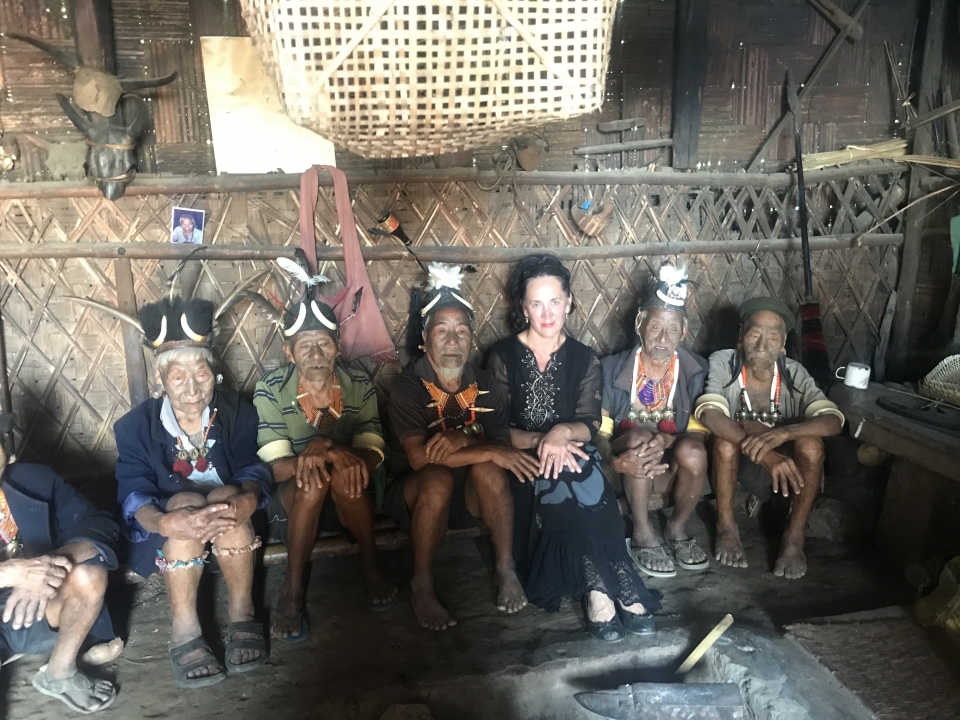
You have traveled a lot. Lately, there is a strange desire in Latvia to bring the problems of other parts of the world here in various ways. How correct is it to compare Latvia and India and highlight environmental problems, forgetting traditions, overpopulation, and…?
I visited India in December 2019, when a huge campaign was underway there – “India will be the cleanest country in the world”. The situation there is definitely improving.
Where have I truly seen a real hell in attitudes towards the environment? In Africa! More precisely, in West Africa, Benin. There was a beautiful plan to get to know the West Coast of Africa, which I had liked very much after visiting Gambia. Yes, the ocean was especially tempting! I was already used to the fact that an African beach outside the resorts is a huge trash heap during my travels, but Benin surpassed everything. In its capital, I saw a scene I saw only once and “in the flesh”. On the coast of the small country, the ocean has become a dumping ground for shipwrecks. The entire water surface to the horizon was full of rusted tankers, ships, all kinds of huge monsters… Seeing them, it became truly eerie.
After my first higher education, I am an art historian, I worked as an exhibition reviewer for a long time, I was once very passionate about contemporary art until I decided to distance myself from it. (Something about it became tiresome and exhausting, often this art admires itself, yet there happen to be excellent works with a strong impact.) This year, the SurvivalKit event included a video work showing how New York subway cars are transported by ship and dumped into the ocean. The video was filmed very beautifully, starting with how the trains rush on their usual route, and then just as beautifully, carriage after carriage from the cargo ship gracefully sink into the depths of the ocean – dozens, hundreds, filled with water, colorful fish swim through the deformed carriages, wondering… The sight “went through the bones”! It is an irreversible environmental tragedy! And this video work reminded me of the rusted ships I saw on the coast of Benin. Eerie! Moreover, it is not Benin that brings its old fleet there – the rusted wrecks travel there from all over the world.
Many things are started with the thought of helping Africa or Southeast Asia, or… In the end, for some reason, the solutions concentrate in Europe…
It is visible how predatory this is! Talk of help is also used dishonestly.
Physical order may exist in Europe, but this part of the world should also be more silent more often and think about what is happening, what is being done, what... Speaking of spiritual values, of “over-democratization”, personally, society’s traditional values, including religion and lifestyle, seem closer to me. Democracy and Europe have sufficiently discredited themselves by trying to force or impose their only correct opinion: “We! We will go and teach how others are to live.”
Individually, we can and it is even necessary to look at what is happening with irony (preferably benevolent and good-natured). Artists can afford it. For example, how can you not laugh when Europeans go to Africa to teach football? To a continent where boys are born into the world with football…
The use of the word “Soviet” – in place and out of place, understanding and not understanding, often confusing it with the everyday adjective “bad”. For example, not that you acted badly, but that you acted Soviet-ly...
Currently, people speculate with this word because there are enough young people among us who have not experienced those times. When works of art are created about those times or conversations take place, often only negative stereotypes appear: everything was horrible! We didn’t feel smells, we were suppressed… Why are such one-sided nightmares implanted in people’s heads? Life went on just the same, vital and real, only the scenery was different and one had to adapt to it. There were areas where life was even cleaner and more understandable. I am talking about life, not politics!
“Green and the green”
I was born with “green being” – I grew up in the forest! My father was a forester by essence and led a hunting collective. I understood very early how everything is arranged in nature, what the logical order of things is. I do not feel any resistance to eating meat or wearing a well-tailored fur coat. It is necessary to be in reasonable, respectful relations with nature. That does not mean that we will now not do this or that out of a sense of faked greenness. As long as “green” has not entered politics, it is fine! As soon as interests appear, everything gets tangled, and the matter can become dirty. Unfortunately, much has become tangled! To think green is to treat nature honestly. Working people need a certain reverence for the environment. Traveling, I have seen many places where I had to think – does man deserve this land if he treats it this way. Trivial views state: “to be green is to shop at a green shop and object to something”, but that is entirely superficial.
There are enough shouters about green things. I don’t listen particularly, because an opinion needs deeper analysis. However, I believe that there are wise and clever people worth listening to.
* You can read more about the Kaucminde Manor problem:
https://m.diena.lv/raksts/sestdiena/tuvplana/starp-divam-kaucmindem-14254979
** You can read about the issues of Latvian aviation history:
https://www.diena.lv/raksts/sestdiena/tuvplana/virs-ar-dzelzs-putniem-14255693
Photographs by Elvita Ruka and zemeunvalsts.lv have been used