




“Our goal is to ensure that every tree felled in Latvia is processed into high-quality, modern, sustainable and environmentally friendly wood products with high added value,” emphasises Jānis Osis, board member and development director at Stiga RM, one of the country's leading wood industry companies. In a conversation with zemeunvalsts.lv, he reveals the company's direction and plans for achieving this goal.
In the public sphere, people discuss and talk more about those at the helm of state or municipal capital companies. You work in a successful, serious, large regional private company.
Yes, I work at one of Latvia’s leading wood industry companies, Stiga RM, which over the last few years has been transforming from a regional family business into a group of companies operating in several directions – woodworking, logging, metalworking, providing timber transport services and real estate development – and a successful exporter with markets all over the world. I have the honour of counting myself among those who not only watched this growth but were fully involved in the process.
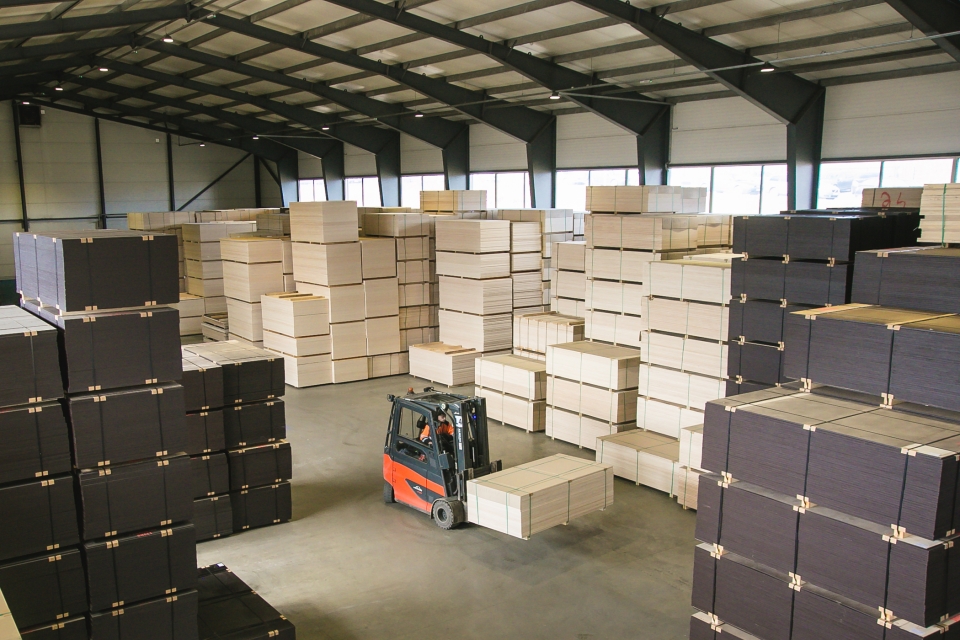
My story with the company began in early 2018, when the owner of Stiga RM, Andris Ramoliņš, approached me and invited me to join his team. At that time, I had worked for a long time in various roles within a division of Latvijas valsts meži that deals with the production and supply of wood products. Among other things, I managed the unit that manages and develops the use of subsoil resources. For Stiga RM, meanwhile, it was the time when development of the birch plywood factory in Kuldīga was beginning. I thought about it and accepted the offer. One of the justifications for this decision was the desire to delve into the industrial process itself and gain experience in further processing. Since I had spent some time in the forest, in round timber extraction and supply, I wanted to go further and deeper into the value chain.
It is said that much worry and headaches are caused by comparisons. However – can Latvijas valsts meži and Stiga RM even be compared?
Both companies have different decision-making processes and speeds of action, flexibility and ability to adapt to circumstances. In a private company, at almost every level of decision-making and operation – from the operational to the strategic – you have to be involved yourself, while in a state-owned company, decision-making and procedures are highly hierarchical and fairly strictly regulated with many management levels.
At Stiga RM, I can clearly (tangibly) see the results of my work, which is a great motivation to continue implementing ambitious development projects. We want to be strong in implementing innovations while not losing speed in our actions and decision-making.
It is often surprising that state-owned companies are criticised for making quick decisions, because, in some people’s view, everything should be discussed and weighed in great detail, literally – painstakingly crocheted; when time has passed in such activities and processes, then a decision can be made. Is this justified, and if so, to what extent?
The sluggishness of decision-making in state-owned companies certainly stems from the fact that when making decisions, they must also be able to justify them to a third party.
A third party can be the public, the State Audit Office, the shareholder, etc. In addition to what was mentioned previously, it is necessary to be able to justify and explain how a decision complies with legal acts, the company's goals and strategy, and, if necessary, the interests of the shareholder and the public, which is not a homogeneous body.
In a private company, of course, legal acts must also be observed, and there is corporate social responsibility and reputation, which are important, but it does not need a lot of paperwork – this often happens in internal discussions, without unnecessary bureaucratic procedures.
Has your previous work experience been related to manufacturing?
Excluding the wood product manufacturing already mentioned, during my student years I also worked for a while at the joint-stock company Laima, where my work was more related to marketing and advertising, though at the same time one of my duties was to source product samples for shipment to foreign clients. Now, that was an opportunity to walk around and visit all of Laima's factories, every workshop, to get to know the workshop managers and see the production process! After that, I worked briefly at the beverage manufacturer Veta, so it can be said that manufacturing has always been close to me.
A large proportion of Latvian companies are concentrated around Riga, but Stiga RM is an explicitly regional company. Is it possible to judge whether Riga is so tempting that working there is more important, even if there are good or even better job opportunities elsewhere?
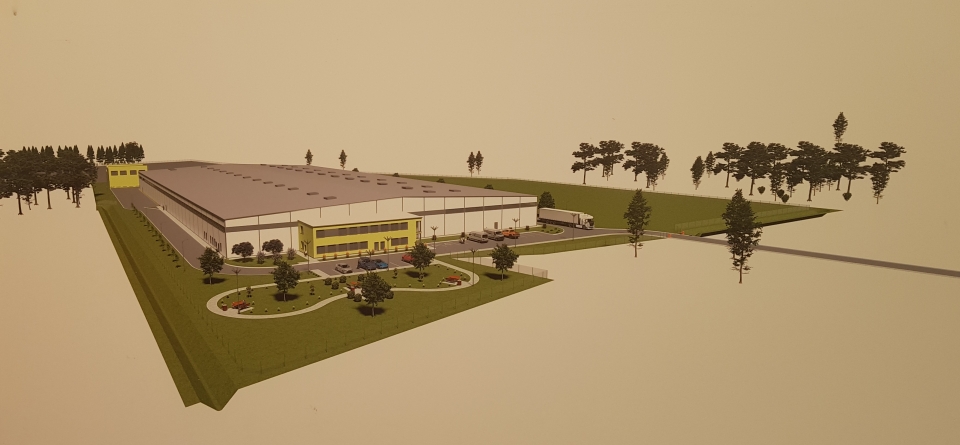
Riga or its proximity is certainly not a condition for a company or a career in it to be successful. Nowadays, there are no restrictions or barriers that prevent being successful outside the capital, especially if we are talking about the timber industry. I find it difficult to imagine, for example, that one could organise production in the centre of Riga. The determining factor in a company's success is the people and the team that implement plans and ideas, not the location. Moreover, the development of the regions is one of the factors for the country's prosperity and the well-being of its residents, which is exactly why we chose to build our new factory in Tukums. As early as 2026, Stiga RM's wood wool cement board (WWCB) plant will begin operations there, where modern, sustainable and environmentally friendly wood products will be created for domestic and export markets. We researched acoustic boards as a growing and modern sound-dampening product with high potential both in technical sound insulation and in design. In this case, it will be possible to add value to low-grade wood by turning it into wood wool and combining it with cement, thus creating a product in high demand for the future.
Stiga RM has set its sights high on development; the new wood wool acoustic board factory project in Smārde parish and the plans associated with it are very optimistic. How were the calculations made, taking into account all the unforeseen events and changes in the world over the last few years?
Investments in the existing birch plywood factory and new investments in the wood wool acoustic board factory have been considered and analysed over more than just a single day. We carried out all the market research work, calculated finances, modelled and created future cash flows, and estimated and analysed various scenarios – what happens if... and what happens if the base scenario does not materialise?
The work has been thorough and diligent. I found in my notes that we started thinking about the acoustic board factory in 2020; three years passed from the first idea to laying the foundations, and I have not the slightest doubt that all the projects we have intended to implement will succeed. Of course, the business environment is volatile and, due to various circumstances, something might not go exactly as we initially planned, but I do not entertain the thought that the project will be unsuccessful.
In parallel, we are also continuing to work on research into other products and projects, as we are well aware that it is a sufficiently long and slow process. We have established a product development group within the company to conduct research and analysis on innovations in the wood industry and to plan future development and new investments. Our observations show that currently a large part of the processing units in the industry in Latvia do not work with modern technologies and have not reoriented themselves to a highly developed level of digitalisation, automation or robotisation. That is why we can show other manufacturers through our own example – everything is possible; we are not afraid to invest and we do not plan to stop at what we have achieved.
How did the choice of the new factory location come about? The local Tukums airfield, well known to locals, is nearby, and driving to the factory construction site one can see buildings meant for military purposes from the Soviet era or their ruins.
Stiga RM has its roots in the Tukums region; the company’s owner, Andris Ramoliņš, comes from Smārde. Furthermore, the future factory is located next to Stiga RM’s mechanical workshops for timber trucks and metalworking plant.
In Soviet times, the Tukums airfield was of military significance, and there were many buildings of military significance and similar infrastructure around and near it. When we regained independence, all of it was left abandoned. Before the municipal reform, the airfield belonged to Engure municipality; the municipality's management wanted to develop it as an industrial zone, calling it the Smārde Industrial Park, and offered the land located in this area for either purchase or lease from the municipality. Up until now, several small companies had developed in the area, but none larger had shown interest.
Evaluating the location, both the roads and other infrastructure, as well as the nearby forests, fit into our overall development plan. We are the first to have started the construction of a large industrial facility in what is now the Tukums municipality industrial park – currently, a production building of 15,000 m² is being built there, along with another 32,000 m² for an access road and yard. I hope that other large companies will follow our example and want to develop this area.
Driving to the factory construction site, one can see that the roads leading to it are sufficiently good.
They were improved back in the days of the Engure municipality; that was the first prerequisite for any life to begin in this area. Until then, there was a lack of electrical capacity there, which we brought in ourselves – a smaller company might have had certain problems with that.
Stiga RM is very proud of its forest acquisitions. This spring, it was possible to read in the media about the purchase of 505 hectares of forest from a Scandinavian company. Does the purchase of forest properties and the increase in the volume of forest properties have a far-reaching goal?
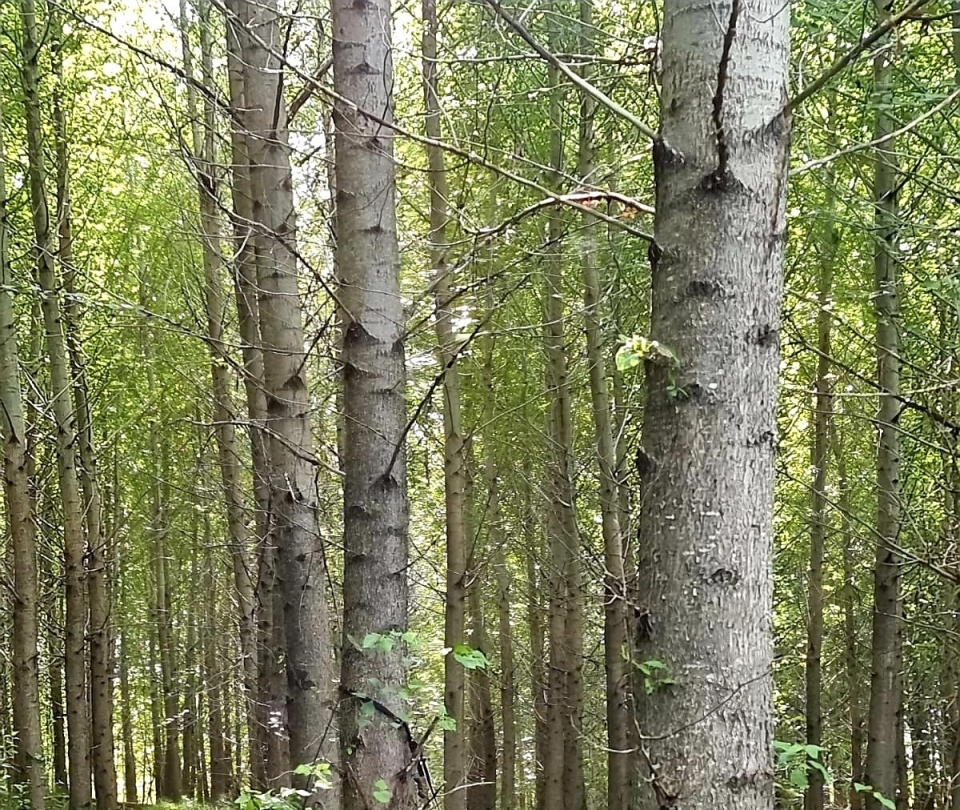
Exactly – one of the company's strategic goals is to increase the volume of forest properties every year. For a company that produces wood products, it is simultaneously a strategic asset. We are proud that we are Latvian, that we are masters of our own land, and we do not want forest properties to end up in the hands of foreigners. It seems this was the first instance in Latvia where a Latvian company bought a sufficiently large package of forest properties from a Scandinavian company. In 2023 so far, we have purchased a total of about 1,000 hectares of forest.
Are you buying properties all over Latvia?
We are focusing on the left bank of the Daugava, which is closer to Kurzeme. Since the company's operations are fundamentally concentrated specifically in Kurzeme, managing individual forest plots in other regions would be complicated and not very rational, although – historically, we do have a few properties on the right bank of the Daugava, but we are not expanding them.
Industry colleagues tend to emphasise that the market for forest and forest land is more active in Latgale.
In Kurzeme, too, the market is sufficiently good and active. It is important to add – there is a lot of competition in this region, and you cannot buy forest property as cheaply as some might have wished. Speaking of the aforementioned purchase of 505 hectares – it was an international offer, and its sale was organised by Latio, which compiled a circle of potential interested parties who then participated in the auction.
Several years ago, in an interview with an industry colleague, I heard a note of sadness in their story, namely, that in Kurzeme some people were selling forest properties quite quickly and quite cheaply.
At the moment, I can say the opposite – I mostly hear that a large part of forest properties are sold and purchased at auctions. We have more than once invited forest owners (including those who own small plots) to ask at least two or three companies or potential buyers about the potential price before selling and not to sell to the first bidder – if there is an opportunity to compare, there is less chance of making a mistake. This is definitely something that must be done, because our goal is not to buy something below market value; we want the forest owner to be satisfied, and our reputation is important to us. It is sad that, like mushrooms after rain, many companies have sprung up that often confuse forest owners with loud campaigns, trying to earn something in brokerage fees.
Turning to other company projects, I was pleased by the fact that the long-planned construction of a residential house, which the people of Kuldīga (not the council, but the residents) once objected to, has now begun its path of development. How do you deal with the classic Latvian train of thought – “we need jobs, taxes, entrepreneurs, infrastructure”, but... do it and earn your money in the neighbouring municipality or neighbouring country, but in ours – no.
Indeed, by investing in the promotion of employee welfare, we have started the construction of a five-storey apartment building in Kuldīga. Through the implementation of this unique project, 65 apartments will be provided for the company's employees and their families. This will be the first apartment building of this kind in Kuldīga since the late 1980s and the largest upcoming residential object in the city. The municipal council and parish management are certainly interested in business development and an active presence of entrepreneurs; cooperation with the local government is good, economic activity is supported and there are no obstacles. The residents, too, are generally interested in job opportunities, even if they themselves do not work at the company and are not planning to work there, as it increases both employment in the region and the opportunities to choose a workplace. I have happened to experience protests by people who have already achieved a certain level of prosperity by working in a city, for example in Riga, and have found a place in the countryside to spend a beautiful summer or live permanently. To these people, however, any nearby or planned industrial object will in no way align with their quiet life in the countryside goals and plans. For example, when discussing the construction of the house in Kuldīga, the nearby neighbours argued that the building could overshadow their homes, there would no longer be as much sun in their gardens, etc., and in general – one cannot predict who will live in this house, maybe it will be incomers, the house will turn into something like a ghetto, etc. At that moment, we realised we did not want to spend time or resources to resolve the matter legally. Over time, an opportunity arose to purchase another plot of land, where we began developing our initial plan.
In Vidzeme, where one cannot complain about the busyness of entrepreneurs, people are invited to work, but accommodation opportunities are as they are... What is the situation in Kurzeme?
If we are talking about the opportunity to find a place to live, Kurzeme is sufficiently vast, and in every inhabited place the situation will be different. For example, in Kuldīga and the surrounding area, there are effectively no free, affordable living spaces. In Soviet times, Kuldīga was not an overly industrially developed city, but it has remained well-preserved historically. There is a high proportion of old buildings in the city (the old town and old architecture), some of which have been restored by the local government, and some by entrepreneurs – hotels, restaurants – but restoring these buildings as living space is very expensive and inefficient. If I may say so – no one coming from outside can afford to buy a house in Kuldīga’s old town to restore it for living. Conversely, all the Soviet-era apartment buildings are occupied, mostly by seniors who are no longer active in the labour market. There are no free apartments for newcomers, and if one happens to appear, the prices are like in Riga’s micro-districts. Centres that attract people also attract labour and, to a certain extent, exhaust the available housing stock.
Speaking of the wood acoustic board factory being built in the Tukums industrial park and the calculations associated with it – to what extent is it possible to take into account the EU's major political projects (Green Deal, nature restoration, renewable energy, etc.)? Latvian entrepreneurs value EU plans quite practically, evaluating their good ideas and not hiding criticism of the performative nature of many ideas.
Of course, every European plan hides both opportunities and certain challenges. In my opinion, the greatest opportunities in the future will be for forest owners, which is one of the reasons why we are expanding our forest properties. The forest absorbs carbon, and sooner or later, a carbon footprint will be calculated for every industrial activity. Such a situation will allow us as entrepreneurs to look at our operations with more confidence. The product that is manufactured must be carbon neutral; we have looked, analysed and calculated – our production is just that. What is considered a serious risk or even a threat is the availability of resources in connection with plans to restore biodiversity and potential logging restrictions. At the industry and national level, these risks are being managed and minimised, but at the same time, no one is prepared to predict how it will all end. I think the situation is well characterised by the old saying “If you are afraid of wolves, do not go into the forest!” A moment comes when business decisions are necessary, and the choice has arrived. It only seems that at one time everything was clear, but that is not the case now. Almost at every moment when a decision is needed, some information is missing, there are a series of uncertain and unclear things, but a decision must be made!
The factory we have started building on the outskirts of Tukums will be the most modern factory in the world with the highest level of robotisation and automation currently available in the world. Production efficiency, as we plan, will accordingly give cost savings, which will be reflected in the product price. The product we will manufacture is not alien to the European and world market; export opportunities and prospects already exist, and we plan to actively participate in this market. Looking from the European perspective and the Green Deal and the plans associated with it, our product fits into them perfectly because it will be produced from natural raw materials; furthermore, acoustic boards help to create an excellent indoor climate – they are anti-allergenic, regulate humidity and have good acoustic properties. Speaking of the latter, I think that over time in public buildings we will see European regulations regarding sound pollution; our product will be very useful there.
