
Weekly review
Poll
In recent weeks, both in the Saeima and the Cabinet of Ministers, the thesis has been heard once again: “We must act this way, otherwise there will be penalties, infringement procedures, etc.” Often, such a pseudo-argument completely excludes reasonable disputes, discussions, or alternatives, forcing those responsible to make decisions hastily and not always in the interests of Latvia. Why is that?
Old habits are hardening - someone somewhere knows better, let us rely on them
Lack of sufficient capacity or laziness to defend a different point of view
A generation of cabinet officials has been created who are accustomed to accepting rather than delving into matters
This is a serious problem for Latvia for which no solution is being sought. It will probably be all right somehow...



22–28 July
On current and upcoming events
### It is possible to sign a petition “No new protected nature areas without providing fair compensation!”
### We are looking for a tree with a story!
### Bat Night. 28 July in Lielstraupe and 29 July in Dundaga
### Bread Day at Āraiši Windmill on 30 July
daba.gov.lv · jau 20 gadu araisu vejdzirnavas notiks maizes diena
daba.gov.lv · jau 20 gadu araisu vejdzirnavas notiks maizes diena
### Hunter festival “Minhauzens 2023” in Mētriena. On 4 and 5 August, when all hunters' paths will lead to the Mētriena open-air stage.
### 5 August, Slītere National Park Traveller's Day
daba.gov.lv · aicina uz sliteres nacionala parka celotaju dienu
daba.gov.lv · aicina uz sliteres nacionala parka celotaju dienu
### 11 August, Bread Festival at Vārme Manor
zemeunvalsts.lv · 11 augusta maizes svetki varmes muiza
zemeunvalsts.lv · 11 augusta maizes svetki varmes muiza
### 26 August, Tomato Festival in Brenguļi
valmierasnovads.lv · tomatu svetki brengulos
valmierasnovads.lv · tomatu svetki brengulos
### Baloži Peat Museum Railway excursions for the 2023 season
### A study on horticulture and its environmental impact by scientists from ten countries (including colleagues from Daugavpils University) – we invite you to support it by participating in the survey:
### Planning your summer activities, it may be useful
majaskafejnicas.lv
majaskafejnicas.lv
Kristīne Liepa, the former advisor to the Minister of Agriculture Didzis Šmits (AS) on public relations matters, has been appointed as the head of his office, according to information on the Ministry of Agriculture (ZM) website. At the same time, the former head of the office, Anna Vītola-Helviga, will henceforth serve as an advisor to the Minister on issues concerning the Common Agricultural Policy (CAP) and the reduction of bureaucracy. A new advisor has also joined the minister's team – Guntis Vītols, who will be an advisor on policy strategy, innovation, and renewable energy.
On sector issues
The future use of historical peat extraction sites and degraded bogs is determined by various factors, which are evaluated by surveying the specific area in the field. Once on-site, the hydrological regime, the state of the drainage system, the thickness of the remaining peat layer, the type of peat, the relief, the chemical composition of the incoming mineral water, the adjacent territory, and other factors are assessed. When evaluating future operations or potential operational restrictions in a specific area, one of the most essential conditions is the natural values identified there.
The State Forest Service invites forest owners to inspect their middle-aged and older spruce stands. Upon detecting an outbreak of the spruce bark beetle, owners must contact the nearest service forestry office to obtain certification for felling damaged trees in a sanitary felling operation.
One of Latvia's leading timber companies, “Stiga RM”, and its related companies achieved a turnover of 50 million euros in the first six months of 2023, which is an increase of 23% compared to the same period last year. Despite the general market situation, where prices for finished timber products have fallen by more than 20%, the company's profitability indicator (EBITDA) in the first half of the year increased by 16% compared to the same period last year, reaching 18 million euros.
The Jelgava solid wood panel manufacturing plant SIA Cross Timber Systems has undergone a change of ownership, and 67.04% of the company's shares are now owned by SIA CLT Profi.
Previously, the main shareholder of the plant was the holding company Skonto Group. The acquisition process was consulted by the audit and business consulting firm KPMG Baltics, and the financing required for the transaction was provided by the lender BluOr Bank.
This year, both a decline in exports and imports can be observed in the woodworking industry, and entrepreneurs in many places are forced to reduce production volumes because demand has shrunk.
A general decrease in activity in the construction sector has been observed since the Russian invasion of Ukraine in 2022, when the availability of certain building materials fell significantly. Subsequently, the rise in inflation increased construction prices, thus reducing its activity. Also, due to the increase in interest rates by the European Central Bank, it is harder to attract financial resources for the purchase of real estate, and as long as uncertainty regarding interest rate hikes persists, fewer real estate transactions will continue to be made, which also negatively impacts the construction sector.
How to live better?
On the economy
Considering the impact of existing adverse economic and climatic conditions on the performance indicators of agricultural producers in 2023, the value of agricultural sector output in 2023 could decrease by approximately 30%. Therefore, Latvia believes that without extraordinary support from the EC, it is also necessary to have the opportunity to apply specific derogations in Latvia's Common Agricultural Policy.
For a decade now, economic reviews of the Baltic states have shown Latvia's traditional lag behind Estonia, but now it has also appeared in comparison with Lithuania. This began to manifest distinctly after the 2009 financial crisis. At first, I looked for an explanation in certain political mistakes: wrong laws, tax rates, the prevalence of corruption. However, a clear link to economic results could not be found.
On the Nature Restoration Law
The law has sparked sharp discussions. Vocal opponents at the European level have been politicians defending large industrial interests and intensive agriculture. Countries with very high population densities have long since felled most of their forests, drained their bogs, and accepted that diverse nature will not be among their strengths. I believe it would be smarter for Latvia to take a different path. The threats voiced by opponents of the law, for example regarding famine in the context of the Russian war, are highly exaggerated. Yes, it is possible that the profits of the largest landowners, who in our case are often foreigners, from pesticide-covered rapeseed fields will decrease. On the other hand, the majority of society and farmers will benefit.
The project also provided for restoration measures for 70% of organic soils, which are drained peatlands used for agriculture. In a letter to the European Parliament, farmers' organizations stated that organic soils make up approximately half of Latvia's agricultural land and therefore “at least half of agricultural land would be excluded from food production”. This contradicts data from the Ministry of Agriculture.
On the harvest time
During the harvest season, the State Police, together with the Road Traffic Safety Directorate (CSDD), will organize technical condition checks for motor vehicles transporting harvests to prevent potential threats to road users, the police reported. During grain harvesting, tractors and combine harvesters move more intensively in road traffic, so the police urge road users to show understanding and drive carefully.
Although it is not yet possible to predict whether this year will be gratifying for Latvian mushroom pickers, as the weather will decide everything, this season is also marked as atypical
On bees and honey
Honey prices in supermarkets have increased by approximately 27% since January 2019, including a 35% increase in one of the largest supermarket chains; however, despite this, honey is still available in shops at an inadequately low price of 5.60 euros per kilogram, said the chairman of the board of the Latvian Beekeeping Association (LBB), Juris Šteiselis.
In turn, the results of a survey conducted by the LBB show that if ten years ago the average age of a beekeeper was 57 years, then this January it was 54 years.
“Even despite the difficulties in selling honey in the autumn of 2018 and the following year, when honey sales were hindered due to low wholesale prices, the industry continued to develop and the number of bee colonies in the country increased,” said Šteiselis, adding that the courses and lectures organized by the LBB, funded by the European Union (EU) and supported by the national budget, also ensured the education of the industry's participants.
To promote public understanding of the importance of bees in nature, Ikšķile resident Ivars Rancāns installs wild bee hives, or log hives. He has been involved in creating them for nine years. This year, the plan is to also create a log hive trail in the “Ogres Zilie kalni” nature park, to increasingly highlight the issue of bee diseases in society, one of the causes of which is the use of pesticides in agriculture.
By the side of the Burtnieki road near the “Krītiņi” house, a refrigerator containing honey has stood for several years now. Passers-by can take honey and pay right there. The owner, Mārtiņš Rags, also assessed that in the three years since this self-service trade has existed, he cannot complain about the honesty of the buyers.
On environmental issues
According to the administrative division, the Gauja National Park currently covers the territory of 4 municipalities – Cēsis, Saulkrasti, Sigulda, and Valmiera municipalities. EU-importance habitats occupy 18,580 ha, or more than 20% of the GNP territory. The largest areas of protected habitats are occupied by various protected forest habitats. Another very important group of habitats is caves and rock outcrops. Those present in the GNP make up a significant part of the total area of these habitats in Latvia.
Following an emergency situation on Sunday evening at the pre-treatment reservoir of the Liepāja wastewater treatment plant, part of the treated water is reaching the sea. There is no threat to human health, but residents are advised to avoid swimming at the Medze parish and Liepāja beaches in the South Kurzeme municipality over the next few days. Residents are also asked to reduce daily water consumption over the next few days to preventively reduce the amount of water reaching the treatment facilities.
Pollution in the Zaņa river has developed over several years for various reasons, but one of the primary ones is that the water level here is regulated by a nearby hydroelectric power plant, and it changes by several meters every year, flushing in everything on the banks.
On the diverse and interesting
There is a view that in at least part of African countries, the USSR is still remembered fondly as the opposite of the bad colonizers in the West. I will not discuss this peculiar construct, but in that case, Ukraine, as a large republic of the USSR, is also entitled to a share of this nostalgia. Russia is perceived positively in Africa because it is not associated with the period of colonialism. Let it be, but is Ukraine associated with colonialism? Recently, Le Monde published an article: “War in Ukraine: the revenge of the global South”. I have never reached such fiery anti-Americanism as entire generations of “leftists” in Europe, but in principle, I can understand the desire of some Iraqi or Mexican person to show various rude gestures to the “Yanks”. Especially if these gestures are liked by China, which is investing tens of millions of dollars in the infrastructure of the global South. But China will not deliver grain; China is a large food buyer itself and, accordingly, a promoter of a high price level.
And here is the most suspicious part. Although I linked solastalgia with doomsday tourism, as both are based on fears about a disappearing environment, there is also a significant difference between them. For tourists who arrive to see the Ilulissat Icefjord or the Great Barrier Reef, these places are not home. For the most part, they have lived their whole lives never encountering a polar bear, rhino, penguin, or anemone in the wild. This sadness about changes in the environment is not absurd, yet it is abstract; its personal nature is apparent, and the gain from encountering disappearing nature looks quite insignificant – so what if a few of us will have seen a live polar bear; this experience will also disappear with us. Therefore, doomsday tourism, however you look at it, is and remains very selfish and based on the (partly colonial) assumption that some people have the right to access everything they want, no matter which corner of the world the desired thing is in.
If we have state control and a competition council, why is there no understandable and transparent management of state-owned enterprises? Especially regarding remuneration. Because it is clear that these professionals would do their job for, say, the President's salary – which is around 7,000 a month. That would be enough for them. But they are paid more. Not less than anyone! It should be understood that public service providers – such as “Rīgas siltums”, “Rīgas satiksme”, or “Latvijas pasts”, or even “Latvenergo” – work and operate in such a way that we see and feel it in our wallets with a smile or a sense of well-being. But that is not the case!
In the Jelgava Museum of History and Art, a collection of Riga Porcelain Factory (RPR) dishes collected by a young person is on display, which is a tribute to the porcelain master and Jelgava resident Zina Ulste. Teo Ralfs Jēkabsons is only 19 years old, but has already collected several thousand porcelain items in his dish collection.
The third stage of the Riga City Council's City Development Department project “Aldaris Park Reconstruction” was started in July of this year. One of the most ambitious tasks of the third stage is the restoration of the tower, or artificial castle ruins. The stone walls of the tower are being restored so that after the work is finished, they can be safely used for mountaineering training while simultaneously being designed to prevent unsafe play practices for children. Inside the tower, an exhibition dedicated to the history of Latvian mountaineering is planned, while a viewing platform will be created at the top of the tower.
A. Freimanis says that Latvia is “full of sinkholes”, and not only in Skaistkalne near the Lithuanian border, where they are a tourist attraction. Once, when he and his colleagues were conducting a deep drilling in Baldone, at one point the surrounding ground started to sag. “I said: “Guys, get out of here!” Everyone jumped aside, but the drilling rig slid upright into a depth of about seven meters. Riga also stands on carbonate rocks, and karst processes are forming there too. If you go to the “Ščecina” restaurant in Riga, the ponds around it – they all formed from karst, but no one is studying it,” the scientist complains.
Current events in cartoons
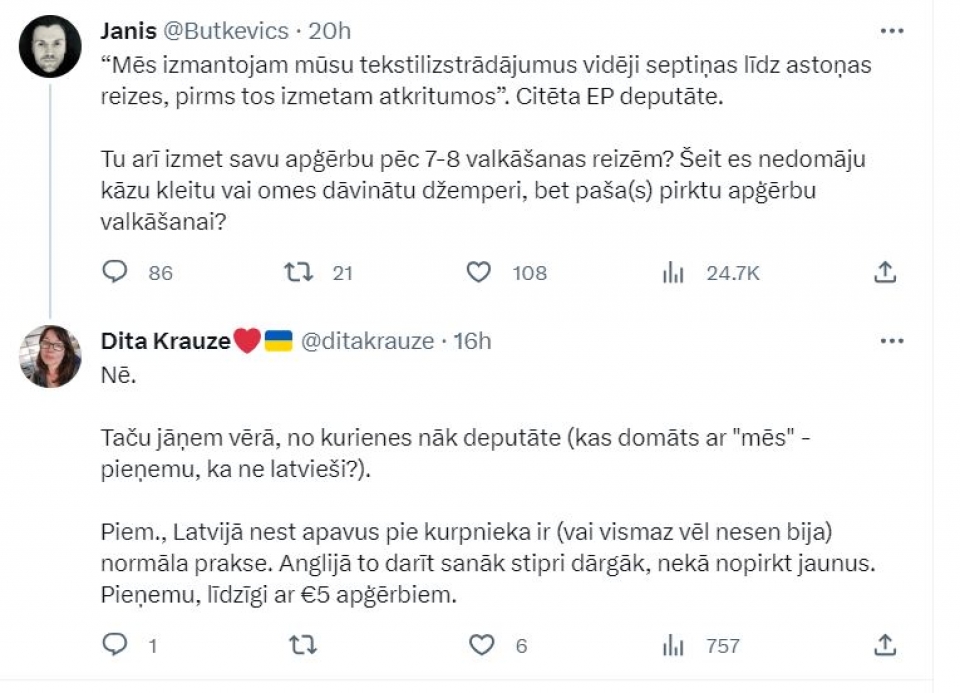 |
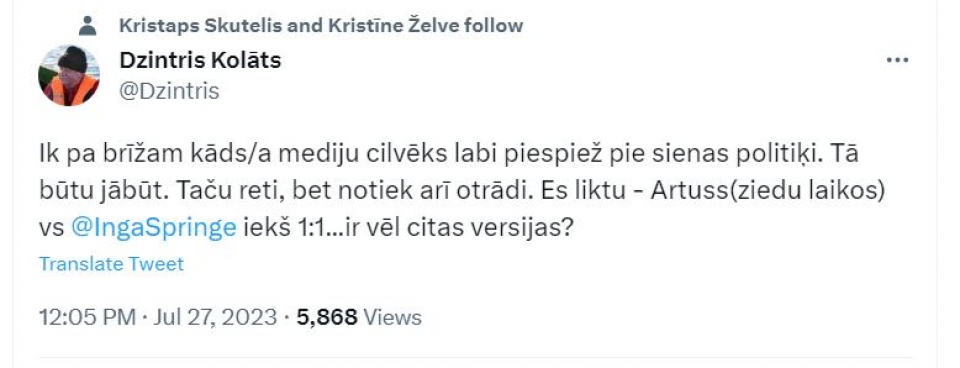 |