
Weekly review
Poll
Concern about gaps in the skills and knowledge of our pupils is voiced quite widely from time to time. Unfortunately, only when someone from outside Latvia has concluded as much. Why is that?
There is a political tendency to be busy, to invest, to make promises, but not to think about the results
If you have little knowledge yourself, you do not even know how or what you do not know...
A smart society is not always desirable or welcome
Many interests swirl around education. A "good result" is rarely mentioned among them

18–25 November
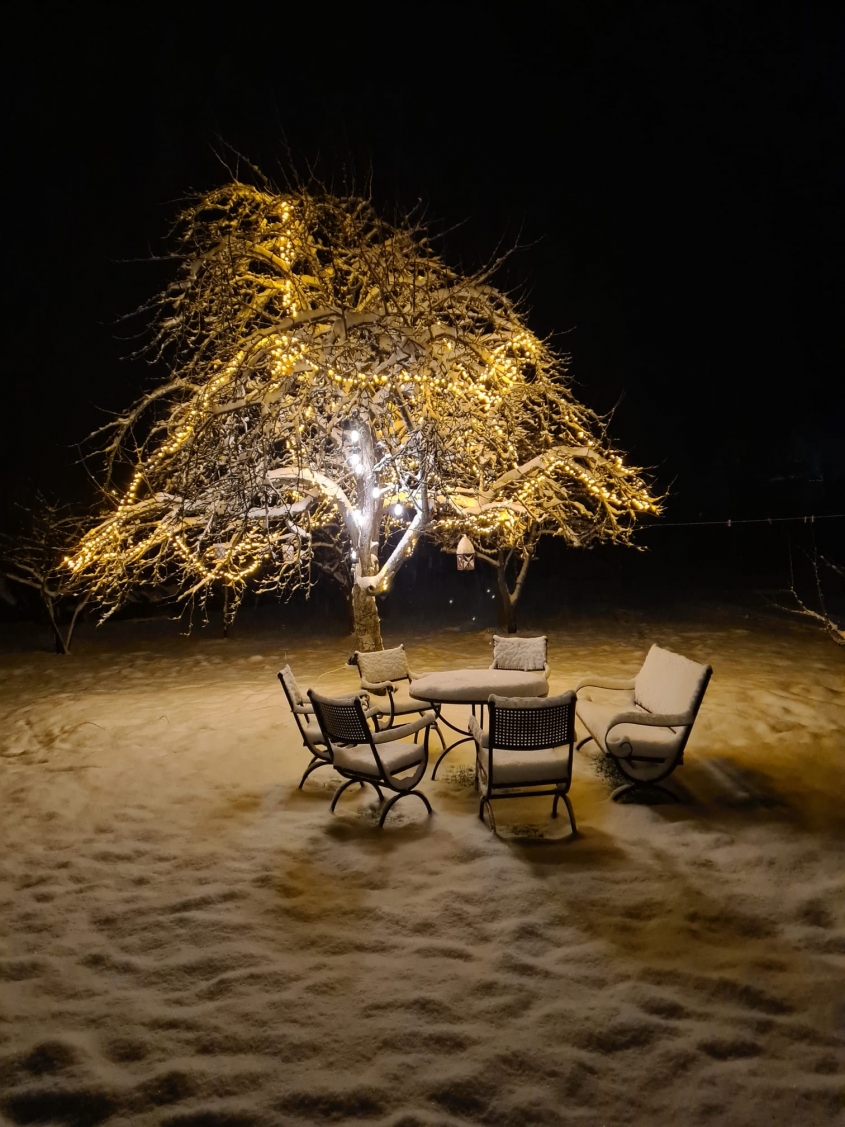
On the European Tree of the Year 2022 in Latvia event by the Sēja Oak
On industry issues
The council of JSC “Latvijas valsts meži” (LVM) has evaluated the company's performance results for the first nine months of 2022. LVM’s pre-tax profit reached 186.4 million euros, which is 87.7 million euros more compared to the same period last year. This was primarily influenced by a 47% higher average selling price for roundwood assortments in the forestry sector.
This refers to the Directive on the promotion of the use of energy from renewable sources, adopted by the European Parliament on 11 December 2018. It stipulates that from 1 January 2023, energy resources derived from biomass may only be sold if they meet specific criteria, thereby ensuring that each EU country uses only sustainably renewable energy. “This means that all biomass used in heat or electricity production in Latvia should be obtained in a sustainable way, which ensures the growing, maintenance, use (burning) and regeneration of the aforementioned material – wood.
...across a total area of nearly 70 hectares in two specially protected nature areas Natura2000 – the “Užava” and “Ovīši” nature reserves – in the North Kurzeme region, a priority, rare and protected coastal dune habitat of European Union importance – grey dunes – is being restored. This is the first time a full-scale restoration of grey dunes of this volume and complexity has been carried out in Latvia.
At the beginning of the year, trees were felled on LVM properties and those that had previously been divested. Then, for a couple of weeks in the summer, the forest workers faced downtime.
“In the summer, there was a certain break in the issuing of work tasks. We did not carry out any work, we did nothing, because we did not have these tasks,” noted Andris Insbergs, Executive Director of Forest Operations at LVM.
Currently, LVM plans to clear the sections designated for deforestation within the next two weeks. If the downtime occurs in winter, at a time when the ground is frozen, the period most suitable for carrying out deforestation – and therefore the most economically advantageous – is missed.
Felling areas located in the Jaungulbene parish on the municipal property “Meža Dekšņi” will be auctioned. This was decided by the Gulbene district deputies at the council meeting on 24 November.
This refers to six land plots within the property “Meža Dekšņi” with a total area of 6.62 hectares. Clear-cutting is planned for three of the land plots, while maintenance thinning is planned for the other three. The total volume of wood to be sold from the clear-cutting areas is 1653.51 cubic metres, and 94.89 cubic metres from the maintenance thinning. According to the valuation, the market value of the felling areas is 90 997.48 euros.
On forests and national defence
xtv.lv · OaG5aMlbGyj 19 11 2022 saimnieks zeme valsts 1 dala
On current affairs
Prime Minister Krišjānis Kariņš (JV) has issued a resolution instructing the Ministry of Economics, in cooperation with the Ministry of Finance, as shareholders, to evaluate the possibilities of adjusting the service tariff projects prepared by JSC “Augstsprieguma tīkls” and JSC “Sadales tīkls”, according to representatives of the State Chancellery.
The Administration of the Latvian Environmental Protection Fund of the State Regional Development Agency, in accordance with the decision of the Latvian Environmental Protection Fund (LVAF) council meeting on 14 November 2022, is announcing a project competition for the activity “Restoration of biologically valuable grasslands” to implement restoration activities for natural grasslands (protected habitats of EU importance).
...a major problem on the part of both the European Commission and the Ministry of Agriculture is the inability to concretely define what we understand by biodiversity: “It is a completely vague concept, and we cannot create specific measures for vague things. It is not defined where we want to see biodiversity – in a wheat field, in a vegetable furrow, around them? In sown grasslands or only in natural ones? Perhaps only in ecologically significant areas, in landscape elements?”
The Ministry of Environmental Protection and Regional Development (VARAM) will organise an in-person seminar on 7 December this year regarding the application of green public procurement (GPP) criteria in construction procurement. The seminar will also be available to watch online, and the connection link will be sent one day before the event.
Experts from the Ministry of Environmental Protection and Regional Development, the Procurement Monitoring Bureau, the Latvian Construction Council, the Ogre District Municipality, the Sustainable Construction Council and SIA CMB will speak at the seminar, discussing the scope of green public procurement criteria in construction tenders.
On interesting matters (events, developments, etc.)
Salacgrīva lampreys have been entered into the Register of Protected Geographical Indications, the Ministry of Agriculture announced. Consequently, only those producers who have joined the “Salacgrīva lampreys” producer group and received a certificate from the Food and Veterinary Service will be allowed to use the name “Salacgrīva lampreys” and display the European Union logo on their labelling.
The identification of natural values, various geological objects, avenues, habitats and endangered species in Latvia began as early as the 1920s. Forestry expert Staņislavs Saliņš, the founder of Latvian monumental tree research, introduced the term “dižkoks” (monumental/great tree) in the 1960s, and it was he who recommended that the primary criterion for a monumental tree be the trunk circumference at a height of 1.3 metres from the ground. Monumental trees have always been respected in Latvia, even though public knowledge about them is incomplete. For example, one of the misleading stereotypes is that only oaks can attain monumental tree status. However, if one looks more closely at trees in nature, the green and white “Oak Leaf” recognition sign is attached to trees of various species.
Jānis Bisenieks was born in the Jelgava region, which is considered a breadbasket, yet he did not wish to be merely a good manager of his own land. Long before the founding of the Latvian state, he laid its economic foundations and realised at an early age that in order to manage well, one needs a good education, not the other way around, which is why in 1902 he founded the first agricultural school.
Reiterating that she understands the activists' motives, the museum director admitted that such actions are nevertheless very unpleasant due to the indirect costs they generate. “A work of art can be damaged – not all are behind glass. It is already the case now that museum exhibitions will have mandatory requirements to place glass in front of them. If we put up ordinary glass, then, forgive me, we see ourselves and the person standing next to us very clearly, while we practically cannot see the picture. If we install professional museum glass, it is very expensive; these are huge expenses for a museum.”
And here we arrive at the question of whether, when weighing the same apple on the same scales today and after a billion or a few billion years, the scales will still show the same reading.
No current affairs section is complete without cartoons...