




Looking at the objects of your research and interest along the banks of Vidzeme's rivers, something you said stuck firmly in my mind: “If riverbanks are managed sensibly, the rivers become cleaner, the Baltic Sea will be cleaner too, and salmon will travel up the Salaca from the sea all the way to Lake Burtnieks.” The idea is simple and easy to grasp, but putting it into practice means running into or up against a great many different obstacles. Why? What creates them?
The question matches exactly the idea I want to bring about. I would add that at present the salmon's passage up the Salaca from the sea to Lake Burtnieks is blocked by the old Staicele paper mill dam. If we work seriously on solving this problem, we will manage it; others have failed to do it in 30-40 years, but I am convinced we will certainly succeed.
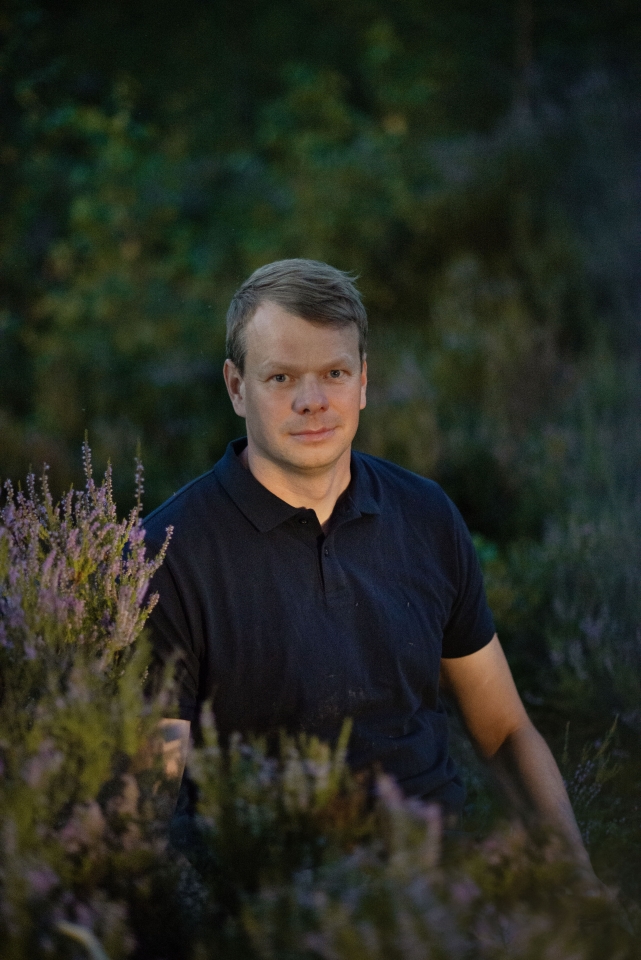
Speaking of rivers and riverbanks in Latvia, the first point is that we have accumulated a certain body of knowledge in this field. The subject of my research at the Latvian State Forest Research Institute “Silava” is riparian forests. As I have already mentioned, a specific and sufficient body of knowledge and data is needed so that discussions can draw on figures rather than emotions, so that we can explain and substantiate what is happening on riverbanks and in rivers and why, and what ought to be changed. In short — we need evidence. Once we have obtained it, we can turn to the next thing that hinders management on riverbanks: the legislation (the laws), which here is very, very prescriptive (excessively restrictive and detailed). I want to stress and to recall that in the 1990s, when the laws were being written, it was established that the principal function of riparian forests is water protection. The third point — until now there has effectively been no discussion of forest resources, nor of nature conservation, landscapes or other values to be found on riverbanks. We are now putting that right, and together with other forest scientists, ichthyologists and hydrobiologists we are assessing riparian forests. It should be added that when these areas come up, we often hear pseudo-green values invoked by equally pseudo-green people — namely, that riverbanks are “meant for” nature conservation. At the same time, foresters say that riverbanks can safely be managed.
There is also a whole range of values that have not been considered at all and are never discussed. I would say that for some time now we have taken on a very substantial piece of work, and we want to understand how riverbanks ought to be managed. If you asked someone right now, “How do you recommend managing a riverbank?”, we would not get a precise answer. It is known that since the last century our Estonian neighbours have left a few trees on riverbanks and cut down the rest in clear-felling. In my view that is not the right approach; in Latvia we grow a larger forest, but our problem is the fact that in many places this forest is already overmature. When we model stand dynamics, looking at both age and species, we see that grey alder is currently collapsing rapidly and ought to be removed swiftly from the banks; we have already secured this in law. But grey alder will soon be “joined” by birch, aspen and spruce as well, which is why we need to think seriously about how and what to do so that these species too can be managed commercially on riverbanks, so that trees do not fall into the river and thereby add nutrients the river does not need — and, further downstream, the Baltic Sea — and do not increase the scale of the existing problem.
The less organic matter from trees ends up in rivers, the less of it will reach the Baltic Sea. Is there not a contradiction here in environmental terms — the state of the Baltic Sea has worried many people for quite long enough, yet at the same time nothing is being done to keep the nutrients that reach the sea out of it (agriculture is usually singled out, while other circumstances are forgotten)?
Exactly! The hydrobiologists say: “Where the Salaca flows out of Lake Burtnieks the water quality in the river is poor; where it enters the sea, 95 kilometres further on, the water quality is already good.” What does that mean? The river is itself a natural treatment plant. If we can influence what happens on the riverbanks through forestry methods, water quality can be improved still further. The better the quality of the water flowing into the Baltic Sea, the better it will be for the sea.
Is there any justification for the idea that riverbanks cannot be managed, or can be managed only in a very limited way?
Some things are permitted on riverbanks — thinning can be carried out, damaged trees can be removed, grey alders can be taken out by clear-felling, but if we put these forestry operations into a spreadsheet, tending riverbanks runs at a loss, and that generally does not work. The forest owner needs to be shown (allowed) that it is also possible to fell those two birches or those two already-collapsing spruces, which might be turned into sawlogs or veneer blocks. That way the forest owner makes the work profitable, and it motivates them to keep clearing the riverbanks in future. As long as forest owners are not motivated in this way, they will choose to do nothing.
When it comes to riverbanks, owners are afraid of inspections. The laws must be observed, but every metre of riverbank is different, and it is impossible to write rules for every bank of every river in Latvia. Inspectors would need very high qualifications and a thorough understanding of the situation. Working in research, I have concluded that it is impossible to draft the classic amendments to regulations, because they would be yet another patch, and nobody wants that. There has to be an entirely new solution, one that can give the owner a decision-support tool (a digital one, for instance) to help them choose what to do and how to do it as correctly as possible.
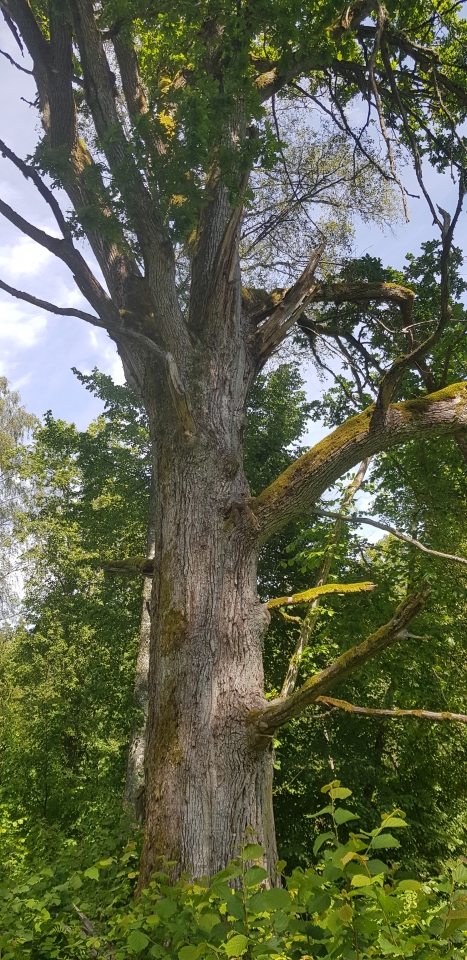
If we look at the statistics, some forest owners have very weak forestry knowledge, and their understanding of what happens on riverbanks is not brilliant either. I would add that the State Forest Service's staff also have a very weak understanding of riverbanks — classic forestry knowledge does not mean an excellent grasp of everything. That, unfortunately, is how we manage things — as slaves to the letter of the law, with no thought for tomorrow. What do I mean by that? We have to take account of everything that exists and everything that is happening — whether it is nature conservation, or management, or the removal of barriers — and only then decide and act. For example, a black stork lives in a particular place and so nothing can be done there; not far away we want to protect dragonflies, which need an opening in the forest (the riverbank must not be overgrown); while for the salmon living in the river any barrier is an obstacle. Which of these species should take priority? Which do we favour? Situations like these on riverbanks can be judged sufficiently difficult and complex, and I can clearly see that the algorithm models mentioned above could be used to help owners manage their land.
You live not far from Vecsalaca manor, next to which lies the former manor park. You mentioned that in your view riverbanks ought to look like the old manor parks — oak, spruce, elm, pine, and further on maple, perhaps the odd walnut and so on. How did you arrive at such a vivid conclusion?
In life and in my professional work I have met a great many forest owners who would very much like someone to explain to them simply and clearly what a riverbank should look like, what the forest should look like, what to aim for in managing it. In my view, the parks of the former manors are a good example to point to.
The Vecsalaca manor park has been tended for some time now, some of the old trees have fallen and are being removed, and a new generation has, so to speak, come into the park. Leaving aside a few shortcomings that I can see, various tree species grow there, the trees are of different ages, there are openings in the park and there are places where the growth is denser. Riverbanks should be managed like a game of chess — not clear-fellings, but micro-openings, so that gaps two trees long are created and the sun can shine in. Sun matters for one very important reason: in Latvia we have only two shade-loving species (spruce and lime), whereas riverbanks offer excellent conditions for every tree growing wild in Latvia; the fertile forest site types are found there — Hylocomiosa, Aegopodiosa, Oxalidosa. If I want to grow larch or oak, I cannot introduce them there, because the trees lack light. The chessboard squares have to be big enough for these species to do well.
You mentioned that several ambitious projects connected with the natural flow of rivers lie ahead, one of them the Staicele dam. How simple is it to remove?
There is a plan to remove the Staicele dam, we have also come to an agreement with the owners, and the whole process is hugely complicated — and here I am not talking about the technical demolition of the dam.
When I worked at the Ministry of Environment at the start of my career, more than one person came to us to talk about similar matters, including simplifying and shortening processes and procedures. There were promises and there still are; real action has not followed. For the most part, plans to remove dams, weirs or barriers run up against the owners' wishes (usually measurable in money), against the environmental impact assessment, and then there is the question of industrial cultural heritage. We come back again to what we discussed earlier: which should take precedence in such a case — nature over culture, or culture over nature?
Is a weir or a dam industrial cultural heritage?
Not the weir itself, but the buildings next to it, for example, may be. In short, the question is very complicated, and it usually demands a mountain of paperwork. The owner's wishes have to be remembered as well.
Are there owners who still want to keep weirs or barriers in a river?
Those connected with generating electricity — the weirs of small hydropower plants — undoubtedly! Then there are, for example, former mill ponds located near settlements: over the years the pond has become a favourite recreation spot for local people, where they can swim, fish and go boating, and where various events can be held. And imagine it yourself — you are used to all of this, and suddenly someone comes along and says: “Where the pond is there will soon be a small stream, with water in spring, but in summer it may well dry up.” Many people do not find that prospect comprehensible or acceptable, and there will be serious public objections.
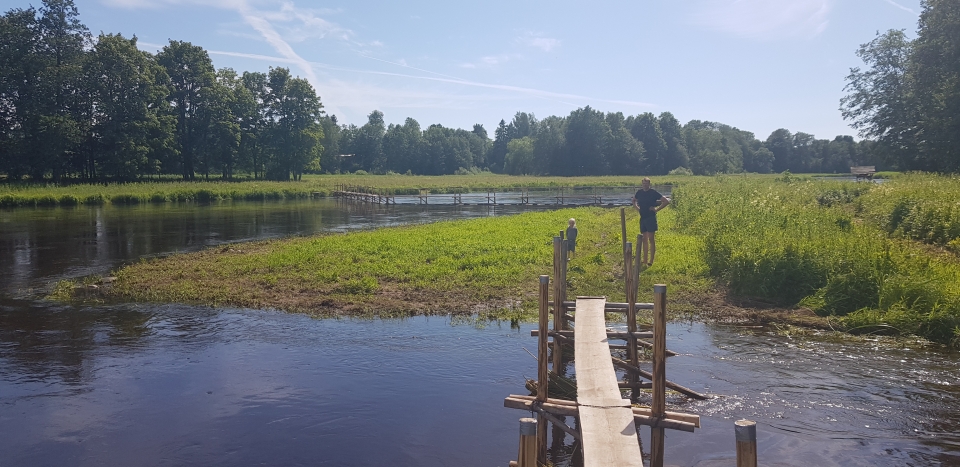
In the approval process for demolishing a weir, the environmental impact assessment runs for two years. What is done during those two years?
The complexity of the process, and hence the time its implementation requires, is set by law. Unfortunately it cannot be done in less than two years, because, for example, if we are talking about potential wind turbines, the movement of birds and bats in the surrounding area has to be observed for at least a year — in every season. In the case of a weir, whether you are demolishing or building, you study the fish, the water flow and so on. For those who want to get on with a project, the environmental impact assessment is a very bitter and unpleasant “dessert”, and it applies to every sector — nothing happens quickly. In my view, it is a serious obstacle to Latvia's economy.
Of course, I accept that there are cases where a two-year assessment period is sensible and right, but when you want to demolish an old, useless dam and return nature to its natural state (a play on words, but there is no more precise way to put it), and on top of that you have to spend a full 730 days assessing it...
I remember there was an environmental impact assessment in connection with “Rail Baltica” too; people objected and protested against a great deal, but as we know the construction work is continuing, slowly but surely. From the point of view of the economy and the national interest, I can see that this process ought to be simplified and shortened, but ministers change, governments change, we are listened to, and yet everything stays as it was.
This government talks a great deal about reducing bureaucracy. Can environmental impact be assessed scientifically, or is it merely a bureaucratic process? The process can certainly be simplified! It is both scientific (though carried out not by scientists but by experts) and bureaucratic.
As for reducing bureaucracy — talking about it is one thing, acting in practice is another. Here we do the former.
Coming back to the question of riverbanks and the creatures living on them, you mentioned dragonflies, salmon, storks and others, and asked which should be given priority. Realistically speaking, do such discussions not end in deadlock?
No! Realistically speaking, a Latvian's life is a little longer than 100 years, and my priority has always been the Latvian (the human being). The interests of society must take priority over other interests — biologically this species (the human being) is dominant, and we have to listen to what it says.
Looking at old (pre-war) maps, from when we were a comparatively prosperous, if agrarian, country, Latvia had a great many farmsteads, and the riverbanks were superbly managed along with all the 27% of forest that Latvia had at the time — cattle were grazed, nutrients were converted into milk, cheese and the like, creating the country's prosperity while at the same time preserving enormous biodiversity. Fifty years of occupation destroyed all of that; people abandoned certain areas and the land became overgrown, mostly with grey alder. I can see that many people are unable to manage riverbanks, which are habitats — species-rich meadows that are now becoming overgrown with alder; beneath the alders grow a few herbaceous species that collapse with the first frosts, and then the nutrients flow freely into the river. Without human activity on the riverbank we cannot significantly change anything, even in our dreams. “We can forget about them — let happen what will happen,” is a view I have also heard, and one I cannot agree with at all. Some portion of the territory, a couple of per cent, we can leave (abandon) in this way and do nothing. That is the situation, for example, on the banks of the Vitrupe, which lie in a Natura 2000 area where nothing can be done. I would not advise anyone to go boating there, it is dangerous — I have experienced it myself. At the same time there are rivers whose banks people manage and which are safe for boating or fishing or anything else.
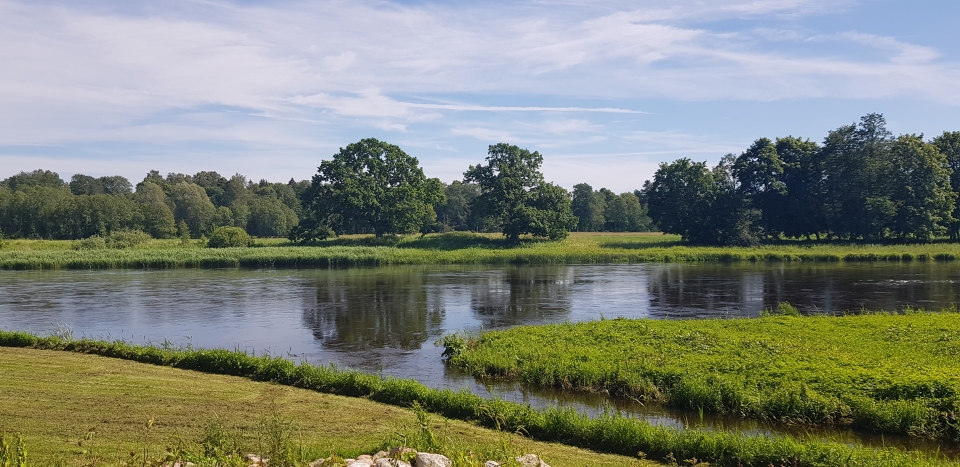
I hear a twofold call — to manage riverbanks and to return to former properties.
That is already happening! Another matter is that we as a society are becoming smaller. In the Vidzeme region I can see people returning to rural properties. There are not as many of them as there should be, but I am genuinely glad of every house on a riverbank where someone lives and which is kept in good order. The greatest contribution to tidying riverbanks can come from forest owners or from the investment companies that have bought the properties in question. We have to work with them, explain things, cooperate, because that is where the greatest investment and return are possible. Good examples need to be shown widely and regularly, which is what we will be doing on the banks of the Svētupe and the Korģe. I am glad of the good cooperation with “Södra”, “SCA”, “Ingka”, “Latvijas valsts meži” (hereinafter — LVM), “Meža birojs” and the private forest owners who allow us to work in their forests and put this practice into effect. The companies are very interested in and responsive to riparian forest management. I am delighted that our colleagues at SCA brought management representatives over from Sweden to see a riverbank forest, showing it as a good example.
I would add that before LVM gave up FSC certification, the company could not fell grey alder on the banks of salmon rivers, because although the law permitted it, the FSC standard did not (the standard does not allow clear-fellings on the banks of salmon rivers). I am pleased with the decision by LVM's management, which makes sense both economically and environmentally. The first steps in our cooperation have been successful.
Photographs by Liene Medne, as well as zemeunvalsts.lv, taken on the banks of the Salaca, the Svētupe and the Korģe

.jpg)




.jpg)
.jpg)


.jpg)


