



The European Commission is proposing to establish continuous cover forestry as the dominant forest management method. Finnish researcher Antti Asikainen believes this is a return to a primitive (subsistence, foraging) economy.
If the European Commission's plan to transition to continuous cover forestry in all commercial forests is adopted, it will create major problems for timber procurement, assuming that the total volume of logging remains at current levels.
Forest.fi examines the latest research comparing the impact of continuous cover and uneven-aged forest management on the climate, as well as on forest ecology and economics. The main conclusion remains unchanged: there is no clear answer to the question of which method is better; it depends on the specifics of the particular site (forest plot) and the needs of the forest owner.
To address climate issues, various demands are being devised, for example, that "forestry must increase carbon sequestration by reducing logging volumes." Antti Asikainen points out that the financial and economic importance of forests is growing, especially at a time when countries have run up significant debts.
“The added value of every cubic metre of timber provides approximately €150 to the national economy. If we fail to derive this sum from the forest, what is the alternative?" asks A. Asikainen. On the other hand, the EC even demands the use of timber available in European forests. However, if timber were only harvested using continuous cover forestry methods, as required by the EC, in A. Asikainen's opinion, this would mean abandoning the forest management practices adopted in the 1950s. If timber usage were to remain at current levels, the area of felling sites would need to be increased, as only a few trees growing in a stand would be removed.
“The risk of damaging the remaining trees during logging would increase, and, furthermore, it would be much harder to manage logging profitably. This would mean a return to a primitive economy," concludes A. Asikainen.
A seminar on the issues of continuous cover forestry was held in April by the Natural Resources Institute Finland and Metsähallitus.
No method is good if it is the only one used
If the only forest management method were continuous cover forestry, nature would not always be “happy” with that either. Studies show that increasing the use of this method (compared to the current volume) would improve biodiversity, but making the method mandatory would not lead to significant changes for forest-dwelling species.
Researchers have only been able to track the development of biodiversity in forests managed with the continuous cover method for about ten years. “We are just beginning,” explained Professor Matti Koivula. His presentation was based on 55 publications, the majority of which are dedicated to selection felling. The situation in small-diameter tree harvesting has been studied in more than 20 publications. The status of species development was compared between clear-felling and old-growth stands.
In continuous cover forests, timber volume is subject to less fluctuation than in forests managed by periodic harvesting. Continuous cover forests lack old-growth stands, clearly visible seedling or sapling stands, or open forest areas with plenty of sunlight and heat.
M. Koivula does not currently consider this a problem, as the majority of forests are managed using periodic harvesting methods. “In the long term, species that ‘prefer’ open forests may face problems if the continuous cover management method is the only one,” said M. Koivula.
The presence of deadwood is not a given
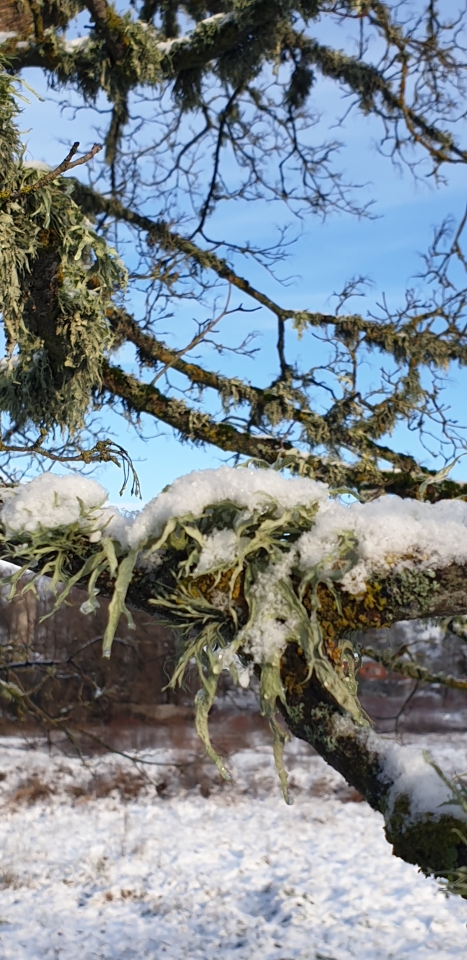
Continuous cover establishment is beneficial for species that require shade. “A good example is black alder, which is the basis for many food chains in the forest,” adds M. Koivula. It is similar for lichens that grow on tree trunks and branches; they can also benefit from continuous cover. They grow on large trees, which are always present in such forests. “But will the lichens survive if small-scale felling is repeated periodically over several decades? We do not have data on that,” explains M. Koivula.
Looking at it from another perspective, several species benefit from clear-felling. Although none of the endangered species depend on clear-felling, some of them “prefer” an open environment. Species that inhabit open environments can find a suitable home in clear-cut areas. However, no forestry method automatically provides the habitats important or necessary for endangered species, such as deadwood or sufficiently robust trees. Such habitats must be created through management. There are hundreds of endangered species that depend, for example, on robust living or dead wood.
Quality differences in continuous cover spruce stands
Regarding spruce productivity, such stands are a successful solution if certain conditions are met. One of the main ones is the growth of seedlings. The profitability of continuous cover forestry is based on the fact that one does not have to plant or sow new trees; the saplings must grow naturally.
“There will be many saplings that grow into trees. But!!! ...they will grow incredibly slowly. It can take 50 years for a sapling to reach a height of 130 cm,” researcher Sauli Valkonen explained the situation.
“On the other hand, small spruce trees will start to grow faster as soon as they have enough light and space. This is a new and important discovery: trees that have been stunted in growth for, say, 30 years, can begin to grow successfully once conditions change,” emphasised S. Valkonen, continuing that forests should not be allowed to grow too densely or too sparsely.
One of the requirements is diversity in tree species. To achieve this, small clearings must be created in the forest. “Only as a result of selection felling can spruce become the dominant species,” continues S. Valkonen.
The first sample plots for spruce cultivation using the continuous cover method in Finland were established as early as the 1980s. They showed that a good annual increment can be maintained for 30 years or longer. However, the average timber yield will be 15-30% lower than in the case of clear-felling.
Spruce logs obtained from continuous cover forests have an especially dense core, which has formed over a certain period as the tree grows slowly in a very dense stand. This core is surrounded by wood of normal density that formed after the thinning of neighbouring trees. According to S. Valkonen, the dense core does not affect the quality of spruce wood intended for cellulose production, but it does cause differences in the quality of logs sold to sawmills and the grades of timber manufactured from them, increasing the need for sorting.

Fewer studies on pine, more on spruce
Continuous cover pine stands are much less studied than this type of spruce stand, although a few plots were established in heathlands in the early 80s. “Regeneration has been successful even without soil preparation, although it does improve natural regeneration. However, the seedlings grow in groups, which accordingly means a lot of free space and less intensive growth,” reported Professor Pasi Rautio from the Natural Resources Institute Finland.
Another problem is that there have been practically no seedlings between the open areas. Pine growth in openings was also tested. As a result, the seedlings grew poorly, but light soil preparation improved growth.
Currently, studies with pine are taking place on ~1000 plots. It has been concluded: to successfully regenerate pine stands, more than half of the trees must be removed. The trees grow slowly, reaching a height of 50 cm in 15 years. The mentioned experiments took place in northern Finland; P. Rautio explained that conditions in the south of the country do not differ significantly, except for the amount of light.
Continuous cover is beneficial in peatlands
Particularly high hopes are pinned on the continuous cover forestry method in peatlands. This is linked to groundwater level fluctuations in forests with uneven cover. Trees “take” water from the soil through evaporation. When logging is carried out in a wet peatland, evaporation decreases because the trees are felled, and the groundwater level begins to rise. Consequently, methane emissions and the leaching of phosphorus, nitrogen, and organic carbon into watercourses increase. Conversely, when trees grow in peatlands, the groundwater level drops, and carbon begins to be released from the soil into the atmosphere.
In a continuous cover situation, the trees and water evaporation activity are maintained, thereby reducing both groundwater level fluctuations and emissions.
“Using the continuous cover method in peatlands, the groundwater level can be kept stable, at a depth of about 30-40 cm, no higher,” said Senior Researcher Markku Saarinen of the Natural Resources Institute Finland.
In this case, too, the problem is caused by trees growing in groups. Between the clusters of trees, the groundwater level can rise. “In the case of small-diameter tree harvesting, the maximum diameter of the felling site should be 20 metres. Otherwise, the groundwater level in the middle of the felling site will rise excessively,” explained M. Saarinen.
Lower risk of damage if the cover is continuous – except for root rot
So far, little is known about the risk of forest damage when using the continuous cover method.
“However, it is believed that the risk of damage is lower for the continuous cover forestry method compared to periodic forestry. An important exception is root rot,” said Professor Jarkko Hantula, a researcher at the Natural Resources Institute Finland. J. Hantula believes that the risk of fire, storm, snow, and wind damage is perhaps (could be) lower if forestry is organised using the continuous cover method. The annual costs (losses) to forestry caused by root rot (Heterobasidion) are approximately €50 million. Pine damage costs about €5-10 million. It is practically impossible to eradicate root rot in pine stands. In spruce stands, the only solution is clear-felling, i.e., abandoning continuous cover forestry. Furthermore, after logging in such an area, broad-leaved trees must be grown, and spruce should not be planted for at least 30 years (preferably not even nearby). The damage caused to trees during logging also poses a risk, as damaged trees can become infected with root rot.
The forest owner decides
From the many expert presentations, it must be concluded that there is no single or very clear answer as to which forestry method is best. Everything depends on the forest growth conditions at the specific site, the characteristics of the forest stand, and the needs of the forest owner.
Kalle Vanhatalo, a Good Forest Management Practice Coordinator from the forest consultancy company Tapio, continued the list by mentioning the forest owner's ability to deal with uncertainty.
“The risks associated with logging methods differ because the probability of achieving various goals is different,” he explained. The definition of good practice provided by K. Vanhatalo differs from other guidelines and instructions regarding forestry: “Good practice is recommendations that show forest owners how they can achieve their ecological and financial goals.”
“You will not find that in forest certification standards or legislation,” K. Vanhatalo is convinced. He further emphasised that all of the forest owner's goals must be reached, because otherwise the solution is not a good one. “Also, benefits will only be benefits if the forest owner considers them as such. It is pointless to try to achieve, for example, landscape-related benefits if the owner does not see any value in them,” added Kalle Vanhatalo.
Photographs by Pierre Pellegrini, Benjamin Everett and zemeunvalsts.lv used
Comments