




At a time when science is often invoked because it is the “done thing”, loud and serious activities often take place for reasons not based on research (science). “Everything is...” The word “everything” in various statements is confusing, as surely no one knows or has managed to find out everything. What is the situation with a resource important to us – water?
Do your studies cover both surface and groundwater?
Exactly – our studies cover rivers (in most cases, medium and small ones), ditches, drainage systems, and groundwater, thus covering practically all parts of the hydrographic network.
The research conducted by both the Department of Environmental Engineering and Water Management and the Scientific Laboratory of Forest and Water Resources has two directions: water quality and quantity in areas affected by agriculture (agricultural runoff monitoring) and measurements of greenhouse gas (GHG) emissions in agricultural land. A small part of the research is devoted to forests, namely, at water sampling sites, we assess water drained from catchment basins with a high proportion of agricultural land and forest cover. For example, if a river's course has more agricultural land equipped with drainage systems, the amount of nitrogen compounds washed out of the soil in the water will increase accordingly. The opposite situation is observed in forest lands: the more forest, the less nitrogen compounds are washed out.

For comparison: forests are not usually fertilised regularly
Natural processes take place in forests over a long period, except when economic activity is carried out: then the leaching of plant nutrients begins. The forest floor is “disturbed”, trees stop absorbing nitrogen (N) and phosphorus (P) compounds; the drainage systems in forests collect and transport the water to further parts of the hydrographic network. Through both surface runoff and filtration through the soil profile, N and P compounds end up in nearby watercourses.
Are the studies used in practice, for example, in solving river siltation? In Jelgava Municipality, there is concern about the Iecava; the siltation of Latvia's not-very-fast rivers is a serious problem that requires a solution.
The focus of our research is not the problem of river siltation. From the results of hydrological measurements, we can find an explanation for why this happens; for example, in the course of our research, we can conclude that the self-purification capacity of rivers has been quite limited in recent years: the number of pronounced, strong, water-rich spring floods that would be able to properly clean the riverbed has significantly decreased.
This is related to the “lack” of cold winters and climate issues. After the excellent winter, were the rivers “cleaned” this spring?
It will be difficult to answer this question because we do not carry out direct measurements of river self-purification. I will add, however, that this would be a direction in which we could develop our research, seeing that this is a current issue in society.
Spring floods clean the river because they are stronger and more powerful. Rain, no matter how strong and intense, cannot do an equivalent job
After prolonged rain, river purification is minimal, unless an unusually large amount of water falls in a short period, as happened in late summer and early autumn of 2017. This year in August, one could see brown-coloured water in small streams, which indicates that soil washed away by water and organic particles are being transported; whether they are washed from fields by surface runoff, stirred up from the riverbed, or whether there is bank erosion in the watercourses is another question. It is impossible to say definitively where the washouts were formed.
I have seen areas that were once drained, which, upon filling in the ditches, have become swampy again
Yes, that happens! This occurs both as a result of natural processes as the ditches become overgrown, and it is also done deliberately. It is done intentionally in organic soils: by raising the groundwater level, the decomposition of organic matter is prevented. This reduces the emission of carbon dioxide (CO2) or nitrous oxide (N2O) from the soil.
Should the restoration of wetlands be considered as correcting the follies of the once very active land improvement (melioration)? We are talking about what happened in the 60s and 70s
Drainage systems must be regularly maintained. If left neglected, they become overgrown and stop functioning; there are also beavers which, in certain conditions, incidentally, can contribute to the improvement of water quality, although in most cases we hear about the negative manifestations of beaver activity.
Economically viable agricultural activity in Latvia is not possible without the presence of drainage systems. Drainage systems need to be maintained and renewed from time to time. Positive changes from the point of view of funding availability began in 2015, when the Rural Support Service announced in several rounds the support measure “Support for investments in the development of agricultural and forestry infrastructure”, which included the reconstruction and restoration of drainage systems, including the installation of environmentally friendly drainage system elements in supported activities. These are positive trends that have changed over time – we are thinking about both the drainage of agricultural and forest land and the improvement of water quality. To a certain extent, the requirements set by the European Union encourage action in this direction; it is expected that in the future, the need to improve water quality will become even more topical.
Environmentally friendly drainage system elements are measures that can be implemented in drainage systems to improve water quality, including reducing the entry of nitrogen and phosphorus compounds into downstream watercourses. For example, artificial wetlands, stone piles, sedimentation basins, controlled drainage, meandering, and two-stage drainage ditches. The functional importance of all these measures is borrowed from nature; for example, a two-stage ditch is a floodplain we know well: the base bed of the ditch is relatively narrow, and a floodplain (terrace) part is installed on one or both sides of the base bed. It is observed in nature what floodplains look like for natural rivers, and such or very similar ones are installed for ditches. Something similar happens with artificial wetlands; there are many naturally overly wet areas in Latvia, and we try to find places that were once drained but where, with minimal resources, the water level can be slightly raised, promoting water self-purification. To obtain funds for the reconstruction and renewal of drainage systems, within the framework of the aforementioned Rural Support Service measure, one of the criteria included is the installation of environmentally friendly drainage system elements in water bodies where there is a risk of not achieving water quality targets.
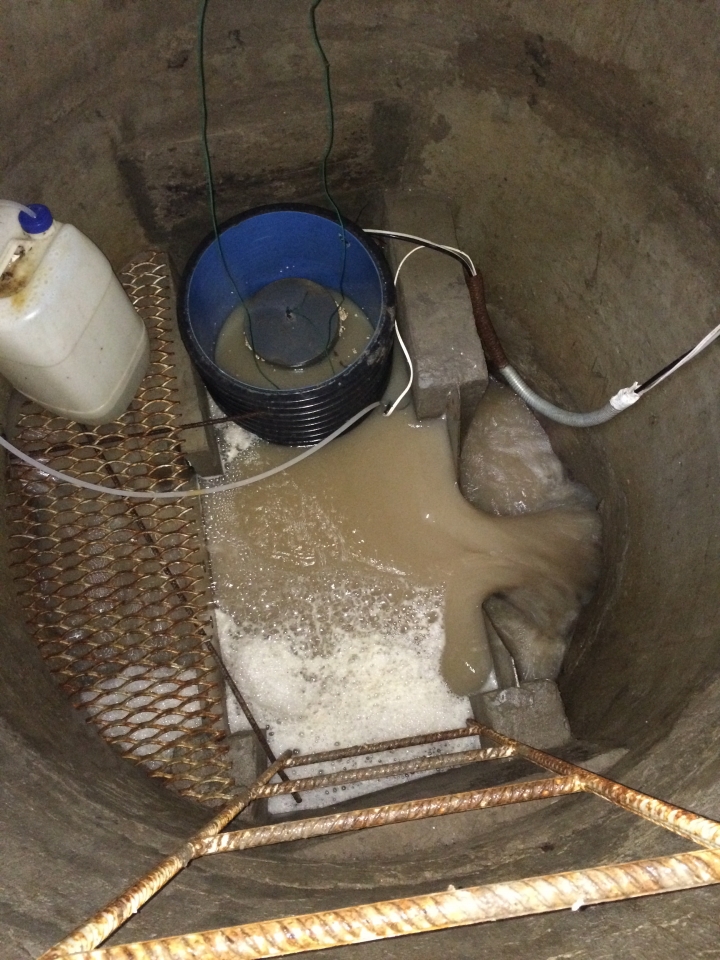
Land improvers usually sigh about “neglected” drainage systems...
Farmers are very different. I have participated and participate in various studies in rural regions, and I see the differences well in my work. There are farmers who take great care of drainage systems: everything is like in a textbook. There are farmers whose ditches and wells are clogged; the system is there, but it does not work. Will the land manager restore the drainage systems or not? Property rights are very important here – a lot of land in Latvia is rented out, lease terms are often not too long, and the tenant does not have much interest in investing seriously.
...and the owners live in different places... Can we talk about the long-term thinking here that is publicly called for? For example, a forest owner thinks about their grandchildren's children
Of course, the life cycles of products produced on forest and agricultural land are very, very different, which also determines the interest in making financial investments. If a forest owner, thinking about tree growth conditions, invests funds for decades ahead, a farmer will most likely not plan that far, because the crop life cycle is measured in months. Situations vary, and there are conscientious and not-so-conscientious people among both forest and agricultural landowners.
Politics are changing and agricultural cultures are changing...
We see this well in research sites where a marked change in crops has been visible in the last 5 years. While wheat and rapeseed were predominantly grown in our research sites before, we now also see maize, which is found in relatively large areas in some places, and also peas and field beans, which were not seen until then. Crop diversification is one of the requirements for receiving European Union subsidies. Besides crop rotation, the method of soil tillage is also changing: at one time almost all fields were ploughed, now ploughing is being replaced by discing (minimal, shallow soil tillage). The next level is seeding without soil tillage (direct seeding) – you harvest and sow the next crop in a field full of stubble. Of course, the choice of crops and soil tillage affects both the amount of runoff water and its quality.
Not far from Dobele, we have a research site where direct seeding has been applied for several years. Water quality there has improved.
Not just any crop will grow in stubble...
Of course, there are certain conditions and limitations. One approach cannot be used for everything and everywhere.
I will not talk about the classic rural landscape, which, listening to this story, is gradually disappearing... A ploughed field. At some point, the field certainly needs to be cultivated more thoroughly...
Of course, every certain period of time, which depends on the soil properties. By the way, the variety of soils in Latvia is sufficiently large, and each soil needs “its own approach”. You cannot say: you must plough every three years. In one place, it will be correct and timely; elsewhere, it will not work, and the solution will be different. The soil tillage and seeding system is complex, for example, taking into account previously grown crops, the plant protection products used and the need for them, the farmer's plans, etc. A well-founded decision is made by taking into account the agrochemical analysis of the soil and knowledge; it would not be advisable to follow the example of some local authority who “does it this way, so I will too”.
In your opinion, what is the public awareness of what Latvian scientists have done? Science is mentioned in general; research carried out in Latvia is not always publicised with the necessary scale
This is a good question, and information about research findings in Latvia could certainly be developed. For example, US universities have a special knowledge transfer service provided by universities (extension and outreach). There is not even a term for such a service in the Latvian language. Its main function is the dissemination of information to potential users: research is ongoing, and in parallel, field days, demonstrations, thematic seminars, information transfer through social networks, etc., are organised.
In Latvia, public information about research results is still in its infancy, and it is definitely necessary to develop it. Very often, the reports that we prepare for both EU institutions and ministries have an overly scientific and complex content, which will certainly not encourage a desire to read these reports or increase public understanding. This is another job: publishing and disseminating research results in a way that is understandable to the public.
Of course, like colleagues from other scientific institutions, we participate in various television and radio programmes, give interviews, etc., but we often lack the opportunities and funding to create specific information dissemination campaigns.
GHG emissions. As far as is known, the forestry research institute “Silava” is working diligently on them in Latvia
In the last five years, we have developed excellent cooperation with specialists from the forestry research institute “Silava” and the state SIA “Latvian Environment, Geology and Meteorology Centre”, and we are also developing cooperation with scientists from the Faculty of Geography and Earth Sciences of the University of Latvia. Several joint studies with “Silava” have been started, in which we cooperate as project partners. For example, studies on GHG emissions, where colleagues from “Silava” work in forest lands and we in agricultural lands, thus trying to complement each other's research with new insights. As for the drainage topic touched upon in our conversation, drainage systems are present in both forest and agricultural lands.
“Silava” scientists analyse in their research the coefficients for GHG emissions applied by European institutions, which in Latvia are still the same as in Germany and France, i.e., not suitable for our climatic conditions
For this reason, too, we cooperate with “Silava” in national and international projects, because we take measurements in Latvian conditions and try to collect the longest possible and representative data sets, which would allow us to show that the internationally accepted emission coefficients included and used in GHG inventory reports are not scientifically justified for Latvian conditions (at the European level, such calculation coefficients have been adopted and continue to be used). These coefficients are quite abstract and general; I would definitely like to emphasise: in Latvia, they are definitely different! Our research so far has shown the value of this work (research). It is worth and very important to continue the work begun, delving into and researching various types of land use in relation to GHG emissions. The trends observed in existing studies show that the aforementioned coefficients are lower in Latvia! Therefore, that, which we report from Latvia using internationally accepted coefficients, is exaggerated. The information on emissions contained in the reports is not comprehensive. We are working to show the true picture: the situation is better than it seems. It should be noted that switching from internationally accepted coefficients to national ones is not possible in a short period of time, because changes must be justified by research results.
Is this heard outside the scientific environment?
There is a certain procedure for achieving the use of national coefficients in GHG inventory reports. Long-term research according to a specific methodology is required. By explaining the methodology used and the results obtained in detail, we can eventually achieve the use of our determined coefficients when preparing future reports. Control mechanisms are implemented by the EU with the aim of verifying the accuracy of the information prepared.
Who should this be explained to?
It needs to be explained to many stakeholders! Speaking of GHG inventory, explanation is primarily needed for European Union audit institutions, and then for other stakeholders as well. I would like to emphasise once again – in terms of emission coefficients, the work definitely needs to be continued, and it will undoubtedly pay off!
Agriculture and runoff. “Many are well aware of the dire situation in Latvia: everything is being poisoned, finished off, ended...” What can you add?
I will repeat: farmers are different. Similarly to what I said about drainage systems, their maintenance and renewal. There are farmers who act by watching what their neighbour does. If the neighbour sprays with herbicides or insecticides, one should act the same. Why? “The neighbour is smarter, he does it that way.”
Most farmers observe what is happening in nature: if there are no diseases or insects, no one will spray anything unnecessarily anywhere. The issue is in no way to be viewed in black and white (“for” or “against”), but the differences between one farmer and another can be quite pronounced. If we talk about studies related to water quality, we have had detailed and accurate information on N and P losses from agricultural land available since 1995, and we are gradually increasing the monitoring network. In 2005 and 2010, new research sites were added, and since last year, detailed water quality monitoring in a number of Latvian water bodies has been implemented within the framework of the LIFE GoodWater IP project. Here I am talking about what we have.
What do we not have? We do not have information on the presence of residues of plant protection products in water. Yes, a number of studies have been carried out, but they have been episodic and are not considered regular and long-term studies that can provide a precise insight into the true picture, where monitoring should be carried out in different parts of Latvia, in different soils, in different relief conditions, in different crops, as is the case in our study (N, P). Our network of monitoring stations covers different regions of the country and different management conditions. Assertions that pesticides end up in the water are not based on research. Why are there no such studies? N and P analyses cost about 30 euros (each), while analyses for the presence of plant protection products are very expensive. Why? The active substances in these products are very numerous; to determine the presence of a substance or substances in a water sample, one must first ask the specific farmer what he uses. We are then searching for residues of those substances. If we do not know what to look for, we have to determine, for example, the 8-10 most commonly used ones, which, in turn, can increase the cost of one analysis to 500-600 euros. Therefore, by comparison, performing the analyses is 15 to 20 times more expensive, which is why the studies take place very episodically. If we really want to understand the real picture, a 3-5 year study is needed, where water samples are taken in different places in Latvia, knowing what active substances are used, and we determine their presence or do not find them, until we can say – rumours about the presence of pesticides in waters are a myth or the truth. I certainly do not agree with the action that took place some time ago: “everything is being poisoned, everything is bad, water and soil are polluted”, because we do not have a single study that would confirm this or, quite the opposite, refute it! We do not know! This is an issue where research should be developed from both the soil and water perspectives.
Nitrogen and phosphorus are also “dumped too much” on the fields. Farmers comment on this clamour quite practically – namely – opponents (those who shout) forget that fertilisers and plant protection products are by no means cheap, and a farmer who earns money by their work usually counts this money carefully enough
Very accurate: I see this situation in our research sites. For example, in Mellupīte, Zaņa parish, Saldus municipality, we have 16 experimental plots where we use different doses of mineral fertiliser containing nitrogen for research. We, the researchers, also have to buy mineral fertilisers, they cost about 300-400 euros per tonne depending on the type. If 150-170 kg is spread per hectare on average and there are 200 ha of sown area on the farm, we can calculate how much that is in monetary terms. Farmers who manage their farms with foresight and sustainably collect and analyse soil samples and know what is needed or not. In this situation, no one will bring more to the field than is necessary (If necessary!). Using precision technologies, watching the development of the crop, it is calculated: how much fertiliser is needed in a specific place – the work proceeds thoughtfully. Of course, as I mentioned before, there are farmers who watch what the “authority” next door is doing.
I will add: the claim that mineral fertilisers directly end up in drainage systems and rivers is false. Nitrogen and phosphorus compounds are formed in the soil both as a result of natural processes, for example, in mineralisation processes, and by humans bringing them in the form of fertiliser. If we look at and compare the volume of N/P that has accumulated in the soil over time or arrives with plant residues, as a result of management (fertilisation) we are adding a very small part. One of the directions we want to continue in our research is to find out what the sources of nitrogen compounds that end up in drainage water, and later – in ditches and rivers, are. We have equipment and methods to determine whether the water we are checking is old or new, we can also determine the origin of nitrogen at the isotope level. It must not be forgotten that nitrogen and phosphorus are already naturally occurring elements in the soil, and these elements would be washed out of the soil regardless of whether the field is fertilised or not. In the aforementioned Mellupīte object, we use 0, 60, 120, 180, 240 kg/N/ha and see the correlations. If nitrogen is not used as fertiliser at all (0 kg/ha), the nitrate ion concentration in the drainage runoff is still 5-6 mg/l.
In your view, does Latvian agriculture need fundamental changes at its core? Now and then phrases are also heard: let's produce less, let's work less, it will be better...
Seeing what is happening in the countryside, I understand – we need to educate and explain more! The more we explain how to improve economic gain while at the same time thinking about environmental issues, the better it will be and we will all benefit! This should definitely be developed in Latvia. Measures by which we can influence the quality of water drained from agricultural land are divisible into two large groups: one – work that we can do in the field, N and P spreading, soil tillage, crop choice; the other – what we do outside the field (the aforementioned environmentally friendly drainage system elements). The more we educate, emphasising economic benefit, and at the same time think about the environment, the situation in terms of water quality and GHG emissions will definitely improve. Answering the question: “No, fundamentally nothing needs to be changed, but knowledge needs to be strengthened!” So that the decision-maker – whether it is a forest manager or a farmer – decides based on knowledge and only knowledge, not gut feelings. As soon as we reach such a level, there will be incomparably fewer environmental problems. I apply this conclusion to both the Baltic and Scandinavian countries; we have the same problems. Food is needed for both Latvia and for export, which gives us – the country – substantial income. That is also clear.
What to call green living or thinking? It is much more serious than speaking out or spelling...
These are definitely complex actions that are not directed in one specific direction. A single-word answer is quite difficult to provide, therefore, in answering the question, I would like to use one of the best-known definitions of sustainable development, namely, it is a process that ensures the satisfaction of the needs of today's humanity without posing a threat to the satisfaction of the needs of future generations.