



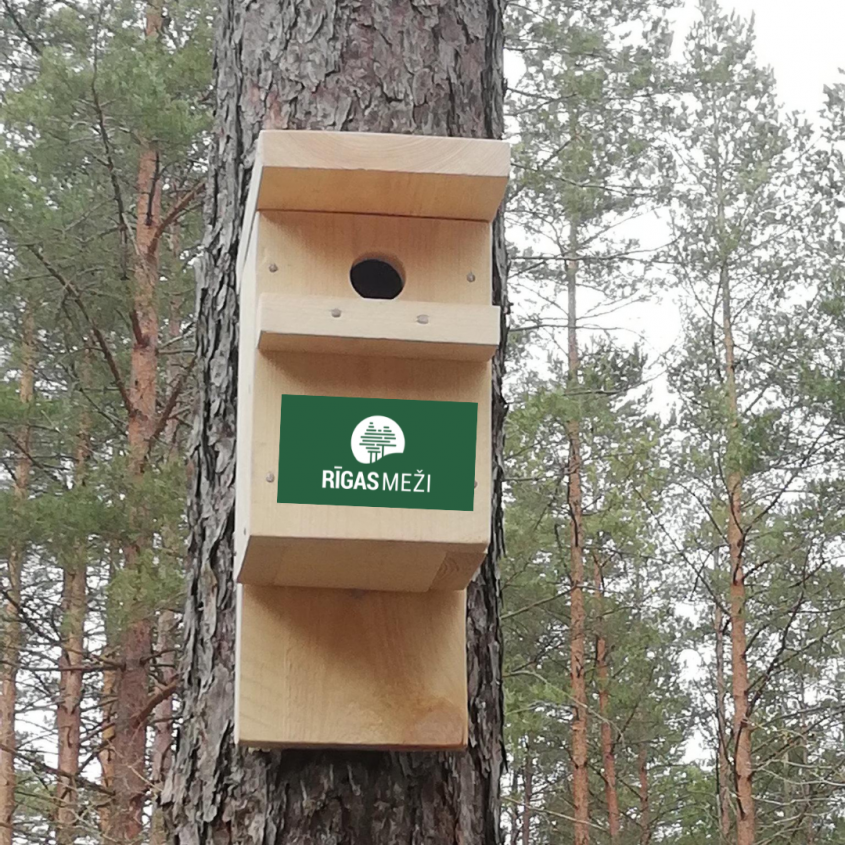
The “Rīgas meži” Environmental Education Programme is launching its spring activities with birdhouse work bees – cleaning and repairing existing houses, as well as preparing and installing new ones. Seven birdhouse work bees will take place in various “Rīgas meži” territories throughout February, March and early April. These will be both educational and practical events.
The first event took place on 22 February at the Riga 5th Primary School. The prepared birdhouses are planned to be placed later in the nearby Šmerlis forest, which is managed by “Rīgas meži”.
The next birdhouse event is scheduled for 2 March – representatives from the “Rīgas meži” Environmental Education Centre will visit the Valdemārs Primary School, a special education institution in Jumprava. The school pupils will take part in a workshop where they will learn tips on how to build birdhouses, prepare them for nesting and install them safely, as well as hammering together more than 50 birdhouses themselves, which will later be placed in the surrounding school area with the help of teachers.
Birdhouse events are also planned in areas managed by “Rīgas meži” – the Jugla forest, V. Kudojars Park, “Mežaparks” and an Easter event on Lucavsala on 9 April, as well as at the company’s Environmental Education Centre in Tīnūži parish.
As spring approaches, many people want to install new birdhouses at their homes, in their gardens or in the forest. “Before doing so, it is important to clean up boxes put up previously, cleaning and repairing them once a year, or replacing outdated ones. A correctly made and maintained birdhouse can last at least five years, or even ten or more with waterproof roofing,” notes Edmunds Račinskis, a nature and environmental protection specialist at “Rīgas meži”.
The “Rīgas meži” Environmental Education Programme involves the public, especially schoolchildren, in various environmental education activities, including providing birdhouses for the nesting season. The birdhouses are crafted from components produced by “Rīgas meži”, made from trees grown within the company’s territory.
Furthermore, every year the company cleans and maintains hundreds of birdhouses in its forests and parks, replacing old or damaged ones where necessary. New birdhouses are primarily placed in areas where forest management has taken place, as well as where trees have been broken or fallen due to strong winds. It is precisely in these locations that birds find more food, but they often lack natural nesting opportunities, such as hollows.