




When highlighting various environmental and management issues, people tend to forget that humans need to eat and drink, and that (at least in Europe) one needs financial resources to buy food and drink. Sometimes, these three interconnected and very important factors are not mentioned during disputes or discussions, as if they were unimportant and unrelated to people. Furthermore, someone has to grow (produce) everything a human needs.
In March 2020, as the Covid-19 restrictions and state of emergency began, the Ministry of Agriculture wanted to understand whether there would be enough food for the population. Latvian food producers responded: “There will be enough!” During “the time of” Covid, various activities against agriculture and forestry became clearly visible, because, apparently, everything is clearer when seen from Riga!...
Yes, yes, it can be seen better from Riga, but I am absolutely certain – for the most part, food is still produced in the countryside! Crises usually irritate us because it is, to a greater or lesser extent, human nature to live recklessly. As soon as threats appear, we try to look after the future. If we remember, last year buckwheat and other “popular” crisis-time products disappeared from the shelves of some shops for a while. Neither then nor now does anyone really know how the situation with Covid will end, or if it will end at all. In terms of food products, there are items that we in Latvia “cover” easily (produce ourselves), and there are those that we cannot grow or obtain.
For example, rice is not grown in Latvia...
Indeed it is not, but if we truly take a green approach to food, do we need it? We could do without rice; its cultivation consumes a lot of water and many plant protection products (PPPs), and there is also the carbon footprint of transport, etc. People demand rice, and it is brought to Latvia. There are other products that we could grow or produce ourselves, for example, pork, but due to various circumstances, this does not happen. Dairy and grain products are produced in Latvia in much higher quantities than we consume. Various experts speak out and lobby for different things; some say the economic factor is not important, but that is absolute nonsense. Whatever is said and thought, many people still want to live in well-built houses, drive good cars, and travel. For all this to exist and to be able to obtain and use it, production is necessary in the country. We do not have an excess of resources: there is land and a suitable climate.
Is every patch of land being cultivated in the region around Valmiera?
Not quite every one, one cannot say that. When driving along the main roads, we mostly see cultivated fields, but there are also uncultivated areas and neglected fields where forests are already growing. One can only call it a forest conditionally – whatever has grown on former agricultural land over the last 20-30 years. Of course, there are farmers who “reclaim” the land, and there are areas we have lost. If the land is not productive, one doesn't really want to get involved to do anything serious; the investment must be recouped. It is clear that milk production and grain farming are sectors that make money, and I think that as the crisis draws to an end, the global demand for food will rise.
“Crisis” products – buckwheat – are grown in Latvia...
Buckwheat is grown here in sufficient quantities, I think even more than we consume. But – because there are no buckwheat processing companies in Latvia, the harvest is taken elsewhere for processing. Some farmers have the capacity to process them in small volumes, but there is no large processing plant in Latvia. It is absurd. Yes, it is grown in Latvia, but it is taken elsewhere to be processed!
In our country, there is a lot of talk that we need small-scale producers, we need “bio”, we need products straight from the farmer or from the field. That is one story. In reality, it often happens otherwise: the “right” speaker, having finished their “right” speech, rushes to the supermarket and looks for the cheapest product. A large part of the population acts like this, as a result of which production needs to be concentrated. To strengthen the “bio” product segment, we need to change ourselves.
Discussions about agriculture without plant protection products flare up from time to time. Can normal yields be grown in Latvia without using them? That is to say, so that we do not turn from producers into buyers...
In any case, biological plant protection products will remain, and very serious work is being done on their development.
Those who count and calculate must understand that the 7 billion people on Earth cannot be fed just like that. We look at and perceive many things locally, but processes are global enough. For example, in a week or even less, grain from Latvia will already be on another continent.
Several years ago in Brussels, while discussing organic farming issues, it was clearly stated that conventional farming would move closer to organic, and vice versa. It would be more important to talk about the production of sustainable and reasonable products. If a field needs to be sprayed once, but it is not done, resulting in the loss of the entire harvest, that is madness! You cannot call that smart action.
If one were to abandon plant protection products altogether... Currently, those looking for low prices or those who cannot afford higher prices can afford to buy Latvian products in the shop because their prices are acceptable. In the event of a ban on PPPs, there will be no affordable local products, but there will be products from Belarus or Ukraine, or...! They will spray there, and they will grow and produce there! We will have “bio”, and it will be quite expensive. One must act wisely, one does not necessarily have to run from one extreme to the other! Wise action will pay off in every way.
Why is there such a major campaign against plant protection products? Farmers, of course, are different, but being practical people, they know that they are expensive and usually do not splash them around: money and material are saved. In campaigns, it is often said or implied that PPPs are like sand or water.
Society is agitated, and there is a lot of talk about the use of PPPs. Of course, one cannot think or explain that pesticides are not harmful because they do protect plants from something. There are some studies commissioned for campaigning (not scientific) purposes, for example, they looked for pesticide residues in Latvian waters but found ibuprofen... Medicinal products intended for humans are not harmless either.
What happens in practice: someone sees a tractor in a field, sees it spraying, and... “the information ball rolls down the hill, becoming larger”. Information circulation happens quite actively in our country, which cannot be observed elsewhere. Why? Elsewhere, people think more and evaluate each process more seriously. In Latvia, as has become customary, there are always active “objectors to something”.
Is there any basis for thinking that plant protection products are used in Latvia “just because”? Like: I will buy it and pour it, and we will see what happens!
If we were to analyse and calculate in detail the volumes of PPP use in absolute numbers per hectare, we would classify very close to “eco” in several other European countries. PPP use is not high, they are expensive, and pouring them “just because”... What is the point of that?
Integrated use of plant protection products...
In my experience – it has never been any other way! Never! A farmer will think twice – whether to spray or not to spray, they will not run to the field because “it is written so”. If something like that happens, we can talk about rare cases. There are crops where spraying is necessary, for example, potatoes must be sprayed against late blight – if it is not done at a specific time, the work and the harvest are wasted. Spraying takes place after careful consideration, and one must remember that the sprayer themselves is a person, on whom the respective substance can also have an effect.
Situations are different. For example, some time ago, a systemic insecticide was banned and replaced by a contact insecticide, which has to be used 2-3 times. Which is better?
Sustainability: a popular word that is often used because it sounds good and is always appropriate
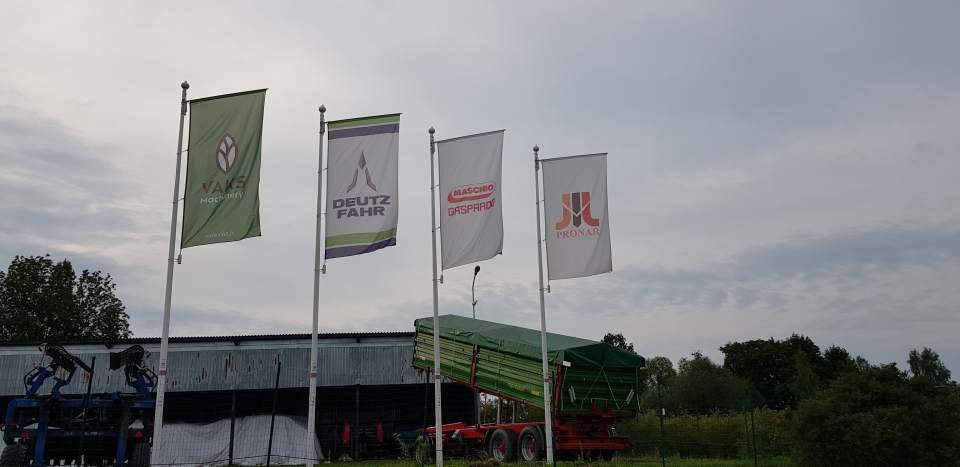
Why was the VAKS cooperative founded? To think about sustainable work and act accordingly. If something is needed only for a short moment – yesterday or tomorrow – a cooperative does not need it. We have cooperation, resource optimisation, and the opportunity for small and medium-sized enterprises to work effectively. We are a member-owned company, not a joint-stock company. Sustainability is our foundation; without the thought of it, for example, I would have nothing to do in the cooperative. Worrying only about tomorrow – let others do that; we look and think much further ahead.
This year we experienced a wonderful winter and a sunny, hot summer
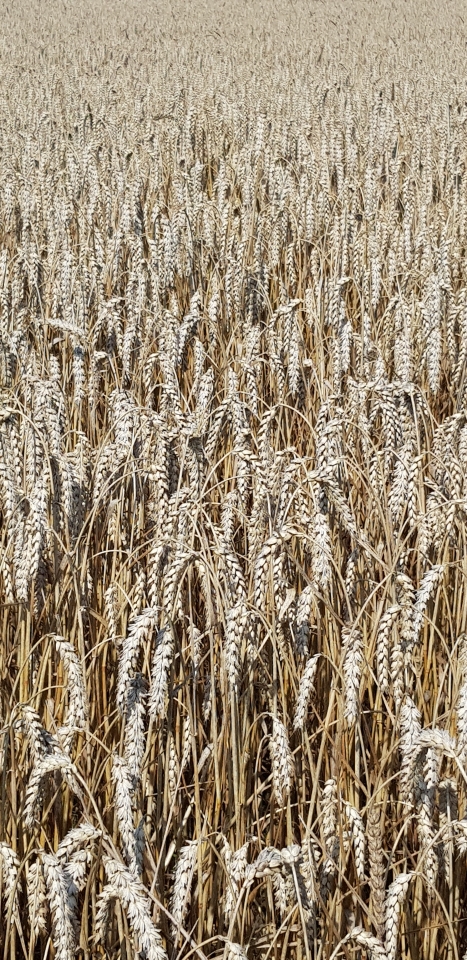
The winter was quite harsh for current climate conditions, but I know that in some places the ground did not even freeze and damaged winter crops – in the Gulbene and Varakļāni areas, they rotted under the snow. That has happened more than once – one can worry about it, but only after you have harvested the crop and can touch it: it is yours. The beginning of the year was promising, the July heat made adjustments, and the harvest is average with lower quality.
Potatoes... Beetles, heat, drought
Those who grow potatoes know that there is a “struggle” with beetles, but it is not difficult at all. In small gardens, leaf beetles can be picked by hand, and there are many preparations. What I do know: in small gardens, different PPPs are often used, and they do it quite “heartily”, pouring them uncontrollably... Yes, in one or another small garden near Riga, I have seen gardeners’ cupboards! Where their contents were taken from and obtained is not clear, and besides, small garden owners say one thing and worry about others, but act differently themselves. For example, it has never occurred to me to treat the edge of the path near my house with herbicide (I have seen this action).
Speaking about weather conditions from a practical side, scientists are improving crop varieties. Even now, in a favourable summer, we have no problems growing maize up to the cobs, for example. I doubt that any distinct warm-country crops will be grown in Latvia anytime soon. Yes, the summer was very suitable for watermelons and melons; the question is about the choice of varieties! The world has experienced climate change before – currently, it is neither the warmest nor the coldest period on Earth. The main thing is our knowledge and our ability to apply it.
This summer's discussion between farmers and the Minister of Environmental Protection and Regional Development regarding the slandering of farmers due to the use of plant protection products. Did the minister finally hear the farmers and understand the problem?
I will start by saying that we in the cooperative do everything so that nothing like what was loudly worried about in the media and by various activists happens. Echoes from Riga reach us too. Of course, there are mistakes, there are different employees, etc. If a lathe operator turns something incorrectly, they will discard the defective part. A field sprayed incorrectly or at the wrong time is another problem, which, of course, will be presented accordingly without delay. I will emphasise: a farmer works in a field where they are well seen. In other industries and other “corners”, many things can happen that are not talked about loudly because they go unnoticed. We, farmers, are seen!
The attempt to create a negative view of farmers, unfortunately, is purposeful: it is business. Disseminating false information is business. Nowadays, when we are moving more and more into the virtual space from real life (also due to the virus), one can get away with a lot. The claims and the ways in which people express themselves about agriculture... I will say this – if farmers were to express themselves similarly about what we are dissatisfied with, we would certainly get it in the neck. We are forbidden from expressing ourselves like this. There is a series of things that need to be spoken about correctly and properly. The minister says he knows nothing... Wait, the minister works on the relevant council (Environmental Protection Fund)! I have not experienced the Soviet times myself, but it looks like a lot is happening as it is told about those times: if we or Latvia need something bad, the “right” (ours) must be sent or put to work – everything will be as bad as it needs to be! As is known, even in Soviet years there were differences between the Baltic republics, which quite a few still remember.
Brussels, from which instruction after instruction is coming...
Since I also lead the Agricultural Cooperative Association, I have to communicate with European Union institutions in Brussels quite often. If you want to influence something in the corridors of the EU, you need serious resources: people, contacts, finances. Since the Baltic states are small and cannot really afford this, our thoughts or voices are heard little in Brussels. We have collected signatures; it has been promised that we will certainly be taken into account... Yes, one can listen, but...
What do the cooperative members say about the situation surrounding agriculture?
Of course, they are worried! Several years ago, the requirements and rules were different; they change quite regularly. Perhaps officials have no problems: they take a new book, turn on the computer, and continue. A farmer has worked, invested, planned, and yet something else must be changed, and moreover, radically, and the future situation is not clear either.
I think we will not reach 100% organic farming, as we discussed before, but the pressure in the “bio” direction is obvious. It changes everything: different technologies, different work.
What do those around you say: friends, acquaintances, neighbours? Knowledge about agriculture is what it is...
Things happen differently. Last year, many were “stoked” by what was said about rapeseed, because the published information was understood very far from what was really happening. I happened to be in the company of such rumour-spreaders, where I kept silent for at least an hour while those present, having read fake news, talked about farmers.
For a while the story of Latvia's sugar factories was forgotten... This year it has returned to circulation. How farsighted or sustainable was the idea at the time to stop sugar production in Latvia?
If you don't look from the side of all those involved (sugar beet grower, factory worker), not thinking for a moment about sustainability, the decision was excellent: the owners were paid long and well. The other side of the decision – we don't have a sugar industry, “the benefit went to a narrow circle of people and immediately”. It should be noted that this is not the first such case in Latvia. Rumours about the restoration of the sugar industry, which are heard here and there... I doubt it! I very much doubt it!
In conclusion: which government decision during Covid hindered the most?
Remote communication Zoom or MS Team. From Valmiera, everything happens “for real” remotely, but in Riga, for an official or politician to “slip out” of the office and discuss what was talked about online again, there were and will be no obstacles. Those living and working outside Riga have fewer opportunities to participate fully in the discussion of issues; as a result, the quality of opinions and decisions has certainly fallen.
The second thing, the consequences of which we will feel for some time: distributing money right and left. Money was given to sectors that were already strong anyway. Fine, that happened in many places in the world, but... One should not be surprised that life is becoming and will continue to become more expensive, because there is a lot of unearned money in circulation. Time and society seemed to lead or push to do it, but... it was given without asking what they would give back. There are still companies that received benefits but have not resumed work; in fact, there is a lack of motivation.
Comments