



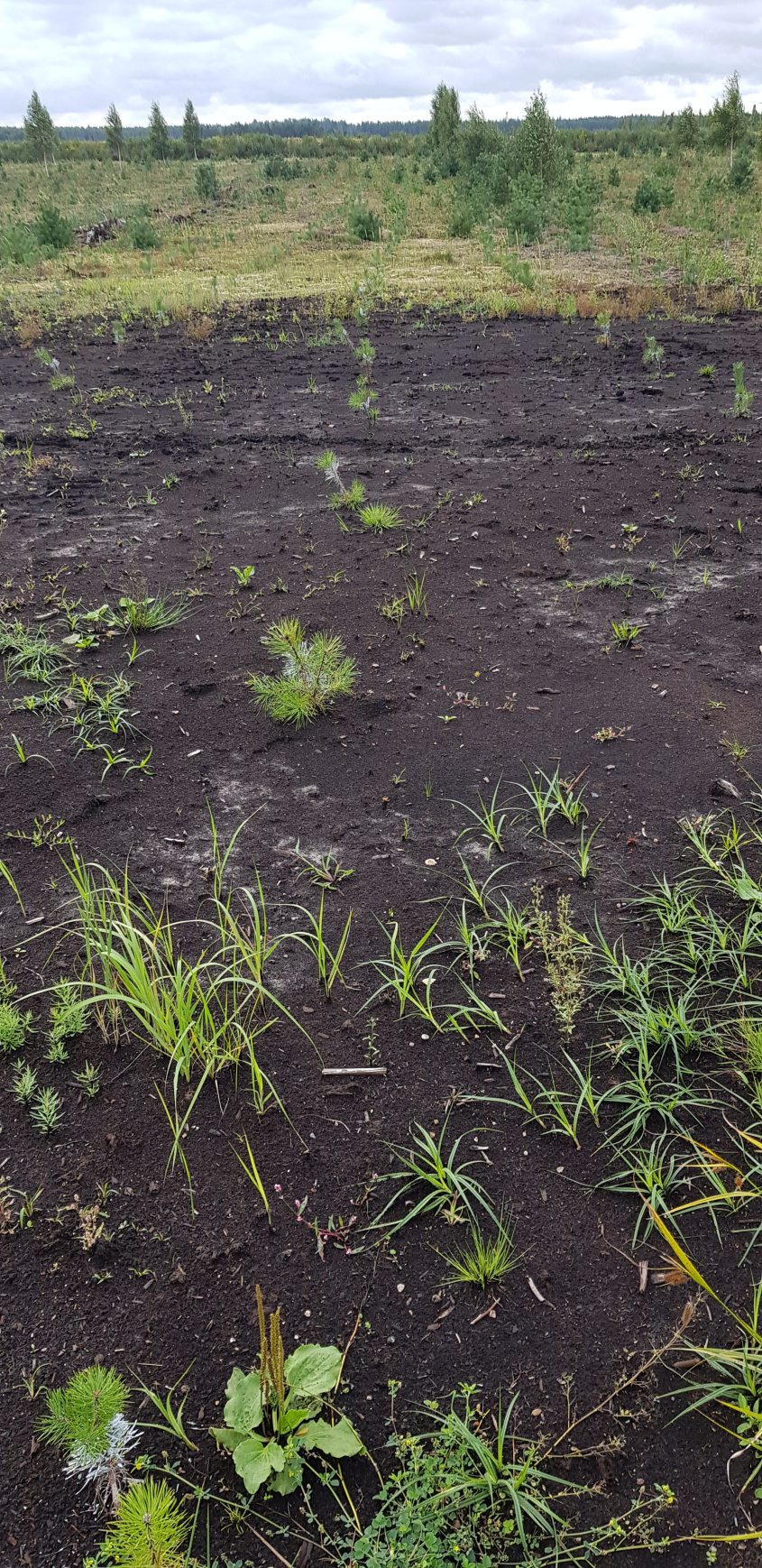
The first year of the PeatTransform research programme has concluded, during which studies were launched across all scientific disciplines, cooperation with peat industry enterprises was developed, and trial and demonstration sites were established. These sites will be used to practically study various peatland management methods following the completion of peat extraction, as well as future land-use options and alternative product solutions.
One of the goals of the research programme is to create a virtual peatland research platform, which will consolidate information on past, current, and planned research, scientists' competencies, available infrastructure, and achieved results. The platform will be accessible to all interested parties and will serve as a source of information and collaboration for scientists, entrepreneurs, and other industry representatives, promoting scientifically-based and sustainable peatland use in Latvia. The mapping of research infrastructure and competencies related to the creation of the platform is already available on the website.
Seven Latvian scientific institutions have come together for the PeatTransform study. Over four years – from September 2025 to September 2029 – scientific, data-driven solutions will be developed for the sustainable use of Latvian peatlands and the peat industry's transition towards climate neutrality. Alongside scientific findings, the practical experience of peat and related industry enterprises will also be utilised in the research.
Seven main research directions are planned: greenhouse gas (GHG) emission measurement and modelling, reclamation and sustainable use of areas affected by peat extraction, development of innovative products and emission-reducing technologies, socio-economic analysis, future scenario modelling, and the preparation of policy recommendations for the sustainable use of natural resources.
Greenhouse gas emission measurements and refinement of assessment methods
One of the most significant research directions of PeatTransform is the assessment of greenhouse gas emissions in managed peatlands and peat extraction areas. Within the framework of the research, field measurements are being conducted to determine carbon dioxide (CO₂), methane (CH₄), and nitrous oxide (N₂O) fluxes, while simultaneously monitoring groundwater levels, peat moisture, and temperature.
The data obtained will help to clarify how the condition of peatlands and management techniques influence greenhouse gas (GHG) emissions, as well as refine the calculation methods used in Latvia's GHG inventory to more accurately reflect the actual situation in the country. During the first year of the study, a measurement quality audit was carried out, which confirmed the reliability of the results obtained, and two new quality control methods were developed.
Sustainable use of peat extraction areas and new solutions
At the same time, opportunities for the use of peat extraction areas after extraction has been completed are being explored. Various future land-use solutions are being tested at demonstration sites, including renaturalisation, afforestation, the creation of water bodies, paludiculture, and the integration of solar panels into berry cultivation. At three demonstration sites, solar panel solutions are being researched in combination with the growing of cranberries, highbush blueberries, and cloudberries. These trials will help evaluate the potential of various approaches for the sustainable use of territories affected by peat extraction.
Partial substitution of peat, reuse, and development of innovative products
As part of the research, opportunities are being sought to partially replace peat in plant growth substrates by using wood fibre, grass, and compost. The studies are evaluating the composition, properties, and suitability of these materials for growing vegetables, berries, and forest seedlings.
The first-year results from trials at the Institute of Horticulture indicate that by using appropriately developed peat mixtures, it is possible to achieve strawberry yields equivalent to those obtained in commercial substrates. Although these results are still preliminary and further research is required, they highlight the importance of material composition and growing conditions in developing sustainable substrates and reducing the proportion of peat used.
Possibilities for peat circularity and reuse are also being studied. Trials have begun at the Institute of Agricultural Resources and Economics to assess the suitability of biochar obtained from used peat substrate for growing summer wheat, oats, and peas. Simultaneously, solutions for processing used substrate are being developed.
Meanwhile, scientists at Riga Technical University (RTU) are refining the process of extracting humic and fulvic acids from peat, evaluating its scalability and environmental impact. A life-cycle assessment of the products is also being conducted to identify opportunities for improving the sustainability of the technology.
Strengthening cooperation between science, the industry, and society
In the first year of the research programme, a knowledge transfer platform was created, strengthening cooperation with peat industry and related sector enterprises. This cooperation facilitates the exchange of knowledge between scientists, entrepreneurs, and other stakeholders, and also ensures access to research sites and materials necessary for trials. As a result, the faster and more effective implementation of research results in practice is being promoted.
Results are regularly presented at scientific conferences and industry events, promoting international scientific cooperation and public awareness of the issues being researched. Over the course of the programme, it is planned to produce 50 scientific publications, nine of which have already been published. To ensure that the wider public has access to the research results and to promote understanding, infographics will be created for each publication, presenting the key findings in an accessible way.
For public engagement and the education of the younger generation, the “Come up with an idea for the future of peatlands!” idea sprint for young people from Eco-Schools was organised as part of the research programme, where pupils explored the challenges of sustainable peatland management and future use in depth, developed their own ideas, and sought ways to turn them into practical solutions.
In the next phase, emissions monitoring, the development of demonstration sites, and the refinement of alternative product solutions will continue.
About the PeatTransform study
PeatTransform is an inter-institutional research programme aimed at developing research- and innovation-based solutions for the peat industry's transition towards a climate-neutral economy, while simultaneously promoting the sustainable use of Latvia's natural resources. Seven partners are collaborating on the research, combining field studies, laboratory analyses, remote sensing, modelling, and practical product trials.
PeatTransform study No. 6.1.1.2/1/25/A/001 is being implemented within the framework of the European Union Cohesion Policy Programme 2021–2027 with co-financing from the European Union and the Republic of Latvia.