



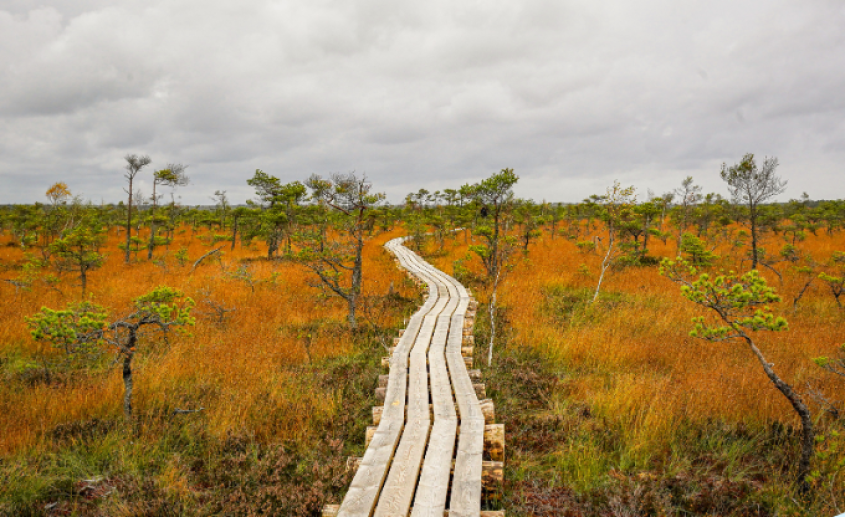
AS “Latvijas valsts meži” (LVM) has completed restoration work on the popular Dunika bog trail in the LVM South Kurzeme region. The complex work took several months, involving the renewal of a three-kilometre-long wooden plank surface specifically designed for bog conditions.
The five-kilometre-long Dunika bog trail, with its wooden boardwalk, is one of the longest trails of its kind in Europe. During the project, the majority of the boardwalk was restored – a total of 3 kilometres. A few years ago, LVM also restored and improved three picnic areas in the vicinity of the trail, complete with tables, benches and outdoor grills.
“Carrying out construction work in a bog is particularly challenging – all building materials are transported to the required location solely by hand and using wheelbarrows. Given the length of the trail and the significant weight of the materials, the volume of manual labour was substantial. The boardwalk is built from specially treated coniferous timber to ensure it is more resistant to weather conditions.
Additionally, by the end of this year, plans are in place to install benches for rest along the trail every 500 metres. Later, there are plans to build a low viewing tower for birdwatching.”
The Dunika bog trail is unique because it crosses the at least 7,000-year-old Tīrspurvs, or Dunika bog, offering a view of an almost endless bog expanse with small lakes, clusters of islands and small, several-hundred-year-old pine trees. At the end of the trail (or the beginning, if walking from the other side), hikers are greeted by a special surprise – a nearly 150-year-old hornbeam stand, which is the only pure hornbeam stand in Latvia. The tall tree canopy and the interesting scent of the trees create a special atmosphere for the walk, which certainly cannot be experienced elsewhere in Latvia. One of the rest areas with a table, benches and a grill has also been set up in the hornbeam stand.
In total, since the company's founding, more than 300 free-to-access recreation sites have been created and are maintained daily in state forests: nature trails, parks, dendrological plantings, viewing towers and platforms, bog boardwalks, cycling paths, and well-equipped campfire and picnic spots by rivers and lakes.