

Reflecting on entrepreneurship during the years of Latvia's independence, there was a time when entrepreneurs' ability to calculate correctly was emphasised most loudly; much later, there was a call to diversify business, which was followed by various crises. In recent years, starting with the Covid-19 phase, the war in Ukraine, the rules invented in the corridors of European Union institutions, and continuing with the US-Iran conflict, one must conclude that there has been no true 'peacetime' for the entrepreneur, when one can only think about work and development. What do you personally consider most important at the moment?
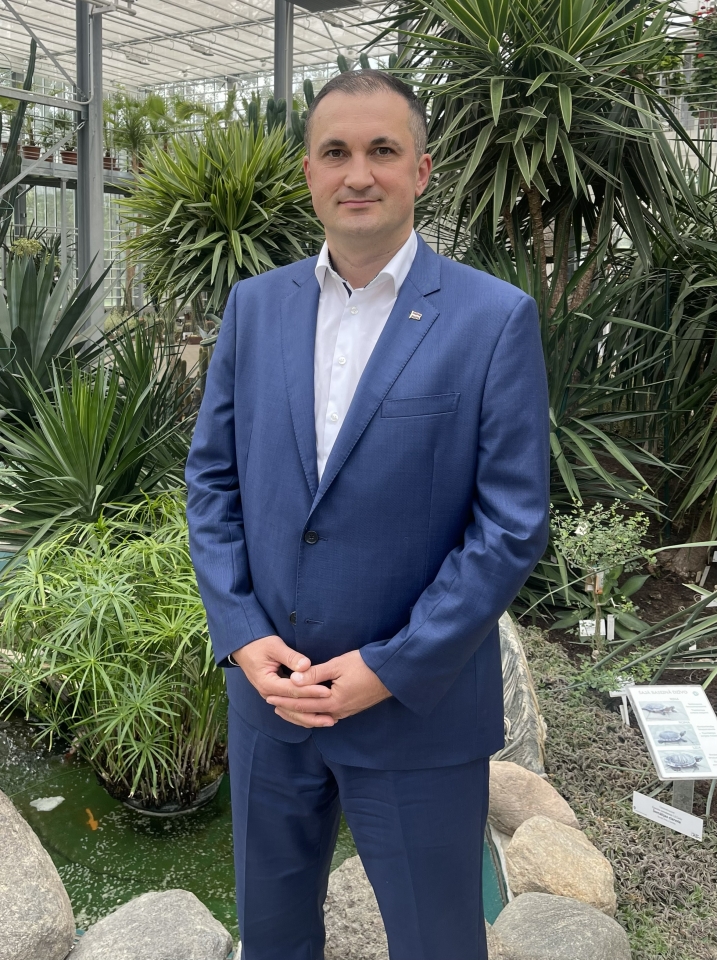
I think every entrepreneur's story is different; there are as many stories as there are entrepreneurs. One lacks affordable loans, another lacks markets, a third lacks good staff. I definitely find myself lacking geopolitical stability, which is truly essential for me. I will add that, in conversations with other entrepreneurs, I often conclude that for many, geopolitics is unimportant, as I quite often hear: 'Why are you worried? Just relax! Everything is fine!'
It is clear that the difference in entrepreneurs' opinions is determined by their respective business profiles. I am a manufacturer and exporter, so my view of what is happening in the country and the world certainly differs from the view of an entrepreneur who issues quick loans, deals with accounting, or specialises in the military industry.
I can say with a little irony: the more bureaucracy there is in the country, the more work there is for legal service providers. The perspective of an entrepreneur in each profile is different; for example, exporting entrepreneurs 'understand' each other well, as they care about both the aforementioned geopolitics and stable, predictable taxes. It seems that everyone involved in business could be united on the issue of good, high-quality education. In this regard, I definitely want to share my view on regional development during our conversation.
I count myself as a small entrepreneur; I have been engaged in floral design for more than 20 years, we export the finished products, we know the situation in the global market well, we sell our output to a larger entrepreneur and are informed about how they are doing. Following the development of events in Iran and the Persian Gulf, unfortunately, the Dubai market, on which we had placed high hopes and with which we associated ambitious plans, came to a complete standstill.
Could the situation in the Middle East slowly, very slowly, change for the better?
Entrepreneurs who are developing or planning to develop projects in this region are currently waiting. Peace, of course, will come one day; I do not believe this region could sink into stagnation and become uninteresting for business—that is hardly likely to happen. God grant that the people who have invested enormous work in the region continue to work!
Speaking about the Middle East and Ukraine (and not only there), I personally find it very sad and incomprehensible that in the 21st century, some people still have a desire to wage war and change the world map. This is especially important for us, as a small country. If we observe what is happening in the world, people are so correct and intelligent in their public statements, but... at the same time, many people die in war every day. That is something I truly cannot understand.
Since the Russian invasion of Ukraine, insecurity has also affected our region. I know entrepreneurs who have left Latvia for security reasons and now live abroad. Of course, for those who have production facilities here, moving is difficult; for entrepreneurs in the service sector, it is simpler. Regarding those who have left, I must add that development has not stopped in Valmiera; several significant projects have been started and completed, mostly in connection with the military industry (especially in recent years).
Looking at it as a whole, the situation currently could be assessed as slightly stagnant and wait-and-see.
For a long time, people have been saying that Valmiera is a good place to work, but once you have found a job or an employee, the headache begins: where should they live? Has anything changed in this regard?
The problem of finding housing in the city persists. Of course, the situation can be assessed in different ways – it is possible to find accommodation in buildings constructed during the Soviet era, but young professionals and young families want to live in new, modern homes. Those are in short supply.
Valmiera is the first place in Latvia where municipal apartment buildings were built, and now the private sector has also built several houses. As far as I know, a few more projects will be realised in the future, because what has been done is not enough.
If I remember correctly, the support programme for housing construction in the regions was created in 2014. That was a time when I was involved in politics myself, and I assume that my interview from that time can be found on the internet, in which I emphasised how important and necessary it is to build apartment buildings specifically in the regions. Back then, people looked at me a bit strangely, saying that people did not need housing, but rather jobs. My colleagues in politics and I argued a lot about this; one must remember that the state does not create jobs—the state can create favourable conditions so that someone would want to create these jobs. The state can create policy for the development and construction of the housing stock. In the mentioned interview, I expressed that to attract quality specialists, a good, modern dwelling is necessary, not accommodation with an outhouse 100 metres away. At that time, the Ministry of Environmental Protection and Regional Development (VARAM) reacted to my proposal by starting to develop a corresponding programme, but... the excellent and so-needed plans began to stall because a battle started between the Ministry of Economics and VARAM—who would start, who would be first.
I assume they got a 'taste' for the potential of large construction volumes. I consider the idea of building residential buildings in the regions to be one of my successful political initiatives; it must be said, however, that it is still moving far too slowly—we can count how many such buildings have been built in the country in 12 years. In Valmiera, as I mentioned, this happened thanks to very active municipal support, active local people, and entrepreneurs. In Valmiera, the city's development is taking place thanks to excellent cooperation between the municipality, entrepreneurs, and residents; our region has exceptional local patriots in the best sense of the word. Everyone works like the mechanism of a Swiss watch.
Could the aforementioned Swiss watch, its mechanism (discipline), be a broader problem? For example, in the forest industry, many people talk about cooperation; they talk and talk, but often they do not reach the point of cooperation.
Regarding the precision of the operation (the mechanism), I recently listened to an interview on YouTube with the former manager of the Freeport of Riga, Leonīds Loginovs. He spoke about a visit to the previous Minister of Transport (Atis Švinka) and the fact that Latvian ports had submitted a number of proposals to the ministry, to which they had received no answers for nearly two years. The minister had replied that the received proposals had been sent to other ministries for evaluation, no answers had been received, and thus everything had come to a halt. I have a question: 'Why don't you follow up on the letters? Why don't you follow up to ensure there is a response?'
The port of Klaipėda has significantly increased its cargo volume in recent years, which cannot be said of our ports. The fact that cooperation between ministries is stalling significantly is a major reason why many things here are slowing down, being delayed, or not happening at all. In my opinion, this shows a lack of understanding of the issue—the state needs successful entrepreneurship. I will emphasise that the lack of understanding is observable specifically within the state's bureaucratic apparatus.
Why? A great many people in the ministries or parliament have never had prior contact with entrepreneurship. As is well known, in Latvia, it is forbidden for an entrepreneur to combine business with work in parliament. In Germany, for example, it is permitted, and entrepreneurs make up about half of the members of parliament. Some time ago, I met the deputy speaker of the Swiss parliament, who is a large-scale farmer and the owner of a tourism business; he, too, combined his work without problems. In our country, a deputy who wants to continue doing business will quickly face problems.
Speaking about Valmiera and regional development, over time many people have formed the impression that if the regional mayor is a member of some large party operating throughout Latvia, they will undoubtedly have support in Riga. After talking to people and deputies in the regions, one must conclude the opposite—yes, they boast in Riga about regional mayors who are members of the respective party or alliance, but there is no reasonable or significant cooperation or support.
It is so! I agree! A vivid example is not far to seek. My former party, the National Alliance (NA), once won an absolute majority in the Kocēni region, and the chairman of the regional council asked the party leadership for support in advancing projects for the region's development, but received no support at all. What happened? The entire NA team in the Kocēni region, along with the chairman, joined the 'Valmierai un Vidzemei' (For Valmiera and Vidzeme) party. That is a vivid and not the only example.
The current mayor of Valmiera is faring similarly; he has no special support from Riga for the faster advancement of projects or plans, which, of course, does not stop people in Riga from praising Valmiera for the city's successful development.
I remember when I was a Saeima deputy, with what difficulty we changed the land-use category for what has now become the large Valmiera industrial park—it was considered forest land, and the municipality had to carry out a change in land use. The process was long and complicated, including soil remediation... The law was amended, it had many opponents, and today anyone can come and look at this park, appreciate the railway sidings, etc. In my opinion, more tracks have been built in Valmiera in recent years than anywhere else in the country.
This is a vivid, if not exactly pleasant, example of how sluggishly any kind of development happens in our country. Neither at the start of the creation of the industrial park nor subsequently did the then-mayor of Valmiera receive any support from his political party for the advancement of the project. If I am not mistaken, the Saeima's decision on the amendments to the law was made only thanks to the fact that there were several of us Valmiera residents in parliament at that time.
Why do processes happen this way? Is there an explanation? It is not only short-sighted but actually harmful.
It seems to be a national peculiarity—if possible, to trip someone else up, pull them under the water, etc., regardless of the state's interests or problems. The reasons? For example, the mayor of Valmiera develops the city, supports entrepreneurship, his popularity grows and... someone in Riga starts to think—what if they decide to put the mayor of Valmiera forward as prime minister or minister? Such a possibility bothers someone, and there are always ways to not support, to stall, to give the project to someone else (it does not matter if it is not needed elsewhere or if the other person will not be able to manage). That is what happens! The belief that a regional or state-city mayor's membership in a ruling party gives any advantages is fundamentally wrong; that is not the case—everything is literally fought for.
The envy and spite of the local people were once mentioned even by Bishop Albert when laying the foundation stone for Riga. In Western countries, such things happen more elegantly; in our country, it is too direct or obviously political, which greatly hinders the state's development. In many processes, one can observe a lack of integrity—why praise someone, why appreciate someone's merits, why... It is unacceptable to use public media in a fight against politicians. Unfortunately, this is observable in Latvia. Of course, if someone expresses speeches directed against the state's independence, let the public see him face-to-face, see who he is and what kind of propaganda he is expressing, but to flatten opposition or undesirable politicians to the ground from the side of the public media is unacceptable.
Valmiera has historically been an industrially and economically developed city for a very long time. Where there is industry and management, manufacturing and exports, people also have different views and thinking, which is why the city is developing successfully. It can always be better, faster, and more successfully; although it must be said that many are very satisfied with what exists because they do not know that and how it is possible for it to be even better. I have travelled enough, I can compare. Yes, I am also satisfied with what is happening in the city, but I know it could be even better.
My experience shows that Latvia is the best place in the world to live. Yes, we have 'shortcomings' in the climate, there are many cloudy, even dark days, but... one must live and work in such a way that, when the dark period begins, everyone can get on a plane and go to warmer countries for a while. That is what Latvia and our economy should be like!
At what point does a person who is successful in business, who has an interesting life, who is not bothered by boredom, agree to an invitation and enter politics? What happens when a full stop is put on politics?
In this regard, I must definitely mention my grandmother, who spent her days in a wheelchair. At the time, I created several jobs for people with disabilities; my first workshop was located next to the 'Rūja' care centre. People came and created floral works—that was the beginning. One of the employees suggested that local elections were approaching and that I should participate. I tried. On my first attempt, I was not elected; the second time was successful. I am not a career politician, nor have I wished to be one. The idea was that I would work in the council as a small entrepreneur and accomplish specific things. By the way, it should be mentioned that in Germany, ~96.8% of entrepreneurs are micro- and small businesses, which create a stable economic and social base.
At one time, I had an idea that a certain number of people with disabilities should work in public administration (5%). The situation was not and still is not good because such people are not hired. Who could set a better example if not state institutions? When I started working at the Ministry of Environmental Protection in 2014 together with Einārs Cilinskis, in a short time we achieved 5% of employees being people with disabilities. I very much hope that they are still working at the ministry. I assume the Saeima should critically evaluate itself in this regard.
The first time I was elected to the Saeima, from the business environment there was the brewery owner Jānis Dūklavs, the owner of a Līvāni door and window manufacturing plant Jānis Klaužs, and myself, a small entrepreneur. Three entrepreneurs out of a hundred deputies is very little.
The Covid period put a full stop to my political career, when I realised that a group of people had not yet formed in the country that could realise and develop ambitious ideas—so that Latvia could develop with new, educated, modern, and smart people. All the Covid period restrictions gave me the impression that the majority of Latvian society does not care about young people, that it is not considered that young people's interests should be defended, that they are our value and that young people are our future. What am I talking about? During the Covid restrictions, they banned everything, including sports training. Absurd! Stand in the fresh air 10 metres apart from each other, train! Why couldn't that be done? Valmiera's young people were going to train in Estonia at that time. Even crazier things happened in connection with vaccination—if a child was vaccinated, they could attend training; if they were not, sit at home. How can one sort children and young people like that? In my opinion, this turning against our children was absolutely short-sighted, incomprehensible, and unacceptable. I will not talk about the attitude towards adults who lost their jobs and went to work abroad.
My son, who trained in hockey in Latvia, went to Switzerland during the Covid bans, where he studied and did sports freely. Everything happened there; there was no 'forced' vaccination, there were no restrictions on sports. My son lived a normal life. I know that at that time, a large number (more than 200) of young people connected specifically with hockey left Latvia. The issue is not vaccination, which is a free choice, but the division of children. My son remembers that time very well; he had very good results in both sports and studies in Switzerland, and now he is continuing his career in Canada.
Shortly after the Covid period, Saeima elections took place, the result of which was that power was retained by the same people who invented and implemented the restrictions. Yes, a couple of political forces did not enter the Saeima anymore, but the others who supported the atrocities that had occurred formed the government again. The politicians did not change. Of course, we have voters loyal to parties who never or almost never change their choice, but... there was, after all, an opportunity to replace the elected politicians within the party itself. Almost all the same people returned to the Saeima. That put a full stop to my desire and possibilities to change anything. I assume the majority of society is not ready for change. If society sees incorrect and misguided decisions, but those who made them return to the Saeima anyway, what else could one do or ask for?
I understand that many people, perhaps I as well, are unable to delve into or understand the situation around and with Air Baltic and Rail Baltica, but almost everyone saw the 'Covid-time' mistakes and absurdities. Is that caring about one's children, the future, and Latvia?
For example, the demographic situation in Latvia. It can currently be described as Latvia being on the edge of a cliff. In Rūjiena, as a Valmiera regional council deputy from the Rūjiena side told me, only 8 children were born in 2025. It has happened that I have spoken with some people who argue that Latvia could have, let's say, a million inhabitants and that more are not needed (there are currently about 1.8 million). In my opinion, that is completely skewed. The fewer people there are, the less competitive, for example, our food production industry will be. Internal consumption is very important; a certain number of people are needed for internal economic activity and exports to take place.
Money can be earned only by working hard, figuratively speaking, with a shovel in one's hands. That is how it is, and nothing better has been invented or proven. If we look at, for example, Switzerland—people there work very disciplinedly, a lot, and hard, literally—savagely. In our country, unfortunately, many try to conjure up a different picture—let's sit at a computer, use artificial intelligence, tinker around, borrow money, and the money will pour in; then some money-intensive research will come in handy. Listen, where will the money for research come from? It is earned by exports and manufacturing. As much money as we bring in, that is how much we can spend. I think the Latvian bureaucracy very much lacks people who have been entrepreneurs before, who understand the situation, who understand how the state gets money. That is very important! Borrowing is not the right path.
At the beginning of our conversation, we agreed that you would explain your idea for regional development
In 2014, the idea mentioned earlier in the conversation began to be realised—housing is more important than a job. We are currently at the next stage. I think the region that first builds and opens an international school can hope for success and significant development. It is not yet possible to create that in Valmiera because, with the exception of the mayor, others responsible for education do not hear this idea. Municipal support in the creation of the school is necessary because the private sector will not handle it alone.
Learning at this school would take place in English; it would be the Cambridge or British education system, the curricula for which can be found all over the world; if a young person studies in this system, they can go to any country where such a school operates and continue their studies there. Parents, for example, can live and work together with their child in another country where such a school exists. For us to get the smartest minds, to stimulate compatriots to return to Latvia, we must have clear answers about the availability of quality education in the regions. Whether an entrepreneur invests in a region, whether they open a production facility, that will be determined by his wife asking: 'Where will our children go to school?' To a great extent, the attraction of small and medium business investment is determined by the quality and availability of education in a specific place. I know this because we have experience in the family with our eldest son, and our youngest son will continue with it. I am a supporter of the aforementioned programme and, as I mentioned at the beginning of the conversation, in my opinion, the existence of such international schools would also make a great contribution to regional development in Latvia.
I wrote this idea on Facebook some time ago; the comments made me clutch my head. 'Who will come here, who will those children be? We don't need foreigners. We have good existing schools.' This and similar thinking among people is also one of the stumbling blocks for our country to develop in the long term and on stable foundations.
Schools need educators and buildings
We have the buildings; the question of educators is definitely current because they must be well-versed in the English language. Essentially, the language issue itself is the foundation of foundations because the content of subjects does not actually differ—mathematics, physics, and natural sciences are taught similarly all over the world. I think we can find educators in Latvia.
The matter is not moving because...
... I think 4-5, maybe 7 years will pass, and such schools will appear in Latvia's regions.