

Māris Liopa, Chairman of the Forest Certification Council of Latvia, and Pauls Rēvelis, editor of zemeunvalsts.lv, speak with Haralds Barviks.
In September 2019, we talked about the bears gradually arriving in Latvia and the hazel grouse conservation plan that had been initiated at the time, naturally from the perspective of an experienced hunter. We have more bears now, the hazel grouse are still in their usual places, and now, under the guise of protection (because it sounds and looks good), it has been decided to finish off our great forest cat – the lynx. It is becoming increasingly clear that when creating (or forging) various plans and calling them by the name of conservation, the plan-makers lack knowledge or forward-thinking, and often, sensible action is also missing. There is the public sentiment and their activities. What does the lynx or bear* think about this?
More than two and a half years ago, hunters were already speaking quite loudly about the expected increase in the bear population. Researchers were studying it, while the “officials” pretended that everything was taking its natural course. In an interview with zemeunvalsts.lv, the Director General of the State Forest Service warned that a strange, folksong-style perception of the bear might have formed in Latvia, specifically: “Lullaby, lullaby, furry little feet, little paws...”, and a part of the public also lulled themselves to sleep... Recently, one bear even had to be put down.
The first thing that is clearer than clear is that Latvian bears will not sing “Lullaby” to anyone, and they are not Winnie the Pooh. I hope this fact has slowly, but permanently, reached and solidified in people's consciousness. Not all people, because we see what people do and how they act. If a bear was lingering by the roadside, there was nothing stupider to do than feed it pies or biscuits, and go up to it to take pictures. This has been written about and talked about for a long time, but everyone's own “wisdom” remains quite powerful.
Furthermore, in Latvia, there are so-called “armchair experts” who know everything about anything: “What it is, how to act, what to do.” As a result, human behaviour is very often wrong. The third thing I definitely want to add is the incident with the euthanised bear (1). The animal did not need to be put down; it could have been very easily weaned off communication with humans. I will emphasise: very easily and using very simple methods. Unfortunately, pseudo-humanitarianism and pseudo-environmentalism took their toll, and the result is bad for everyone. The bear is gone, even though it could have lived in freedom and harmed no one.

Were hunters asked for advice on how to deal with a bear that had become accustomed to people?
No, that is not considered useful! They are smart enough on their own, they know, and they act on their own. I don't know how many bears the young person who decided to put the bear down has met in their life. In my own case, modestly estimating, I have happened to encounter about 2,500 bears face-to-face in various parts of the world and in various circumstances. I do not consider myself, nor do I call myself, a great bear expert, but I have a practical idea of how one should act.
The number of bears you have encountered is impressive; arguably, for many in Latvia, one would be enough... Are people elsewhere more knowledgeable and sensible?
People are very similar in their nature, but – where this animal is customary, people, for example, take a photo of a bear and drive on, without running up to it with biscuits and buns. Excluding, of course, Romania and Slovakia, where the situation is similar to ours and, unfortunately, every year there is a fatal case; these countries have quite a few people maimed by bears.
A certain contradiction is visible in Latvian society: people are being quite actively encouraged to return to the countryside, to rural homesteads, for example, in the Smiltene municipality, Kārķi parish. That is a region close to Estonia, where bears are already present in significant numbers. A person starts living in a new place, settles in, and an unexpected neighbour appears.
Firstly, one will have to live with this neighbour, because there will definitely be more bears in Latvia, and people, in turn, will increasingly go to live in rural regions, especially under the influence of the current situation. Secondly, what is important to remember is that one should not even think about starting to build a friendship with a bear, but rather make noise and chase it away, for example, by tossing a piece of wood at its backside. The bear is a very intelligent animal, and every positive interaction gives it the impression that the human is not threatening it, that everything is fine. So, each time the bear will come closer and closer. And then... Mood, stress, and other nuances can cause a tragedy. The bear can be driven away from homes; its place is in the forest. That must be clearer than clear!
Furthermore, hunters can successfully make the bear return to the forest, specifically, fine shot in the bear's backside. The shot will not penetrate the animal's skin and will not cause it any harm, but the rear end is a very sensitive area for it. The bear is not traumatised, but the projectile causes unpleasant sensations and will be strongly imprinted in its memory – “this is not a good place, the two-legged creatures are not my friends” – and the bear will keep its distance. This is a good solution. If the bear decides to attack, medicine and plasters will not help; there will be two options...
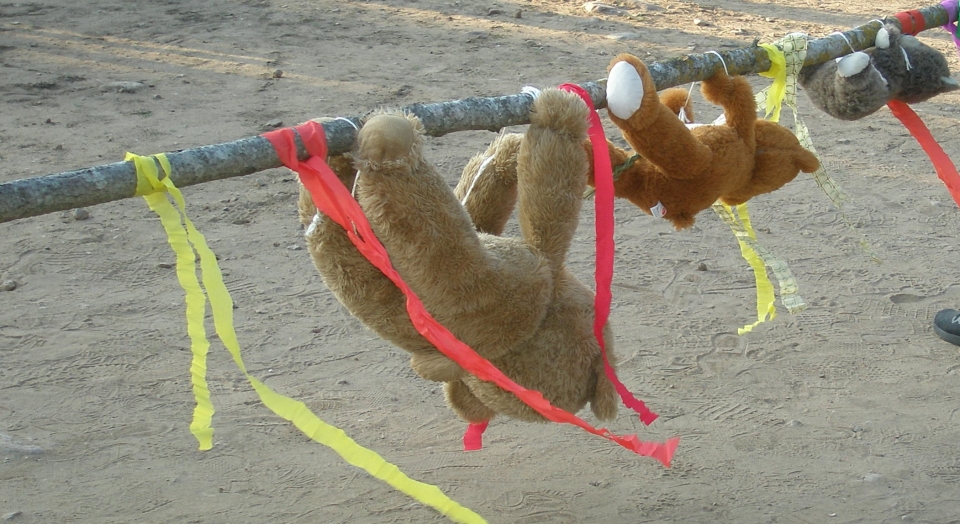
With the increase in the bear population, we must think about managing the species.
There is a bear species conservation plan, but what is needed is the will to implement it (including the political will), and furthermore, one that does not listen to a handful of experts staying in Vērmanes Garden; a rational approach is needed. For example, this summer a clear solution is needed on what to do if a bear becomes overly bold in a region, poses a danger, and cannot be scared off. Such a bear must be “removed” from the population. If we do not act in this way, we will wait for the first bear victim. The recent incident in Northern Latgale (2) is a very special and rare case where a person got away lightly. That is a great rarity! It is a very, very great piece of luck for the person!
The lynx has now been declared a non-game animal.
The decision regarding lynx is sad news and should be considered a submission to a trend; it was made without rational thinking. I would urge both the Latvian public and hunters to assess the drafters and decision-makers of this decision very critically. It is pure populism. The worst thing I see is that, with this, a death sentence (3) has been signed for the lynx population in Latvia. Within three or four years, the lynx will become a very, very rare animal. If social media is now full of photos where these great cats are seen on night cameras, walking during the day, etc., after a while, we will be able to forget that.
Why so pessimistic?
That is the reality. The Estonians tried to take this path 10 years ago by banning lynx hunting. At the time, Estonia was a great lynx power. Over 10 years, the animal's population in the neighbouring country has dropped rapidly. There are two reasons for this. Currently, all Latvian hunters protect the lynx because it is a valuable game animal, very interesting, and for that reason, it is “tolerated”. A lynx consumes about 60-70 roe deer per year. When it becomes a competitor to a person... A direct competitor that gives nothing to a person but only causes harm – in such cases, methods to deal with the pest are usually found. The Estonian example shows that they shot the lynx whenever they met one; in the warm summer, after three days, all that remained of a lynx was a wet pile – that's it. Is that needed? Was that the goal? Unlikely. No scientific material, no trophies, no gain – just a lost animal. I do not want to be a prophet, but such a decision was the worst possible one. Now we have to count on a corresponding result. We shall see – we can return to the conversation in three years' time to look at the statistics and the situation.
What you have said will delight opponents of hunting, who will not hesitate to start talking about the danger of weapons, the undesirability of hunting, etc.
I know these texts, but in hundreds of years, no one has changed human nature. Every decision-maker should know that. If it is a matter of survival, eating, and personal comfort, a person will choose what is closer to them, without thinking about global and mystically unattainable problems.
Currently, we have a situation where we have hit our heads against the doorframe. What now? European policy regarding agriculture was pushed forward thoughtlessly – hop! – we need to eat every day. There will no longer be train wagons with necessities from the east; what now? We must grow them ourselves!

Decisions in Latvia are still made by people who have no idea about the relevant matters. For example, one volcanic eruption “compensates” for all the world's emissions in a short time. Business and the opportunity to earn money at the expense of populism, i.e., earning money by doing nothing, what could be more beautiful?
I have experienced the so-called Soviet times. The television programmes of that time with slogans, cheers, and processions filled me with disgust. One could briefly call it “fake TV”. The worst thing is that modern TV is the same – “fake TV”. One gets the impression that more than one TV presenter does not quite have an idea of what is happening in the world. Russian TV is engaged in the same thing, just in the opposite direction. But! There are media outlets that follow the situation, that have representatives in the relevant places, that analyse... Among us, someone hears something somewhere, doesn't understand it, and alters what was heard as they would like or as it should be. Such behaviour creates much greater negativity in society compared to a clear vision and objective reporting of information. The idea that “everyone must be similar and equal” is directly linked to communism... A person has the right to think for themselves; if a person thinks without carrying out counter-actions, thinking is not forbidden...
We have talked about lynx and bears, but there are three good things. How is the hazel grouse doing in Latvia?
The hazel grouse feels great; I would say – it cannot even feel bad. As is known, a good environment for the hazel grouse is shrubland with mixed forest, with a distinct admixture of deciduous trees, where there are buds, catkins, and berry patches. Our total forest area is increasing, often as agricultural land or meadows become overgrown. The forest is quite an aggressive environment that “enters” an unmanaged place quite quickly. The areas of shrubland are increasing, and the situation for the hazel grouse is improving. What is bad – the number of the hazel grouse's natural enemies, the predators, has increased significantly. This, of course, is “greenery”, because anyone with sharp claws and a hooked beak is directly protected in Latvia, regardless of whether there are many or few predators. Furthermore, due to the decline in the fur market, the interest in hunting small four-legged predators has actually disappeared, so the hazel grouse is experiencing great discomfort due to the sharp increase in the number of natural enemies.
Are any newcomers expected in the Latvian fauna in terms of animals and hunting?
They are still trying to “feed” us the jackal, which is already a known threat, as having arrived by natural means; that is not the case, that is a fact. The jackal arrived in Latvia from the north, where this species certainly does not live! From a pet in Estonia, it turned into a pest.
A similar case, where a human is directly to blame for letting a pet into the wild – the raccoon (not the raccoon dog, but the raccoon!). In pictures, we see that it lives in America, in trees, and “loves to wash many things in water”... The raccoon is an interesting pet, but... it's good if a neighbour has one! If a raccoon lives in your house, the owner is quickly, quickly driven to despair, because the raccoon will destroy everything – it is very industrious and busy, it really likes to rearrange and move things, and the house and its belongings are destroyed quite rapidly. The person with whom such a raccoon lives understands that the animal is cute, but “let it be cute not in this (not in my) house”, and lets it into the wild... Let it go and demolish things elsewhere. That is how raccoons end up in the wild. As I hear, there are already many of these animals in Lithuania, not to mention Poland and Germany, where they are in “thick layers”. Like it or not, the raccoon is expected in Latvia as well.
That would be considered an invasive species.
Exactly! If we look at it from the perspective of a hunter or a forester, one could smile about the raccoon, but if the raccoon enters Latvia, the smile will disappear from the faces of ornithologists and like-minded people... It climbs trees very well, it really loves bird eggs and chicks, the raccoon controls nests, and ironically – the raccoon will excellently handle that part of the population because of which sanctuaries, buffer zones, micro-reserves, etc., are created for us. I would very much not like such a busy bird-lover to appear in Latvia, but it looks like it will...
Are they fighting against the busy foreigner in Lithuania?
Logically thinking people everywhere are fighting against raccoons and trying to deal with them. But not all people think the same, and some consider: “What bad does this interesting animal do to me? Nothing! Let it grow, let it multiply...”
The natural enemies of the raccoon are the fox, the wolf, and the lynx, but... the raccoon will get along perfectly with humans. Moreover, in very, very close proximity. We won't even notice that a raccoon lives in our garden or by the cellar. It is exactly the same with the jackal – it also feels good in the urban environment – rats, mice, small gardens – this is an environment where practically no one threatens either the raccoon or the jackal.

Continuing about the future – we see that goose populations are large and increasing; these birds are already noticeable in places where they have not been seen until now.
There are many predators (especially birds of prey) in Latvia. Will there be enough food for everyone, or are we approaching a moment when their density will be too high?
I think we are close to this ceiling. This can be seen, for example, by looking at the hare population, which is shrinking despite the hare's fertility and successful reproduction. The hare is unable to reproduce in such a way that everyone is happy. A similar situation is with the grey partridge, which likes developed agriculture – it will not live in unmanaged, shrub-overgrown fields. The grey partridge likes field edges... The corncrake and other ground-dwelling running birds are the “target audience” for predators.
We have too many crows, too many magpies and ravens; if we add birds of prey, starting with the buzzard and continuing with the former rarity – the white-tailed eagle – the number will be impressive. Speaking of the latter, there are plenty of salmonids in the rivers of the North and Far East region, and there is enough food for everyone. Here, the situation is different. Too much of a good thing is not good; moderation is useful for everything. What will happen when the food base for the species begins to decrease? The species will “go downhill” – there will be diseases or other misfortunes...
The Russian invasion of Ukraine is very slowly changing the usual thinking and understanding.
The current situation is terrible. I hope that more than one person will have their eyes opened and more than one person will think about creating their life with their own strength and the development of the country with their own hands. We have forgotten about providing for our own country. Many slogans, many instructions, little work. Perhaps the situation in nearby Ukraine will force us in Latvia to think about tidying and cleaning up our country and home, about what hasn't been done. To think about ourselves from a practical side – where will we get light, heat, bread? If something is lacking, how to solve it and how to get it? Right now, such a plan and understanding are missing. I think many are tired of nonsensical populism and tilting at windmills.
If some fool can declare: “We will do nothing, we will grow nothing, we will manage nothing, but it is 'green and cool'!”, excuse me, where is the logic and the sense? It is not good to find one's senses in another's misfortune, but – when else to start thinking, what else to wait for? It is time to take care of ourselves and use the things available to us. Could there really be a lack of heat in Latvia? Certainly not!
Photographs from the 2019 “Minhauzens” hunters' gathering in “Zvejnieklīči”, Sala municipality, were used for illustrations
* The question is by no means unanswerable, because words about the interests of bears, fish, lynx, etc., often sound in the halls of the Saeima and other state institutions, although the person expressing such thoughts does not explain how they managed to ascertain these interests.
1. https://www.la.lv/cilveki-tisi-provoceja-laci-agresivai-ricibai-eitanazets-gulbenes-brunais-lacis
2. https://www.medibam.lv/ziguros-lacis-uzbruk-un-ievaino-cilveku
3. https://www.face.eu/2022/05/from-european-best-practice-to-the-european-court-of-justice-the-latvian-lynx-case-when-successful-conservation-fails-on-bureaucracy/
Comments