



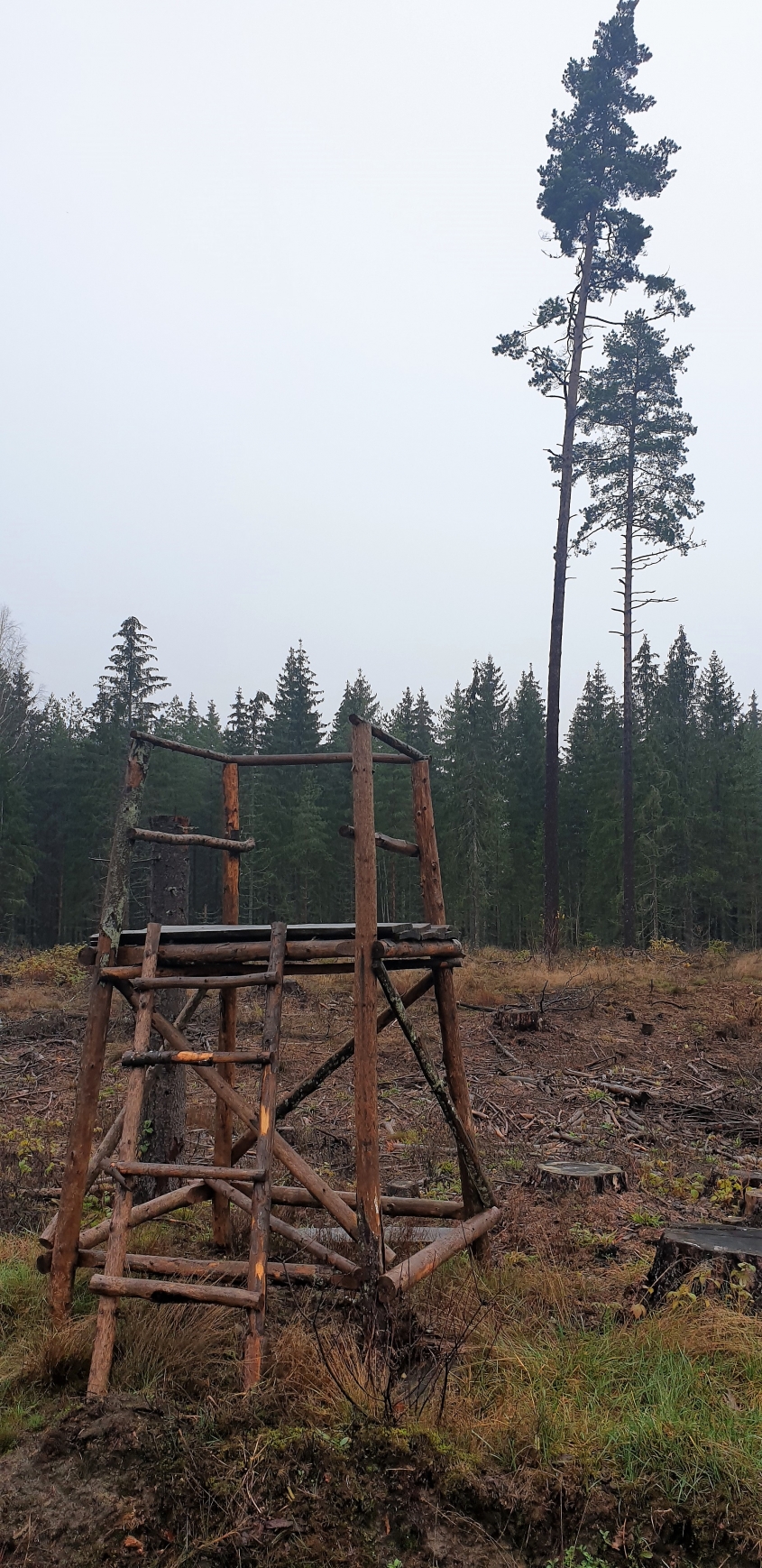
The infection zone has been closed to forestry work since the end of July. The food safety authority Ruokavirasto will decide in the near future whether to extend the ban to new outbreaks of swine fever in Kotka and Hamina.
Until the end of July 2024, Finland was one of the last European countries to maintain its status as free from African swine fever. This provided immense advantages in the export of agricultural products and meat, particularly to Asian countries such as China. With the first outbreak, this status has been lost for at least a year; if no new cases are detected, China, Australia and Canada immediately banned the import of Finnish pork.
The Finnish Food Safety Authority Ruokavirasto has expanded the country's African swine fever (ASF) restriction zone 40 kilometres to the west, including Kotka, Hamina and Pyhtää. In the coming days, it will be decided whether to apply the logging ban, which has currently paralysed forest work in eastern Finland, to these territories as well. This step follows a decision published by the authority on 28 August, which revised the boundaries of the zone. This occurred after a positive test result for African swine fever was confirmed on Friday evening in a wild boar, whose remains were discovered in a field in Hirvikoski, Pyhtää. Consequently, for the new territories, only restrictions on the movement of domestic and wild boar are currently in effect, while broader regulations are being developed.
Closed zones to expand
The ban has been in effect since the end of July. At that time, three wild boar piglets were found in the Virolahti forest and were confirmed to have ASF. On 30 July, this became the first officially confirmed case of the disease in Finland. In response, the authority completely closed Virolahti, Miehikkälä and the southern part of Lappeenranta to all forestry activities. A strict prohibition zone was established within a three-kilometre radius of the discovery site, where mushroom picking, berry picking and any movement off public roads are also forbidden. Seven pig farms are located within this initial zone, and all have already been inspected by veterinarians.
On 13 August, the agency expanded this zone by seven kilometres to the north, where six more infected wild boar were discovered. At the same time, outside the strict prohibition zone, work that entrepreneurs can carry out without the use of motorised equipment was permitted, such as forest planning, mapping, consultations, planting, manual seeding and vegetation management in young stands, as well as the removal of timber felled before the zone was established. For all other still-prohibited activities, it is possible to apply for special permits.
Forest owners risk losing huge sums
"Everything depends on how long these restrictions remain in force and how extensive they are," says Sami Oksa, Forestry Director at the Finnish Forest Industries Federation (Metsäteollisuus ry). According to the organisation's estimates, at least 700,000 cubic metres of roundwood were harvested annually in the original zone, and forest owners risk losing approximately 26 million euros in income from stumpage fees. Federation data show that this volume of timber would contribute nearly 106 million euros to the Finnish economy. S. Oksa warns that employment across the entire forest sector value chain could shrink by nearly 900 jobs. As the south-eastern region of Finland already imports a large portion of its wood from other regions of the country, transport distances and, consequently, costs are expected to rise.
"The situation is uncontrollable," emphasises Stefan Borgman, Chairman of the Association of Forest Industry Experts (METO). In mid-August, he estimated that the closed area reached 150,000 hectares – and that was even before the 28 August decision, which added three municipalities to the list. Local forestry organisations in the restriction zone have already begun discussions regarding staff leave or even redundancies. The association, citing recommendations provided by Ruokavirasto, acknowledges that the restrictions could remain in place for at least a year.
Downtime and unfinished work in the forest
The Association of Mechanised Forestry Entrepreneurs Koneyrittäjät ry has calculated that the downtime of one logging unit – a harvester and a forwarder – causes losses of 1,700 euros per day per shift, which reach 3,400 euros when working two shifts. The association's executive director, Matti Peltola, explains that contractors cannot simply move their machinery outside the zone's borders. Forest machine work is planned in accordance with long-term annual contracts, and areas outside the restrictions have already been allocated. The association is demanding that Ruokavirasto clearly define who will cover these losses, citing as an example Sweden, where government funds fully compensated contractors for losses during a similar outbreak.
"Definitely more than a thousand cubic metres. However, it is not an extremely large volume," is how Jarmo Haimila, Managing Director of the South-Eastern Forest Management Association Metsänhoitoyhdistys Kaakko, describes the situation with the timber that remained in the forest at the height of harvesting operations. In the territory overseen by the association, fewer than ten felling sites remained unfinished, where trees cut down before the ban have been lying in the forest for so long that the wood has begun to blue-stain.
The currently designated zone stretches along the coast of the Gulf of Finland – a region from which the country exports cellulose and paper, as the six strategically important berths of the ports of Hamina and Kotka are located precisely there. If the restrictions affect port operations or the transport of timber through these territories, the consequences will be felt on the global market. In Finland, the forest industry is the backbone of the national economy. The logging ban stops the operation of machinery, breaks supply contracts and threatens massive losses in stumpage fees for private forest owners. Furthermore, felled timber left in the forest during the downtime begins to "blue-stain" – becoming infected with a fungus that rapidly reduces its market value.
Since 5 August, the situation has also been monitored by the European Commission, whose Implementing Decision 2026/1937 established emergency interim measures for Finland. Some of the conditions introduced by Europe turned out to be even stricter than those initially defined by Ruokavirasto.
Why this particular region?
South-eastern Finland borders Russia, where ASF control measures in the wild boar population have historically been weaker. Wild boar easily cross the land border or swim across bodies of water. Finnish authorities have been worried about such a scenario for years; currently, the construction of protective fencing in infected zones is even being considered, similar to what Denmark previously did on its border with Germany.
Sources: Finnish and EU information websites