
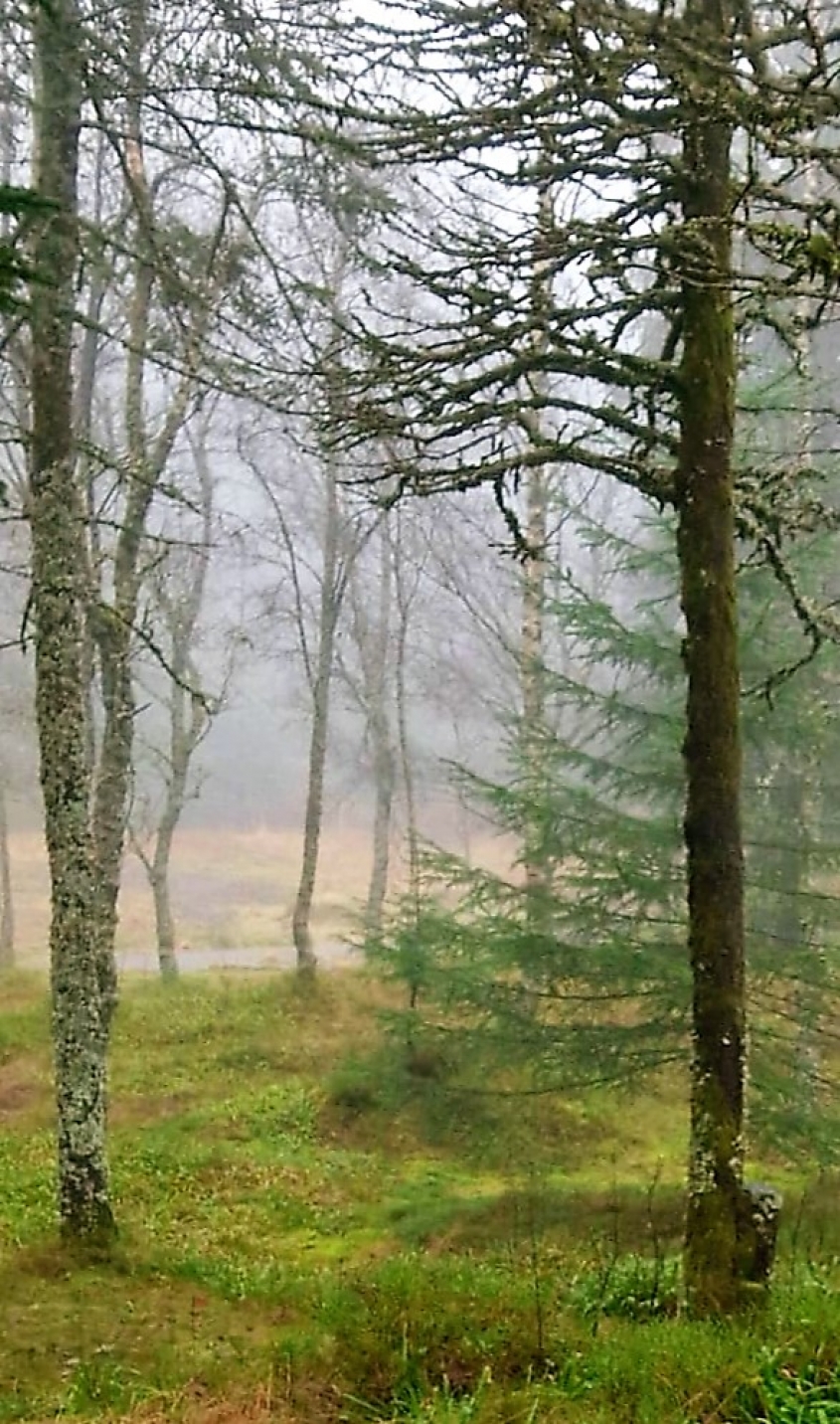
Forestry in Hungary has a unique historical legacy, marked by drastic changes of territory, a fragmented ownership structure and difficulties caused by climate change. The sector is overseen by a strict state legal framework that affects both commercial activity and nature protection.
The influence of the eras
After the First World War and the signing of the Treaty of Trianon in 1920, Hungary suffered a heavy blow, losing about 85% of its forest resources, which lay mainly in the Carpathian Mountains. What remained to the country was chiefly plains and hills, and timber extraction fell to barely 9% of the pre-war volume. To reduce complete dependence on imported timber, in the interwar period the government began the large-scale artificial afforestation of the Great Hungarian Plain, led by the forestry visionary Károly Kaán. In the socialist era, from 1945 to 1989, forests were nationalised and collectivised on a mass scale. In this period forest cover was deliberately increased, with the emphasis on plantations of fast-growing non-native species such as black locust and poplar, often at the expense of the natural diversity of the forests.
Characteristics and ownership
Hungary currently has about 2.2 to 2.3 million hectares of forest, covering around 21% of the country’s territory. The legal regulation of forests in the country is among the strictest in Europe. The State Forest Service sets mandatory 10-year management plans for absolutely every forest, substantially limiting the freedom of private owners to make decisions.
The ownership structure is divided into two large parts. State forests occupy about 57% of the area and are managed by joint stock companies wholly owned by the state, such as SEFAG and Pilis Parkerdő, where the emphasis is on recreation and environmental protection. Private forests take up 43% of the area and belong to almost half a million owners. The average size of a private holding is very small, only around 2.2 to 3 hectares. The remaining ~1% consists of community and municipal forests.
After the change of regime in the 1990s, Hungary carried out a compensation voucher process known as kárpótlás, to make good property nationalised during the socialist period. As a result, about 900,000 hectares of forest passed into private hands. This process created a serious structural problem, because forests were divided into undivided shares of joint ownership. Incredibly, almost a third of private forests still have no clearly registered legal forest manager, which makes sustainable management considerably harder.
Nature protection and compensation
Almost 20% of Hungary’s forests lie in protected areas or are included in the Natura 2000 network. Broadleaf trees dominate in Hungary’s forests, with natural oak and hornbeam forests taking up just under half of the total area. In protected areas logging is strictly limited, especially during the bird nesting season. The state subsidises private owners and cooperatives in order to compensate financially for the loss of commercial activity caused by ecological restrictions. In addition, growing drought and the risk of forest fires in Central Europe are forcing nature protection to be integrated ever more closely with climate adaptation measures, changing the composition of tree species in favour of more resilient native ones.
Timber extraction and processing
Forestry directly accounts for a comparatively small share of Hungary’s GDP, around 2%. The main industrial tree species are oak, beech, black locust and poplar. Several million cubic metres of timber are harvested each year, and the Somogy region in the south-west of the country is particularly famous for high-quality oak and lime timber. The processing industry consists mainly of local sawmills, pallet manufacturers, the veneer and furniture industries, and a growing pellet and biomass sector. Domestic furniture and construction timber production is largely integrated into, and subordinate to, the state forest holdings.
Problems, conflicts and scandals
Sharp conflicts flare up in the sector regularly. One of the loudest corruption scandals of recent years involves a mayor who received European Union rural development funding to build a tourist walkway in the treetops. During the implementation of the project the forest around the walkway was cleared completely, leaving the wooden structure standing in an entirely open field. The European Anti-Fraud Office OLAF found substantial manipulation of procurement and misappropriation of funds in the case.
Another conflict broke out during the energy crisis of 2022. Responding to the risks to gas supply, the government issued an emergency decree that substantially relaxed logging rules, including in protected areas, in order to supply the population with firewood. This provoked huge protests by environmental organisations WWF-Hungary and Greenpeace, and by the wider public. The more aggressive environmental activists regularly clash with the National Water Management Directorate, which clears floodplain forests along rivers such as the Tisza in order to reduce flood risk, destroying “particularly valuable” natural habitats. The activists, of course, are apparently not interested at all in the damage floods do to farmers and households.
Prospects and plans for the development of the forest sector
In Hungary the state’s objectives for forests are set by the National Forest Strategy and by government climate programmes. The main emphasis is on large-scale afforestation and carbon sequestration, with a plan to raise the country’s forest cover to 27% by 2030. Projects such as “Forests for the newborn” and targeted urban afforestation programmes are being carried out to this end.
At the same time work is under way to change management practice. Although the government stresses that uncontrolled deforestation is prohibited and that clear-cuts are limited to a maximum of 3 hectares, environmental organisations are actively calling for a move to full continuous cover forestry across wide areas. Future plans also include encouraging cooperation among small private owners and setting up voluntary carbon credit projects, in order to make forest management on fragmented holdings more economically worthwhile.
A comparison: the Treaty of Trianon against Latvia’s agrarian reform
The historical paths of forestry, and its present-day reality, differ sharply in Hungary and Latvia. While Latvia is one of the most forested countries in the European Union, with a strong forest sector, Hungary, because of historical trauma and unfavourable natural conditions, is still fighting to restore its forest area and faces serious governance scandals
In Hungary the Treaty of Trianon of 1920 brought about the complete collapse of the timber industry. As mentioned above, Hungarians effectively lost 85% of their forests and almost all of their mountain ranges with their high-quality conifers in a single moment. In the territory that remained, timber extraction could not meet even the country’s minimum needs. This forced the government to begin the artificial, aggressive afforestation of the plains using fast-growing non-native species such as black locust, which changed the country’s landscape and ecosystem irreversibly.
Here in Latvia, at the very same time, in the 1920s, the situation was the opposite. The Agrarian Reform of 1920 nationalised the manorial forests, creating a strong State Forest Fund. Latvia did not lose resources; instead it gained an enormous, unified, state-controlled forest area. During the first period of independence, timber exports became one of the main sources of state budget and foreign currency revenue, laying the foundations of the modern forest sector.
The structure of private forests: extreme fragmentation against consolidation
In Hungary private forests take up around 43% of the area and belong to almost 500,000 owners. The average size of a forest holding is tiny, up to 3 hectares. The biggest problem is the “undivided joint ownership” created during the privatisation process of the 1990s. Almost a third of these forests still have no single specific manager registered in law, which means that even a small felling site or thinning work requires the signatures of dozens of co-owners, leaving the management of private forests economically paralysed and unprofitable.
In Latvia private forests take up about half of the country’s forest area, but the structure is far more efficient. Although Latvia has around 110,000 private forest owners and the average holding of a natural person is around 8 hectares, consolidation dominates the sector. Strong private forest management companies and large institutional investors, such as Scandinavian funds managing thousands of hectares, operate on the Latvian market. Latvia does not have the mass legal deadlock over undivided holdings that is characteristic of Hungary.
Corruption scandals and nature protection conflicts
Hungary’s “treetop walkway” scandal has become an international symbol of the misuse of European funds. A local mayor received around 166,000 euros of EU funding to create a 50-metre tourist walkway in the treetops. During the implementation of the project, the forest around the future walkway, on land belonging to the mayor, was cleared completely. As a result the wooden structure, intended for observing the canopy, stood in an entirely open field. The European office (OLAF) carried out a serious investigation and uncovered systemic violations, manipulated procurement and artificially inflated prices. OLAF recommended that the European Commission recover the defrauded funds and prevent further waste of them. Hungary’s law enforcement authorities and tax administration have questioned those involved, including the former mayor, as suspects.
Latvia’s forest sector has no European fund fraud scandal on this scale or of this absurdity. Latvia’s main conflicts arise from the clash of interests between eco-activists and the sector.
While Hungarian society protests against government emergency decrees that allowed felling in protected zones under cover of the energy crisis, in Latvia there are continuing discussions between environmental organisations, the Latvian branch of the World Wide Fund for Nature, the Latvian Fund for Nature, the Latvian Ornithological Society and others, and the forest sector, about the designation of micro-reserves and the level of compensation for private owners, about reducing tree diameters and the effect of clear-cuts on biological diversity, and about introducing a bird nesting quiet period in commercial forests during the spring months.
While forestry in Hungary is largely defensive, a fight to hold on to forest area under strict bureaucratic control by the state, in Latvia the forest sector is markedly organised and profitable, and export-oriented. Latvia fells less than it grows, so local conflicts centre on the interpretation of nature protection factors in the conditions of timber production, rather than on the brazen theft of funds under cover of tourism infrastructure.
The specifics of Hungary’s compensation system
In Hungary the compensation system is dictated directly by the country’s shortage of forest and by the need to preserve every existing ecosystem. Since a large share of the forests have been planted, the state uses two main channels to give particular encouragement to the preservation of natural and semi-natural forests.
The first is the annual Natura 2000 payments. These are intended to cover losses from strict management restrictions, for example a ban on using heavy machinery in certain months, a mandatory requirement to leave dead wood in the stand, or a ban on clear-cutting in oak and beech stands. These payments are very small and usually range from 40 to more than 100 euros per hectare a year, depending on the severity of the restrictions and the age of the particular stand.
The second channel is the agri-environment and forest climate measure programmes, known as the AKG and forest measures. Here owners voluntarily take on additional commitments for 5 to 7 years, for example undertaking to replace stands of non-native species, black locust and poplar, gradually with native tree species. For such environmentally friendly reconstruction the state pays substantial targeted subsidies covering the purchase of seedlings and their establishment.
However, as already noted, the effectiveness of the system is undermined by the legal deadlock. Since hundreds of thousands of hectares of private forest belong to “undivided co-owners”, they are unable to agree on registering a single authorised manager. As a result the state cannot legally pay money to a holding that has no clear legal subject, and a large part of EU environmental fund financing in Hungary goes unused, while forest owners suffer losses because of nature protection restrictions.
The specifics of Latvia’s compensation system
In Latvia the compensation mechanism is unsatisfactory, yet better integrated into real forest management practice than in Hungary. It is the subject of constant argument between forest sector organisations and the Ministry of Environmental Protection and Regional Development. Compensation in Latvia falls into three main types.
First, annual support payments for restrictions on commercial activity in Natura 2000 areas and in micro-reserves outside them. If a complete ban on commercial activity has been imposed on forest land, for example to protect specially protected habitats or species, the owner receives about 160 euros per hectare a year. If a ban on final felling, that is on clear-cutting, has been imposed but selective felling or thinning is allowed, the payment is lower, around 120 euros per hectare a year. If only clear-cutting in pine stands is banned, the support falls to about 45 euros per hectare.
Second, Latvia has compensation from the state budget, a one-off payment or land tax relief, for the establishment of micro-reserves for specially protected bird species such as the lesser spotted eagle, the black stork or the capercaillie. It has to be admitted that this compensation is very small and does not bear comparison with, for example, the system that exists in Finland.
Third, forest owners in Latvia have the right to claim 100% relief from real estate tax on young stands and on forest stands where commercial activity is prohibited by law or by government regulation. This “opportunity”, too, is inadequate to the losses caused to owners. Only very recently have proposals been drawn up which will, it is hoped, improve the existing compensation system in Latvia.
The main differences and problem points
The biggest difference between the two countries lies in the conflict between the amount of compensation and the market value of timber.
In Hungary, where private forests are very small and less productive, the 100 euros per hectare paid by Europe is often a reasonable and even a welcome alternative to complicated and marginal logging. Owners would gladly take that money, if only they could put the legal documentation in order.
In Latvia the situation is the reverse. Because timber prices in the Baltic region are high and the logging industry is very efficient, one hectare of mature, good-quality spruce or pine forest in a felling site can bring the owner thousands, or even tens of thousands, of euros of immediate gain. Latvian private forest owners therefore regard the annual compensation of 160 euros per hectare as unjustifiably low, since it cannot begin to compensate for the capital frozen and the profit forgone from selling timber. This creates a situation in which Latvian forest owners often see the establishment of a new micro-reserve or Natura 2000 zone on their property as a financial or general punishment, which in turn fuels conflict and sometimes hurried logging before the next visit by the experts.