



Introduction by zemeunvalsts.lv
The first three words of the interview are a topical issue, one emphasised by many in Latvia, yet implemented at a state level only in rare cases.“Implementing smart policy”. What is so complicated about that? Latvia has every opportunity to implement its own independent and smart Green Deal policy, based on the skills and knowledge of local people, wisely using global experience and without looking over our shoulders, worrying about “what someone might think”. (The latter is best forgotten forever!) This opens the gates for us to both develop and leap forward to such an extent that the rather sleepy “old European countries” would look to us for advice and experience. We have the potential in people and science. Forward!
By implementing smart policy, Latvia can not only continue peat extraction, but also implement agrivoltaics in already harvested peat fields – producing electricity and growing various crops that can be used just as diversely – both as animal feed and as raw material for the production of building materials and substrates – this way the industry would turn from a CO₂ emitter into a CO₂ sequesterer.
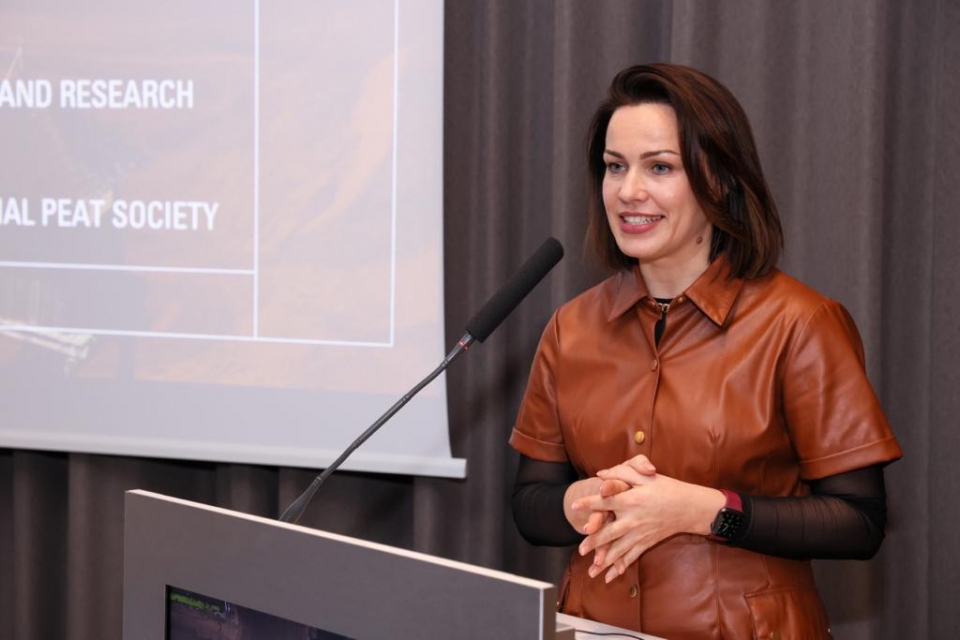
This is what Ilze Ozola, board member of the Ezeru un purvu izpētes centrs (Lake and Peat Research Centre), researcher at LVMI Silava, Dr. geol., says in an interview with Dienas Bizness. She emphasises that such a solution significantly changes the future development opportunities for the peat industry, which has been almost declared as something that should be liquidated and is harmful to the environment.
In the context of the EU Green Deal, what is the situation with peat extraction in Latvia?
Over the last few years, the explanations and emphases as to why peat extraction should be stopped have changed significantly. Specifically, in the past, the “closing” of peatlands was justified by the need to preserve biodiversity, later – by climate issues – reducing greenhouse gas emissions, and recently these two arguments have been combined. At the same time, there is a harsh example: Ireland wanted to be a kind of pioneer in the European Union, stopping peat extraction and trying to give up the use of peat products, but... after a short while, they had to import these products, including from Latvia, and eventually restart peat extraction. Currently, they are trying to implement something similar in Scotland.
Peat is one of the natural resources that, albeit slowly, regenerates. In total, peatlands cover 10% of Latvia's territory. Of all our peatlands, peat extraction takes place on only 4%, and thanks to favourable climatic conditions, the annual natural increase in peat in Latvia significantly exceeds the extraction volumes. There is no reason to declare peat extraction in Latvia as the most significant source of GHG emissions, especially when data from the LIFE REstore project research show significantly lower emission volumes from peat extraction than from currently used agricultural lands, which were drained in the past. Emissions from peat soils used in agriculture are as high as the emissions of the transport sector. Moreover, the agricultural output or produce generated from them is many times smaller compared to that produced on mineral soils.
One must also take into account the emission accounting methodology, as a result of which emissions that arise from producing and using substrates are equated to emissions that arise from burning peat. In a way, it is absurd, but that is how it is counted. Since about 1.2 million tonnes of peat are extracted in Latvia annually, the methodology provides that about 1.2 million tonnes of carbon dioxide equivalent are emitted as a result, even though the peat substrates produced from this peat are not burned; rather, tree seedlings and plants are grown in them, which sequester CO₂. Furthermore – a flower pot on a windowsill at home, in flats or offices stands for years, and after that, its contents end up in the ground (thus there is minimal CO₂ emission, just the same as with urban landscaping), rather than being burned and reaching the atmosphere.
A study conducted by the peat extraction and peat substrate production company SIA Laflora shows that “during its lifetime”, the CO₂ emissions of a peat substrate are lower than those of its substitutes – wood fibre or mineral wool. It should be taken into account that wood fibre is not suitable for Latvia's climatic conditions and contains seeds of non-native plants that attract insects; this is by no means beneficial to the plants that would be grown in a wood fibre substrate. It should also be taken into account that the recultivation of harvested peatlands is an opportunity that would allow not only covering the fundamentally miscalculated emission volume in peat extraction, but, by growing paludicultures in a “package” with a solar panel park, implementing an agrivoltaics programme, and ensuring greater CO₂ sequestration, thus resulting in a positive balance.
What should be done in Latvia?
Change the mindset and, in the true sense of the word, become smart masters of our own land. Latvia must be bolder in defending its own (residents', entrepreneurs') interests, rather than looking at how we will be allowed to defend ourselves by the “club” of the wealthier Western European countries. On the other hand, in order for Latvia's position to be defensible, research is needed, for example, how much CO₂ is in the peat substrate put in one flower pot, how much CO₂ is in it after one or three months when a specific seedling has been grown in it, how much when the seedling with all the soil is transplanted into the ground, etc.
In Estonia, such research has started this year; in Latvia, so far... it has not. It should also be taken into account that in greenhouses, extra CO₂ is supplied to help plants grow faster. Latvia should not feel guilty about greenhouse gas emissions (which are realistically much lower than those calculated) from peat extraction. It must be taken into account that emissions are attributed to the country where the peat is extracted and the substrate produced from it, not to the country where it is consumed. It seems this aspect could be the most significant one for stopping peat extraction in one's own country, while importing the peat substrate needed for growing seedlings and food products.
A real implementation of the EU Green Deal is not possible without peat and its substrates. Specifically, 6,000 tree seedlings can be grown in one m³ of peat, enough to plant 3 ha of forest, where one hectare of forest will sequester 370 t of CO₂ over 50 years. 7,000 vegetable seedlings can be grown in one m³ of peat; if they are cucumbers, one can obtain 16 t of yield, if tomatoes – 32 t of tomatoes. One can calculate how large the GHG emissions are to obtain 1 m³ of peat, and how much CO₂ the trees and vegetables grown in it will sequester. The mathematics prove that the volume of CO₂ emissions caused by peat extraction is many times exceeded by the CO₂ sequestered in plants grown in peat substrates. If we really want to “take on” the Green Deal and reduce the amount of carbon dioxide in the atmosphere, we must think about how to help natural carbon stores to store more, for example, by restoring and stabilising the water level in fens and bogs, growing higher quality forests, and reducing emissions from peatland agricultural lands. To plan and act in such a way that every euro spent provides the greatest possible emission saving.
For example, in 2021, the insulation of the LU (University of Latvia) dormitory (on Buļļu iela) was completed, as a result of which a building was refurbished for approximately 1 million euros, which allows for a 40% reduction in heating costs; the emission saving is 84 t of CO₂ equivalent per year. In total, 74 energy efficiency projects for buildings were implemented in Riga in 2021, which reduced the volume of CO₂ emissions by 2,400 t of CO₂ equivalents, which is as much as is stored annually in approximately 400 ha of our largest – (approximately 14,000 ha) Teiči peatland. To understand the big picture – in 2021, approximately 13 million tonnes of CO₂ equivalents were “counted” in Latvia. CO₂ equivalents are slowly becoming our “new currency”, it is self-evident that we will all have to delve into and understand the causal relationships of emission generation and reduction. Such research and its conclusions must be louder, Latvia's state policy makers must be interested in them in order to take them into their “arsenal of weaponry” for defending national interests in EU cabinets! ...unfortunately, this is not happening. This indicates a lack of understanding at various levels.
What to do in peatlands once peat extraction is finished?
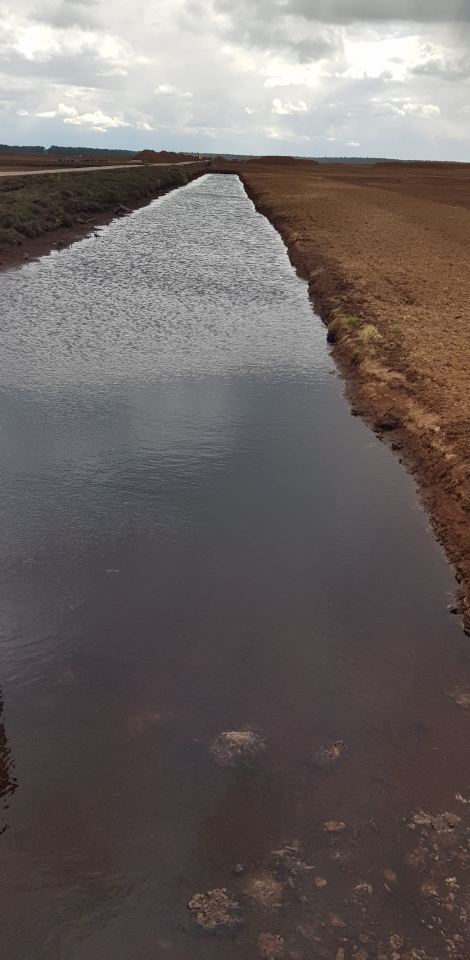
In Latvia, 18,010 ha are considered degraded peatlands where recultivation must be carried out. The owners of these territories are, primarily, the state and municipalities. Conscious recultivation has not been carried out in these areas; it has so far been neither a priority nor has there been clarity on exactly what to do. With climate problems becoming more topical, more EU funding is being directed to this issue and more and more research is being carried out to clarify the pros and cons of different types of recultivation. Harvested peatlands can be used for various purposes – installing solar panels, wind turbines (if there is an appropriate wind speed in the respective location), they can be used not only for growing berries but also other crops that can be used as a raw material for the production of building materials or animal feed, as well as in the energy sector; one can even grow new raw materials for substrates, increasing the owners' income. Initially, such ideas seem taken from science fiction, yet in the context of the bioeconomy – the opportunity to grow on one's own land not only food for people and animals but also raw materials, for example, for the production of building materials, for energy, medicine and pharmacy, reducing the use of fossil raw materials and also the volumes of greenhouse gas emissions, makes its own small contribution in the context of climate change.
What is the foreign experience?
In Germany and the Netherlands, various crops are planted in harvested peatlands, and both their impact on CO₂ emissions is studied and the economic benefit and costs are calculated. In Germany, a special federal programme has been created – EUKI (European Climate Initiative); within its framework, in cooperation with the Greifswald Mire Centre, the Estonian Fund for Nature and the Lithuanian Fund for Nature, a project was also carried out under EUKI – Paludiculture in the Baltics, the goal of which was both knowledge transfer and the development of paludiculture cultivation plans.
What was started is being continued in a new project Carbon Capturing by Baltic peatland farmers – Practical exchange for paludiculture & carbon farming and also in my research project implemented with the support of postdoctoral research: “Climate policy-adapted solutions for the use of harvested peat fields and the cultivation of paludiculture biomass.”
Only the first steps have been taken in the cultivation of paludiculture (plants growing in wet, peaty soils and characteristic of peatlands) in Latvia. Undeniably, every new idea creates new opportunities for peatland owners and (or) managers to earn additional income, yet there are still many unknowns in the cultivation of paludicultures. One of the most significant issues is the cultivation costs of these crops, the harvesting of the obtained yield and potential buyers. Paludicultures can be grown in raised bog peat – sphagnum moss (for peat), sundew, while in fens – reeds, cattails, sedges, mannagrass, plants used in medicine, as well as willows and black alders. In Germany, there is approximately 25 years of experience in planting sphagnum moss; in Latvia, the first experiment near Mālpils was carried out only 11 years ago, followed by attempts by SIA Laflora, and later – the Nature Conservation Agency and SIA Klasmann-Deilmann Latvia. The first experiments have their own specifics, as there was a lack of knowledge and understanding of why the initial goal could not always be achieved. In late October 2018, SIA Klasmann-Deilmann Latvia planted 0.35 ha of sphagnum moss in a harvested peat bog. Growing sphagnum moss in Latvia is definitely cheaper than in Germany, but the costs are still significant. Infrastructure is needed – a pond, water supply canals; planting is also not cheap, and, moreover, it must be taken into account that sphagnum moss seedlings were not bought. In Germany, sphagnum is used in peat substrates. Sphagnum is the main component of peat, therefore – growing sphagnum means growing peat.
One can grow sundew, which is a raw material for the medical industry – a plant whose components can be used not only in homeopathic preparations but also in cough syrups. As a good example, one can mention Finland, where 100 kg of dried sundew is extracted annually. The Finns do not particularly advertise this, but they earn considerable income. In Latvia, just as in Germany, one could create special sundew plantations and use the plant extracts in pharmacy.
In Latvia, building materials are understood as not only wood products but also sand and concrete products, whereas in other countries, they are also reeds and cattails. In the Netherlands, wall panel blocks are produced from reeds, mannagrass and cattails. Cattail biomass can be used for the production of thermal insulation materials; in Latvia too, there are companies that express interest in trying this product. To insulate a three-storey house, approximately 15 t of dry mass are needed. Such an amount can be grown on an area of one hectare. Interestingly, cattail does not absorb moisture, and at one time life jackets were filled with cattail seeds because they can be in rain, snow, water, but do not absorb more than 15-20% moisture. Cattail purifies polluted water. Research shows that one hectare of cattails absorbs 12-15 tonnes of CO₂, and these plantations are also an important place for forest animals. Cattail pollen can be used in greenhouses to feed insects that kill pests. Data from German researchers show that 10 kilograms of pollen can be obtained from 2 ha of cattails; harvesting them does not take much time. Cattail roots can be used in cooking, as an additive to various porridges.
Cattails are well-eaten by livestock. Up to 22 tonnes of cattails can be harvested from one hectare. Cattails seed themselves; the installation costs of such fields can be nothing (zero). In Germany and Belgium, cultivated sedges and mannagrass are used as fuel. Sedges as biomass fuel are no longer science fiction; this is shown by several examples where the boiler houses of small settlements use sedge biomass grown in nearby fields as fuel. In Latvia, a more familiar paludiculture representative that was once used in the energy sector is mannagrass. In our country, mannagrass and wood pellet granules were once produced. Mannagrass can also be used in animal feed; it contains a lot of fibre, which is particularly topical for horse breeders. Mannagrass can also be used for bedding in livestock farms, but the customers' attitude towards its dark colour, which is wrongly associated with poor quality, which is not true, must be changed. In Latvia, there are farmers who both grow mannagrass and manage wet grasslands, without even knowing that they are engaged in paludiculture cultivation and carbon farming. Interestingly, in the Netherlands, in once-drained peatlands where the water level has now been restored, water buffalo are raised in the wild; their meat is very popular and expensive. Mannagrass biomass can also be used as a raw material for the production of building materials. Currently, the most popular way of using harvested peatlands in Latvia is the cultivation of large-berry cranberries and highbush blueberries. Of course, one can plant nothing and let the peatland naturally regenerate, and over time include the peatlands as a CO₂ store – a bank.
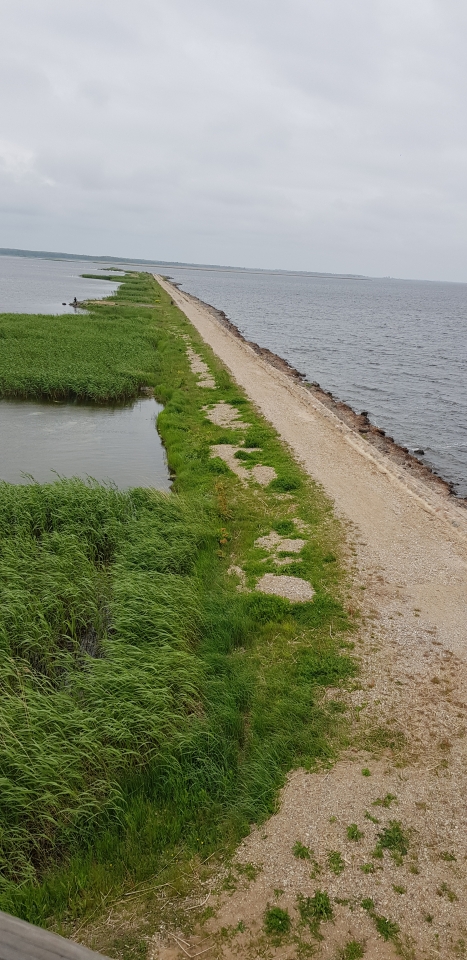
Will peatlands as a CO₂ store, whose owners, as a result of the Green Deal, will become rich by doing nothing?
Undeniably, peatlands are a huge carbon store. Peatland ecosystems contain approximately 30% of global terrestrial soil carbon. It is estimated that the rate of carbon accumulation in the Northern Hemisphere over the last 11,700 years has been on average 23±2 g of carbon/m/year, and the accumulated atmospheric carbon in peat has reduced the global temperature by approximately 1.5-2 °C. In the already mentioned research on carbon accumulation in a natural raised bog – the Teiči Nature Reserve – approximate calculations showed that in a year it accumulates 24,336 t of carbon; over the last 180 years, 4,380,480 t of carbon have accumulated in Teiči. Since there are already ecosystem services market transactions in the world, owners of peatlands and other organic soils for their carbon stores, where the water level has been restored and stabilised, can receive payment and become filthy rich, but... that does not mean doing nothing! Restoring and stabilising the water level, while not flooding adjacent territories, may not be simple in a large part of the territories, nor is harvesting biomass in wet conditions. This management method requires a serious change in mindset – from the drainage that is almost written into the DNA of all of us to rewetting, which is wrongly called flooding, but should rather be explained as “restoring the water level”. As a peatland researcher, I could agree that peatlands, to remain peatlands, must be wet, but regarding peat extraction sites, the creation of a carbon store is not the most economically advantageous solution for the state.
What would be more economically advantageous?
According to the LIFE REstore project data, licences have currently been issued for peat extraction for 25,740 ha, while extraction is actually taking place on 15,000 ha. The peat extracted in these areas generates approximately 280 million euros in our export balance. If we assume that these fields were planted with mannagrass (which absorbs ~5 t of CO₂ eq./ha/year), it would allow for the sequestration of approximately 75,000 t of carbon. In Latvia, peat soils in agricultural lands create as many emissions as the entire transport sector, as I have already mentioned before. By planting forest in drier places, and in wetter ones using it in paludiculture cultivation, one could significantly reduce the emissions of these lands; moreover, land used in this way would allow its owner to earn additional income and would solve the growing issue of emission reduction in the agricultural sector.
First publication of the interview in the 16 May 2023 issue of the magazine Dienas Bizness
https://www.db.lv/zinas/purvi-var-klut-par-nakotnes-izaugsmes-sturakmeni-511711