


The cloud of uncertainty hanging over the future of the peat industry has substantially dampened businesses' appetite for investing in Latvian plants producing the agricultural peat substrates that are in demand worldwide, while at the same time the industry has to devote a great deal of effort simply to meeting every kind of condition on paper.
This is what Ilze Ozola, the newly elected chair of the board of the Latvian National Peat Association, said in an interview with "Dienas Bizness". In her view, the most significant source of uncertainty and doubt about the future is the EU Green Deal and the regulations, conditions and potential payments associated with it, as well as campaign-style activities.
What is the current situation in the industry?
Anxious and full of uncertainty when it comes to the future. Sadly, one has to conclude that among some peat industry businesses optimism about the future is fading fast, which in turn affects their willingness to invest — and without investment there can be no talk at all of longer-term prospects. Uncertainty about the scope for peat extraction in Latvia makes the production of agricultural peat substrates problematic (with many open questions), even though demand for them is only growing. The most significant "source" of uncertainty for peat substrate producers is the EU Green Deal and the regulations, conditions and assorted payments associated with it, as well as the campaign-style activities of so-called environmental activists aimed at making peat extraction a thing of the past, just as happened in its day with the sugar factories and other sectors of the Latvian economy.
For now, the pressure from the Green Deal shows up mainly in the requirement to reduce CO₂ emissions in the peat industry. There is, of course, an oddity here: the principle is stated as "the polluter pays" (and so the end consumer), but... EU legislation provides for the opposite. The peat substrate produced in Latvia is supplied to nearly 100 countries around the world, yet it is the peat extractor who will have to pay for the CO₂ emissions — that is, a company operating in Latvia, with the emissions "assigned" to Latvia. If the polluter pays and peat is so harmful, it would be logical for the CO₂ emissions from the peat consumed to be paid for by, say, the flower or vegetable growers in the Netherlands or Germany — countries that were historically among the largest peat extractors but have completely exhausted the peat resources available to them.
I see two scenarios for solving the problem. One is to ensure that whoever calls the tune also pays for it — in other words, that the emissions are assigned to the country importing the peat. The other is to change the formula adopted in the IPCC guidelines, under which the calculations make emissions from peat identical regardless of whether it is burned or used in agriculture. Both routes are hard going, but if nothing is done the peat industry may have to buy emission allowances and spend many tens of millions of euros that could otherwise go towards investment, innovation and research, in order to create new products from peat and to raise labour productivity and efficiency. In reality peat is not burned and is used several times over, until it merges with the soil. Peat is one of those natural resources that renews itself, slowly but surely; yet as the EU sees it, if emissions from burning peat are as high as those from burning coal, and coal is fossil, then peat is fossil too. And never mind that peat extraction is a traditional sector of the Baltic economy and has been carried on here since the 18th century.
How can we accept that peat is fossil when the generally accepted rate of peat accumulation worldwide is 1 mm a year????! Studies in the Teiči and Ķemeri bogs show that in places it is as much as 3–5 mm a year. How can something deemed to be fossil renew itself? And once again, despite the fact that peat volumes increase every year, there is talk of a desire to cap the annual volume extracted, effectively setting a maximum extraction volume — something akin to the maximum permissible felling quota for standing trees in state-owned forests in Latvia, which the Cabinet of Ministers sets for a five-year period. If such a solution is introduced in Latvia, there is a risk that a range of groups in society will want to reduce these maximum peat extraction volumes step by step, creating tension among the industry's companies, which will have to reach a mutual compromise on how to divide up the allocated peat extraction quotas. What sane investor would be prepared to put money into peat extraction and peat substrate production in those conditions????! I fear that only a handful of businesses would go along with it, because the risk is already very high and will only grow in future.
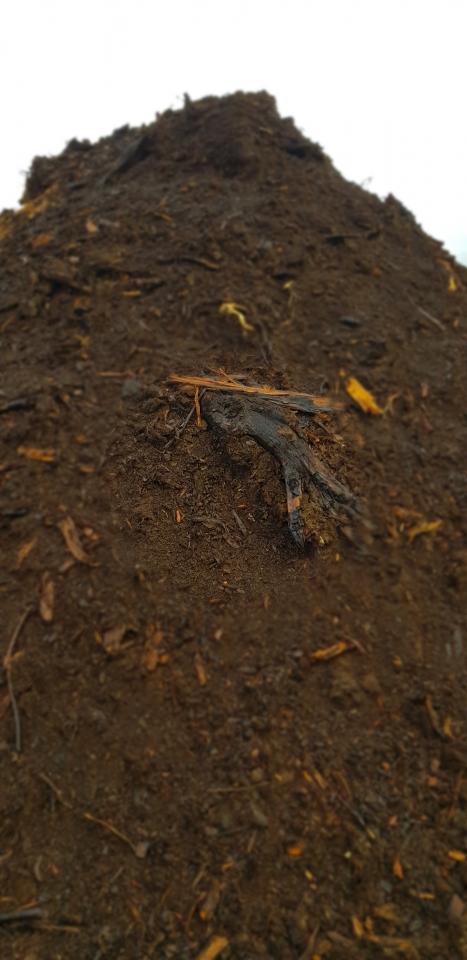
Given that the EU Taxonomy Regulation provides that investors and commercial banks will not lend money for the production of peat or peat-containing products and materials, or even for their use in growing vegetables, tree seedlings and flowers... In effect, peat substrate producers will be denied access to credit in exactly the same way as the farmers and nursery growers who use that substrate to grow their produce. At the same time, one m³ of peat can raise 6,000 tree seedlings — enough to plant 3 hectares of forest, and one hectare of forest will sequester 370 tonnes of CO₂ over 50 years. One m³ of peat can raise 7,000 vegetable seedlings: if they are cucumbers, that yields 16 tonnes of the vegetables; if tomatoes, 32 tonnes. Alternatives to peat are developing very slowly, and at present there are no companies capable of replacing peat in terms of either volume or quality.
How important are peat extraction and peat substrate production to the Latvian economy?
"Dienas Bizness" published World Trade Organization figures last year showing that since 2018 Latvia has ranked first in the world for total exports of peat products. In 2022, Latvia's share of the world market by volume of peat products exported was 19.9%, Canada's 13.5%, Germany's and Estonia's 13% each, and Lithuania's 8.8% of the global market. In monetary terms, Latvia ranked second in the world for peat product exports in 2022 (295 million euros), behind only Canada (502 million euros). Latvia is a consistent world leader in peat export earnings per capita. In 2022, Latvia's peat export earnings per capita were 156.9 euros, Estonia's 115.1 euros and Lithuania's 38.1 euros. These are outstanding figures by world standards, and they could form the basis for a forecast that peat substrate production in particular could become one of the drivers of job creation and a source of tax revenue in future, especially in the regions. Yet despite all this, and despite the sweeping impact on food production, there is a risk that peat extraction and peat substrate production will be disqualified from the European market. It should also be borne in mind that the industry was significantly affected by inflation, when almost all costs rose appreciably; that also pushed up selling prices and company revenues, but last year the opposite occurred — a fall in peat substrate prices was observed.
Is there any substitute for peat and peat substrates?
In theory, coconut fibre and mineral wool are cited as substitutes for peat substrate, and research has been done on the use of other products. If you look at coconut fibre, then by the logic of the Green Deal one ought to calculate what it costs to bring such a product to Europe and Latvia and what its CO₂ footprint is. Riga Technical University carried out a life-cycle analysis of peat and concluded that peat has the smallest environmental impact. At the same time, demand for food is forecast to grow as the planet's population increases (in 2022 it stood at around 8 billion; by 2050 it is estimated to reach 10 billion). As a result, by 2050 some 400% more substrate will be needed to supply food and ornamental plants, according to research data from Wageningen University.
What does that mean? Even if another substrate appears over the next 25 years, demand for peat substrate will still grow by at least 250%. If peat extraction and the manufacture of peat products are significantly hampered or even banned in the European Union, the biggest winners will be countries rich in peat resources, such as Russia, Belarus and Ukraine. Those involved in the peat business will relocate from Europe to those countries and invest in peat product manufacturing there. Since global demand for peat is growing, particularly from China and other Asian and Arab countries, the departure of European producers — from Latvia, Estonia and Finland — from the market will correspondingly increase the market opportunities for peat sector companies operating in Russia, Belarus, Ukraine and other regions of the world.
Is there anything the industry's businesses can do in these circumstances?
Times of change will continue; they will not end, and that is certainly no reason to throw in the towel. Yes, there will undoubtedly be companies that do not invest and do not look for new solutions, but instead try to lock in their profits and carry on working for as long as conditions allow. But there are also businesses in Latvia looking for ways to turn a potentially unpromising situation into an advantage. First of all, 2024 should bring clarity on how — and perhaps at whose expense — Latvia's commitment (its task) to cut greenhouse gas emissions by 17% by 2030 is to be met. There has been, is and will be talk of "taking peat extraction out of the game", since that would immediately cut CO₂ emissions by around a million tonnes a year, making it possible to deliver a third of the emissions sequestration target.
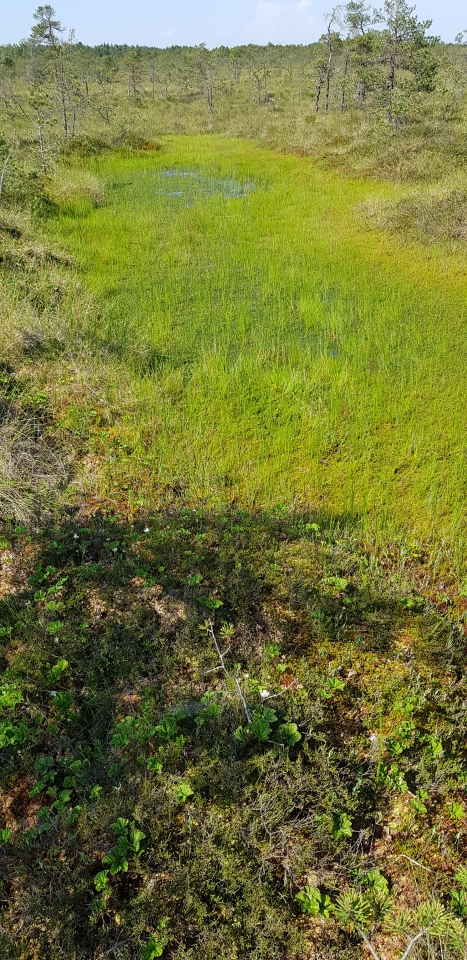
The penalties for failing to meet the target are known to Latvia: achieving even greater sequestration and a maximum possible fine of 11 million euros a year until the target is met. Eliminating a single industry would not solve the sequestration problem; it would reduce the capacity to pay the fine, because jobs would be lost in the sectors concerned, the taxes those sectors pay would disappear, employment in the regions would fall and the risk of rising emigration would increase. I do not know which political forces in Latvia would be prepared simply to wipe out rural jobs and increase emigration, and then go to the voters and urge them to turn out at the polls. That said, it is no argument for sitting on our hands. Carbon dioxide sequestration certification schemes, CO₂ sequestration measures and emission reduction solutions are all currently being assessed. In any of these three directions it is possible to find solutions that make peat extraction — and hence peat substrate production — greener. Comparatively the simplest is to turn a worked-out peat bog into a CO₂ store, a bank, by restoring and stabilising the water level in fens and raised bogs.
As experience in Germany and the Netherlands shows, so-called paludiculture crops can be planted and grown in worked-out bogs: in raised-bog peat, sphagnum mosses (for peat) and sundews; in fens, reeds, bulrushes, sedges, reed canary grass, plants used in medicine, and also willows and black alders. Of course, for the CO₂ sequestration to be counted it will have to be certified, or at the very least an independent auditor's opinion obtained on the sequestration calculations. Several certification schemes already exist worldwide and will only develop further. Putting such a plan into practice requires research, and a number of problem areas have to be overcome as well. Quite recently, in line with the criteria of international certification schemes, together with other scientists we carried out the geological survey, water monitoring and existing-emission calculations required for carbon sequestration certification. On that basis, calculations showed that the existing peat layers had "removed" 371 tonnes of CO₂ from the atmosphere; yet at the same time nobody is interested in the carbon contained in the remaining peat, and there is no benefit to be had from the fact that the peat producer has left more peat in the field.
The study revealed another significant problem: in the study area in question, carrying out restoration measures between 2024 and 2050 would make it possible to sequester emissions amounting to 64,540 tonnes of CO₂ equivalent — which is not a small amount, but the gain over those 25 years is many times smaller than what the company supposedly generates each year. Applying the current immediate-oxidation methodology, the company in question generates emissions of 120,000 tonnes of CO₂ equivalent a year. That means the company produces twice as much in emissions every year as all the restored peat fields will be able to sequester by 2050. The study showed up a present-day reality: sometimes working with paperwork turns out to matter more than working out in nature. That is why I can understand companies that, on seeing these figures, may lose any motivation to restore and sequester anything. There is, of course, another way to cut emissions: developing energy projects on worked-out peat bogs by installing solar and wind power plants, while at the same time developing consumption of that energy on the spot — in greenhouse complexes, for example, whose produce ends up in the shops. In the whole bureaucratic tangle, both people and nature effectively get lost.
Is this purely a Latvian peculiarity?
Unlike Germany or the Netherlands, which can talk about peat extraction the way fairy tales begin — "Once upon a time..." — in Latvia peat extraction still exists and will continue to exist, and peat substrates will go on being produced. That reveals the difference between those countries and Latvia: in the EU's "big decisions" on peat, Latvia has very little prospect of support from them, because they no longer have these industries. A colleague returning from the climate summit in Dubai, COP26, said she had been asked whether there were still any questions about peat extraction. It is hardly surprising, because not only in Germany but in Latvia too the peat industry is coming under very active attack from so-called environmental organisations, which use various campaigns to boycott peat substrate production in order to bring peat extraction to an end. In early May there was a campaign in Germany calling on shops not to sell peat substrates. It coincided with the Plant Parade in Latvia, where nothing happens without peat. My suggestion would be that next year the organisers of the campaign in Germany invite retailers, on the days of their campaign, to take off the shelves every food and non-food product grown in peat substrate — tomatoes, cucumbers, lettuce, blueberries, cranberries and everything made from these products. A campaign of that sort would foster an understanding of how important peat is in producing the food people need.
In Europe there have been campaigns against eating products of animal origin, which many people regarded as a good thing, though one wonders whether they gave any thought to the fact that products of animal origin are not just meat and meat products but also milk, cream, butter, cheese, curd cheese and eggs. The question of public attitudes to a particular industry matters not only in Germany but in Latvia too.
Is Latvian public opinion on the peat industry known?
At the end of last year SKDS conducted a population survey which paints a picture the industry will find pleasing, while also pointing to a sharp difference in levels of awareness between younger people and residents of Latvia's larger cities on the one hand and older people on the other. It should be noted that 19% of those surveyed know nothing at all about peat extraction in Latvia. (Young people (aged 18–24), women and Riga residents were more likely to say they knew nothing about peat extraction in Latvia.) The saddest part is that, compared with the 2018 survey data, the results have not changed significantly. That means measures to inform the public are needed. Although respondents' self-assessment of their own knowledge about peat extraction in Latvia varies, public attitudes towards peat extraction and use in Latvia can be described as positive. Specifically, 75% of those surveyed have a broadly positive attitude (rather positive — 57%, very positive — 18%). Only 6% of respondents say their attitude is broadly negative (rather negative — 5%, very negative — 1%). It can be observed that as self-assessed knowledge about peat extraction increases, so does the proportion of respondents with a broadly positive attitude towards peat extraction and use in Latvia. Here too one has to conclude that, compared with the 2018 survey data, the results have not changed significantly.
Assessing various statements about peat extraction and use in Latvia, most respondents broadly agree that peat extraction makes a significant contribution to the Latvian economy (71%), that peat is an important Latvian export commodity (69%), that peat extraction in Latvia provides stable jobs (68%) and that peat could be an important resource for Latvia's energy independence (60%). 44% of respondents broadly agree that it is impossible to grow trees, vegetables and ornamental plants without peat (44%), while 40% broadly agree that many of Latvia's peat bogs are owned by foreigners. At the same time, it gives real pause for thought that 38% of respondents broadly agree that peat extraction harms nature, and 33% broadly agree that peat extraction leaves peat deserts behind. An even more worrying picture emerges from the fact that 26% broadly agree that peat extraction takes place in most of Latvia's bogs, even though in reality extraction takes place in just 4% of all bogs in Latvia. At the same time, almost half of respondents (49%) broadly disagree that peat extraction reduces opportunities for people in Latvia to pick berries and mushrooms.
Compared with the 2018 survey data, there has been an increase, albeit a slight one, in the proportion of respondents who broadly agree that peat extraction makes a significant contribution to the Latvian economy (from 65% in 2018 to 71% in 2023), that peat is an important Latvian export commodity (from 61% to 69%), that peat extraction in Latvia provides stable jobs (from 62% to 68%) and that peat could be an important resource for Latvia's energy independence (from 55% to 60%). There has been a slight fall in the proportion of respondents who broadly agree that peat extraction harms nature (from 44% to 38%), while there has been an increase in the proportion who broadly disagree that peat extraction reduces opportunities for people in Latvia to pick berries and mushrooms (from 44% to 49%). 21% of respondents think the volume of peat extraction in Latvia should be increased, while 43% think the current volume of peat extraction should be left unchanged.
11% of respondents think the volume of peat extraction should be reduced, while 2% of respondents think peat extraction should be stopped altogether. Compared with the 2018 survey data, the results have not changed significantly: 50% of respondents broadly support allowing a freer peat extraction regime in Latgale (should rather be supported — 36%, should definitely be supported — 14%). 23% of respondents think that introducing a freer peat extraction regime in Latgale should not be supported (rather not — 18%, definitely not — 5%). Allowing such a regime is supported to a greater extent by those respondents who have a broadly positive attitude towards peat extraction. It can be observed that as the level of self-assessed knowledge about peat extraction rises, so does the proportion of respondents who support allowing a freer peat extraction regime in Latgale.
Compared with the 2018 survey data, the proportion of respondents who broadly support allowing such a regime in Latgale has fallen (from 55% to 50%). The Latvian residents surveyed have mainly used peat and peat products for growing flowers or vegetables (59%). 36% of respondents have used them when planting seedlings in their own garden. Peat and peat products are used less often for sowing lawns and for landscaping (11%), for fuel (8%), for forest regeneration (7%), for insulation (4%) and as a design material in interiors (1%). 28% of respondents have not used peat or peat products. Women, as well as respondents living in rural areas, have used peat and peat products more often. Compared with the 2018 survey data, the proportion of respondents who use peat and peat products for growing flowers or vegetables has risen (from 52% to 59%), while use when planting seedlings in their own garden has fallen (from 41% to 36%). 51% of those surveyed think that once peat extraction ends, the natural bog should be restored in the peat bog. Respondents also indicate that once peat extraction ends, forest should be planted in peat bog areas (43%), berry bushes (36%), and 13% say the area should be restored and turned into land suitable for building solar and wind farms. At the same time, almost two thirds of those surveyed (64%) would broadly not be prepared to pay more for trees, vegetables and ornamental plants if no peat had been used in growing them (rather not — 30%, definitely not — 34%). 15% would broadly be prepared to pay more for this (rather yes — 13%, definitely yes — 2%). As the level of urbanisation falls, the proportion of respondents who would not be prepared to pay more for this rises. Those surveyed who have a broadly positive attitude towards peat extraction would also be less prepared to pay more.
More than a third of respondents (37%) do not obtain any information about peat use and bog management. The survey data show that information about peat extraction is more often obtained by respondents living outside Riga, by those surveyed with a higher self-assessment of their knowledge about peat extraction, and by older respondents.
Revenue from exports of peat products (millions of euros)
2011. g. 100,78
2012. g. 104,58
2013. g. 115,6
2014. g. 121,23
2015. g. 130,1
2016. g. 146,7
2017. g. 164,3
2018. g. 178,5
2019. g. 188,1
2020. g. 208,3
2021. g. 239,1
2022. g. 293,7
2023. g. 261,09
Source: Central Statistical Bureau