


Although this year we have heard scepticism from the forest sector about weak markets caused by the construction crisis in the part of the world that matters most to us – Europe, driven primarily by high Euribor rates, there is good news in the sector as well. In recent years the wood industry has made substantial long-term investments in higher value-added production.
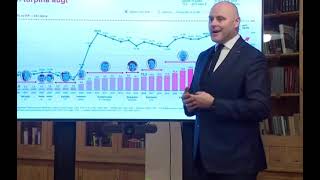
Looking at the study “Spring will come in spring” by Luminor economist Pēteris Strautiņš, we can see that investment in manufacturing in Latvia has been growing since 2021, and that this growth is mainly thanks to the wood industry. Justly or less justly, over recent decades the sector has long been criticised for its not particularly high value added across various cross-sections of Latvia's economic indicators. Now, however – in the past few years – as P. Strautiņš's study shows, the data point to the opposite. Investment in the wood industry has increased year on year, rising from 120 million euros in 2021 to 400 million euros this year. Investments in large and significant projects have also been announced for the coming years, and these will add to the 2 billion euros of long-term investments at residual value that VID statistics report for wood industry companies in 2023.
This is very important, because in the short term we can see that Latvia's GDP forecasts are not especially bright, while in the long term Europe's overall competitiveness on a global scale is shrinking rapidly. Mario Draghi, the former President of the European Central Bank and Prime Minister of Italy, who drew up a plan for improving Europe's competitiveness at the invitation of European Commission President Ursula von der Leyen, names the need for many billions in investment in innovative technologies as one of the tools.
As for our country, and the wood industry in particular, the private sector is investing actively – Latvijas Finieris, CEWOOD, Stiga RM, BSW, Gaujas koks, Rettenmeier, PATA and many, many others. There have also been public reports about the Estonian investor “Fibenol”, which plans to invest up to 700 million euros in the Valmiera Industrial Park in order to build one of Europe's most modern biorefining plants in Latvia. Start-up investment on that scale in a single company has never occurred in Latvia's history. That said, if we take a longer view, Latvijas Finieris, for example, has already invested more than 300 million euros over the previous decade and will add more than another 400 million euros over the next five years. The value of the fixed assets of the OSB and wood-chip manufacturer located in Rīga also stood at 400 million in 2023, and those investments were made largely over the past twenty years. It is pleasing that new investors are showing interest in our country, yet development will rest primarily on those who are already here.
Describing this period as a whole, one can say that this is a period of investment and that, if these plans are carried out, the wood industry will considerably increase its share of the economy overall and will very likely consolidate its position as Latvia's leading manufacturing sector. Most of those investing in the new plants envisage high value-added production specifically – in other words, precisely what the sector has until now been accused of lacking. It is also significant that the investors include leading Latvian-capital companies with experience.
For these investment plans to be fulfilled and for companies to be able to operate profitably in the future, stability and predictability are needed at the first stage of wood processing – in forest harvesting. That would mean regulation that is comprehensible, reduces bureaucracy, is competitive and makes planning possible, together with available resources. The sector's companies will do their part in development and on the road to high value added; for its part, the state must ensure long-term stability and predictability!