

“Rīgas Meži” plans to commence logging work near Kalngale at the end of 2022 (“Rīgas Meži” Gauja forest district, Kalngale ward, Ādaži municipality, Carnikava parish). The work will be carried out in accordance with the company’s “Forest Management Plan,” which places great importance on biologically valuable areas, nature and recreational sites, as well as reducing the total area subject to forestry operations.
For the majority of the forest, the work will be carried out in accordance with the landscape-ecological plan and the territory landscape design plan developed for this forest. Furthermore, when carrying out logging operations, the principles of responsible and sustainable forest management, as defined by the international certificates awarded to “Rīgas Meži,” will be observed.
The aim of the work: to preserve natural values, maintain opportunities for mushroom and berry picking, develop and improve recreational opportunities, shape the forest landscape, ensure successive forest regeneration, and thin the existing stand—including with minimal human impact and limited clear-cutting to ensure forest renewal. To ensure more rapid regeneration of the undergrowth, soil preparation in the felling areas will be carried out using a deep-tillage rotary loosening tiller.
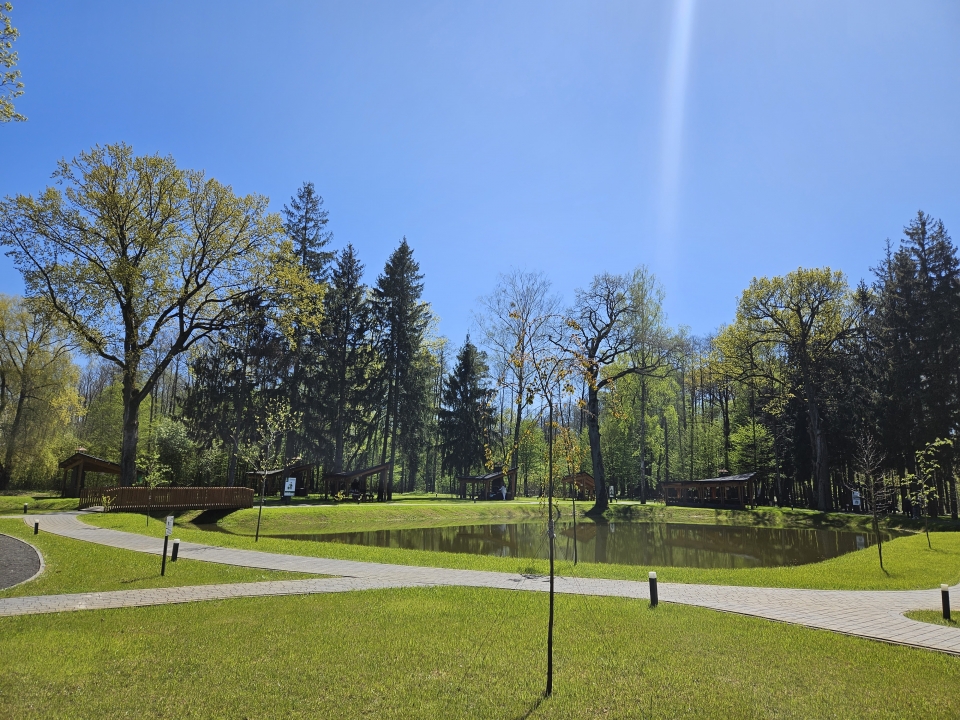
Planned timing: late 2022 – early 2023 (depending on weather conditions).
Work area: 14.22 ha.
Planned sequence of work: preparation of forest roads to suit forestry transport needs; clearing of undergrowth; tree felling; timber extraction; branch collection and removal; maintenance of forest road infrastructure. Work may take place simultaneously or may be temporarily halted due to unsuitable weather conditions.
The forest near Kalngale is notable for the relatively high number of biologically valuable forest stands where no logging will take place. It is also a popular spot for recreation, berry picking, and mushroom hunting.
Prior to logging, a functional zoning of the forest was established for this territory: biologically valuable area, buffer zone for biologically valuable stands, landscape-valuable area, and forestry area. The landscape design plan zoning highlights landscape features and takes into account the forest’s natural values and recreational opportunities.
In accordance with the landscape design plan developed for the Kalngale ward, two types of felling are intended here:
regeneration felling: a type of main felling where the basal area (density) of the stand is reduced until it falls below the critical threshold. Regeneration felling is primarily planned in the forestry area;
thinning: a type of felling to improve the composition of the stand and the growth conditions for the remaining trees, where the basal area (density) of the stand is not reduced to below the minimum threshold.
Before starting logging, “Rīgas Meži” informs the public about the planned work and the functional zoning of the stands:
Biologically valuable area: the aim here is to protect and preserve an area of high biological value containing natural habitats and micro-reserves. Therefore, in accordance with the “Forest Management Plan” and the opinions of habitat experts, restrictions and prohibitions on economic activity have been set. Tree felling in this area will only take place if necessary for infrastructure maintenance, following prior consultation with nature conservation specialists.
Buffer zone for biologically valuable stands: the aim here is to maintain a protection belt around biologically valuable forest stands. This zone is established in areas where natural forest habitats are concentrated; the felling plan is evaluated by a “Rīgas Meži” nature conservation specialist, who provides recommendations for the preservation of natural values.
The buffer zone for biologically valuable stands is designed to ensure the value of these stands is not diminished. Taking into account necessary spatial and seasonal restrictions, regeneration felling may also be planned in this area (logging work will not take place in spring—during the bird nesting season). In this current logging cycle, work is planned in two stands involving small-scale regeneration felling.

Landscape-valuable or recreational area: this plays a crucial role from the perspective of non-timber forest values. These are areas of landscape significance that are popular for recreation, berry picking, and mushroom hunting. Therefore, the aim of the work in this area is the long-term preservation of the non-timber values favoured by the public.
In these areas, logging work will be more sensitive, including the exclusion of regeneration felling. Meanwhile, thinning will be carried out with irregular and regular openings to promote better natural pine regeneration and ensure natural forest stand replacement in the long term.
In this logging cycle, individual thinning operations are planned in the landscape-valuable area to ensure optimal growth conditions for the strongest trees—more light and space to develop a more robust stand resistant to external environmental and biological factors (windthrow, snowbreak, insect damage, such as the eight-toothed bark beetle).
Forestry area: in accordance with the forest landscape design plan, the aim here is to carry out economic activity in line with the forest management plan, ensuring the maintenance of the main tree species, the regeneration of felling areas, and the creation of a sustainable forest landscape. Forestry work here is planned at a lower intensity—thinning is scheduled, while existing natural values and additional ecological trees will be preserved during regeneration felling.
Ecological trees (vigorous trees of the previous generation or trees with a diameter larger than the average diameter of the dominant species in the stand) will be concentrated in one or more groups. In addition to these ecological tree groups, individual larger-dimension trees from the dominant stand or individual ecological trees from the previous generation will also be preserved.
Furthermore, in addition to the ecological trees, healthy pine undergrowth, juniper, as well as the oldest and most valuable pines and hollow trees will be preserved.
#GaujasMežniecība #KalngalesApgaita #KalngalesMežaKopšana